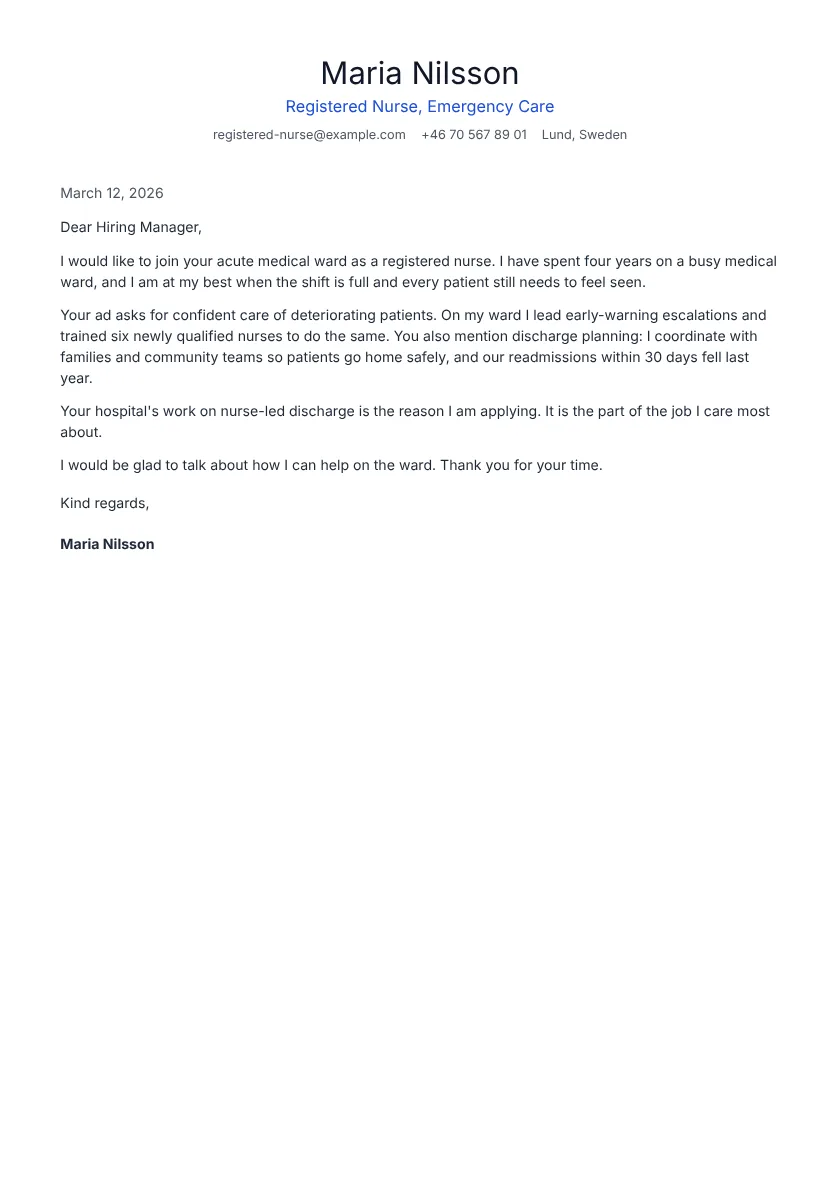
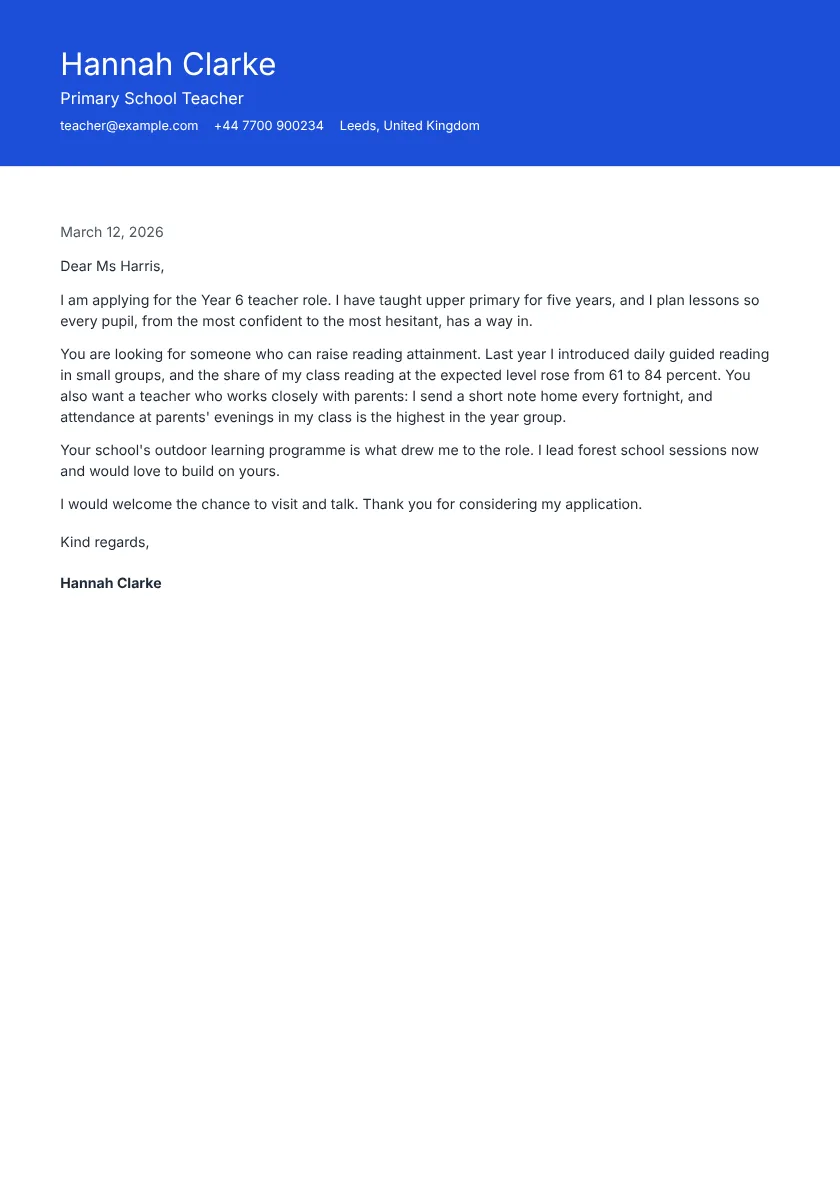
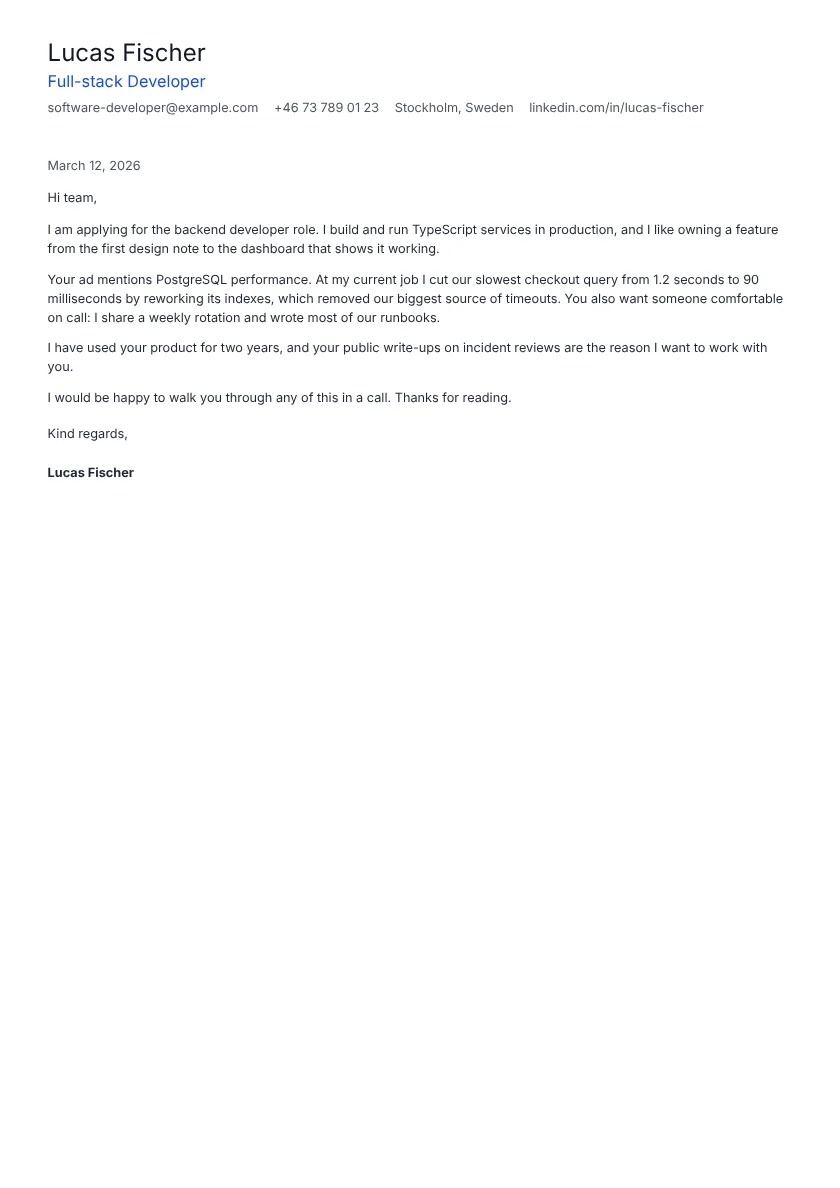
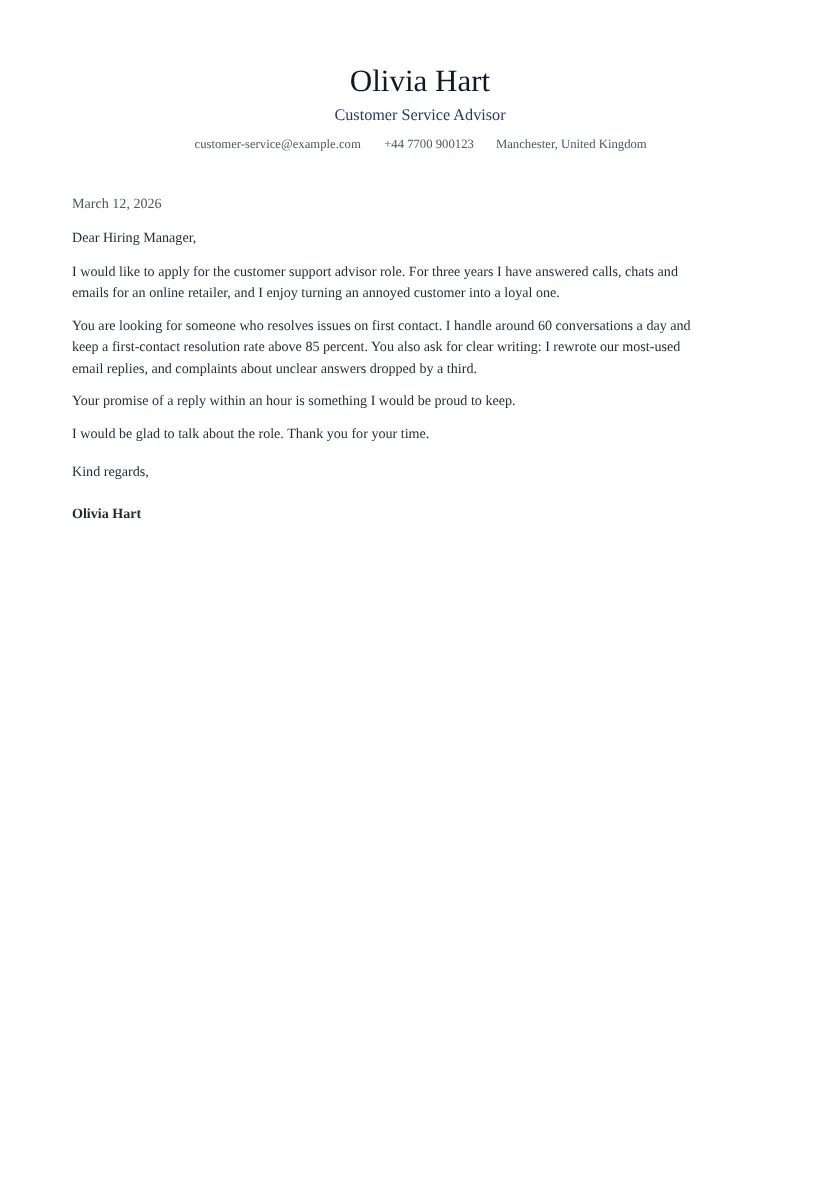
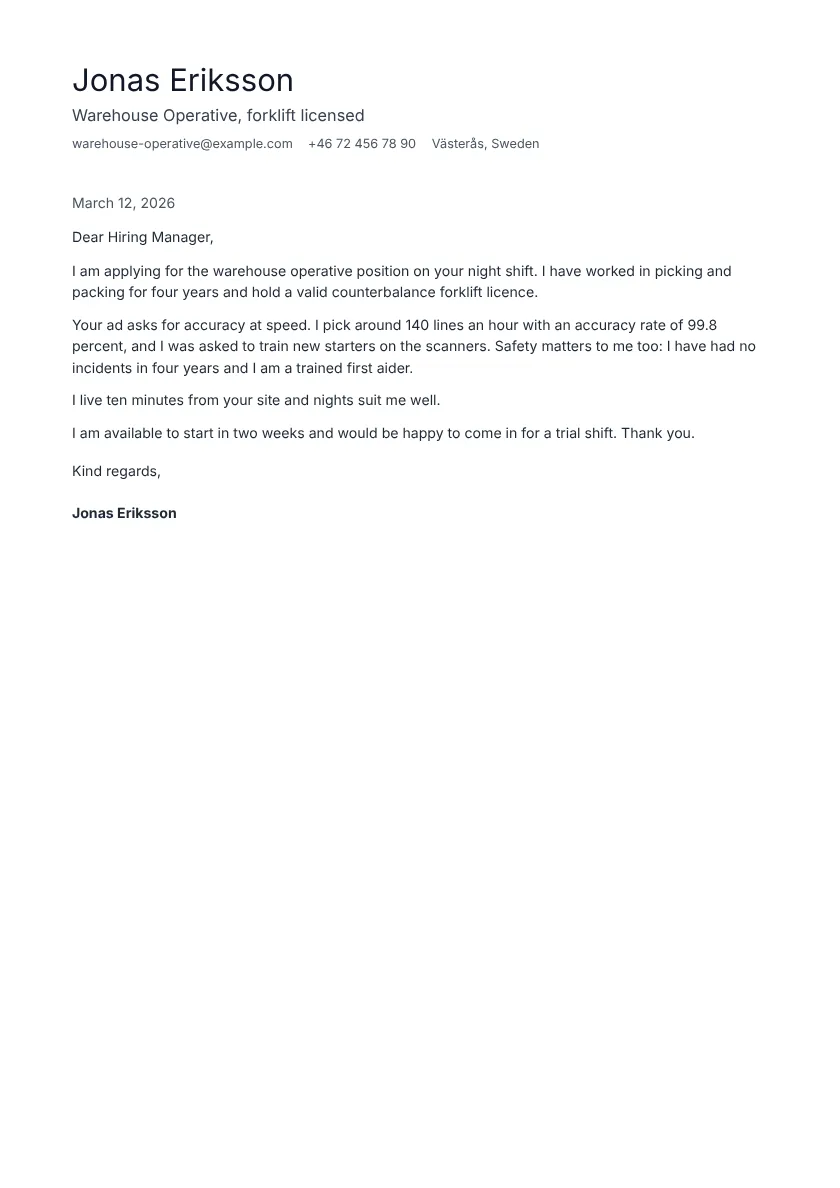
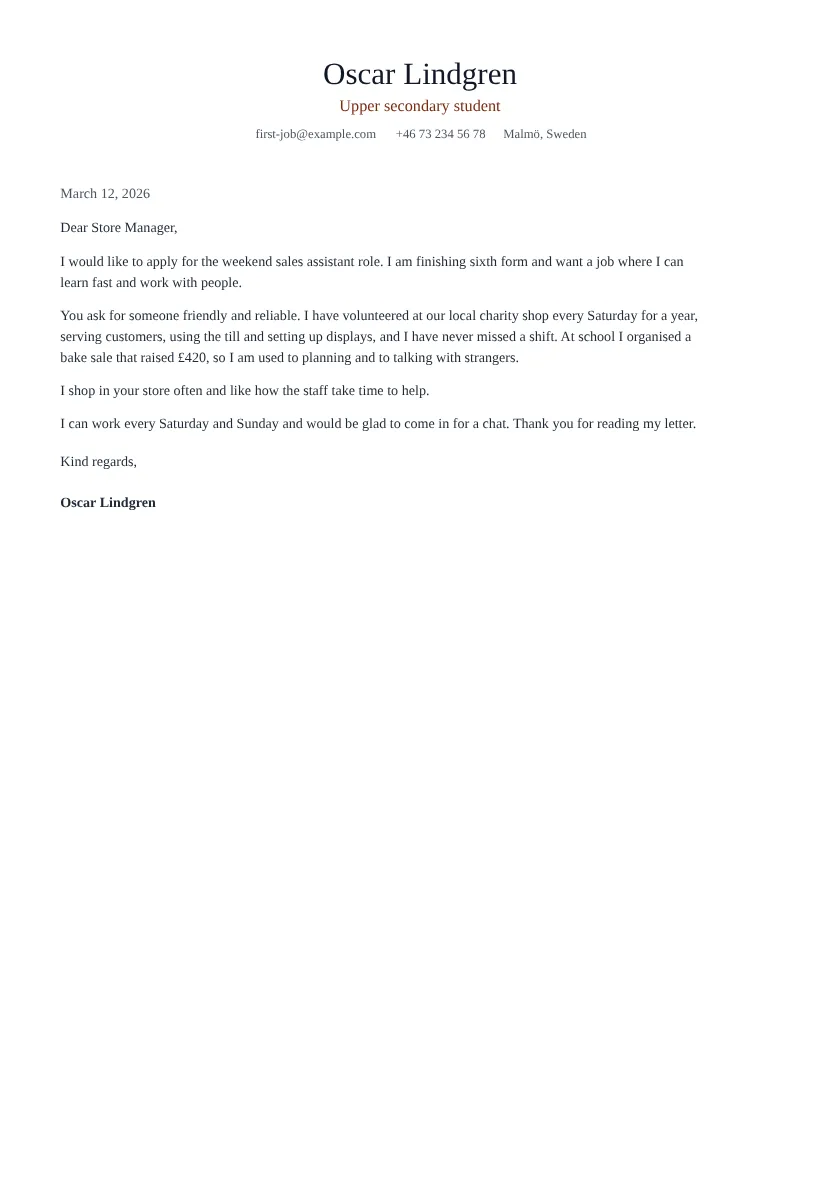
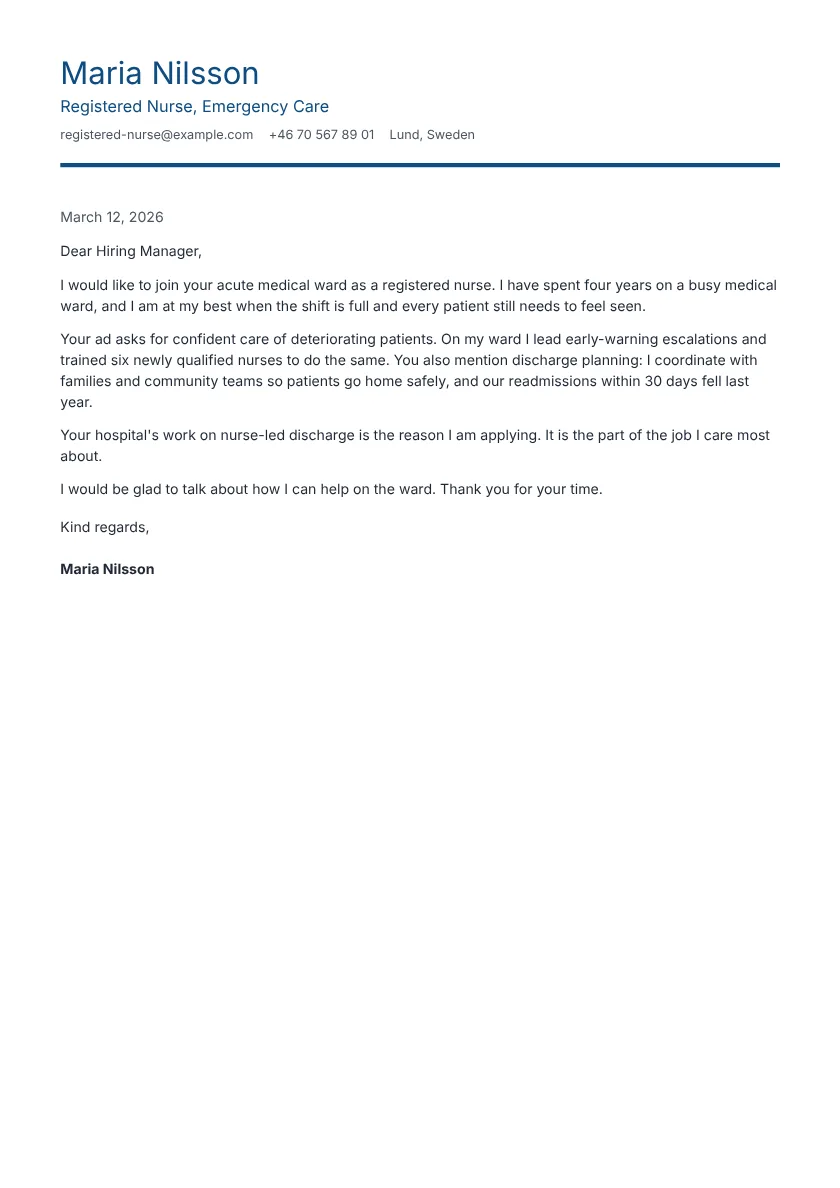
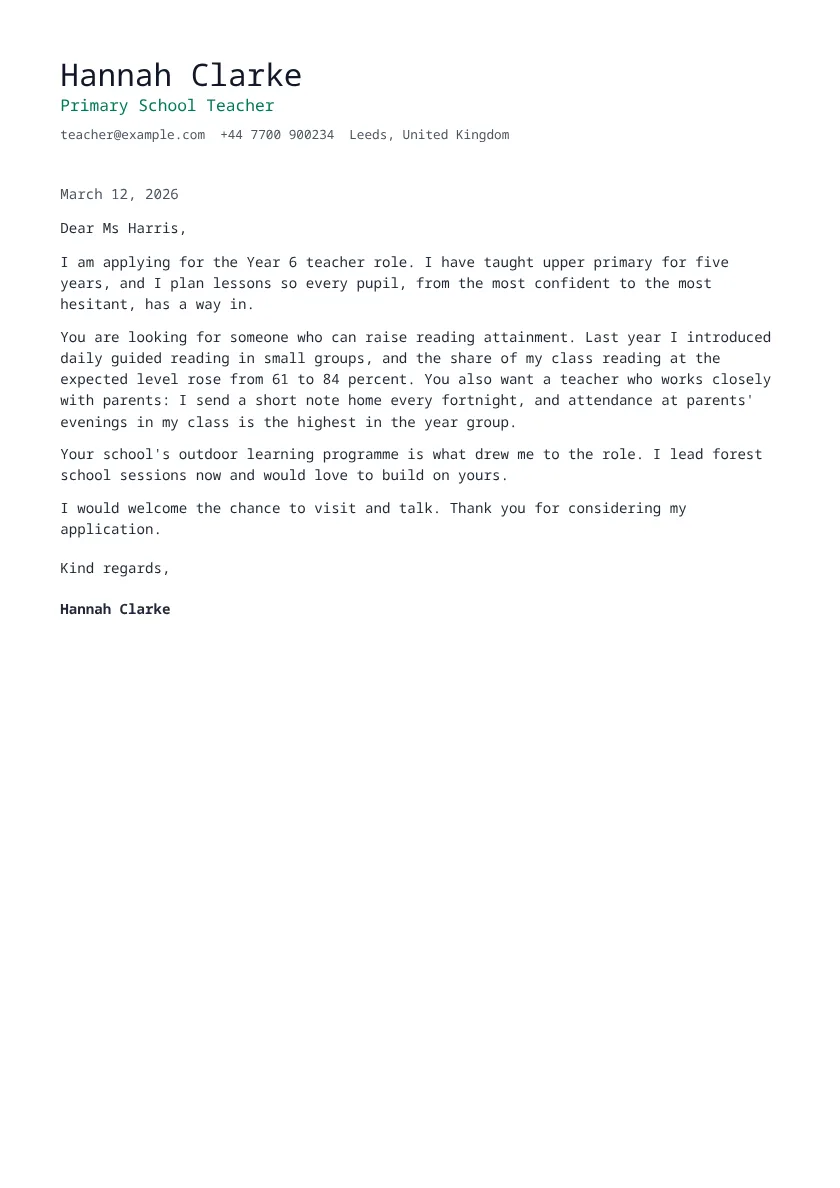
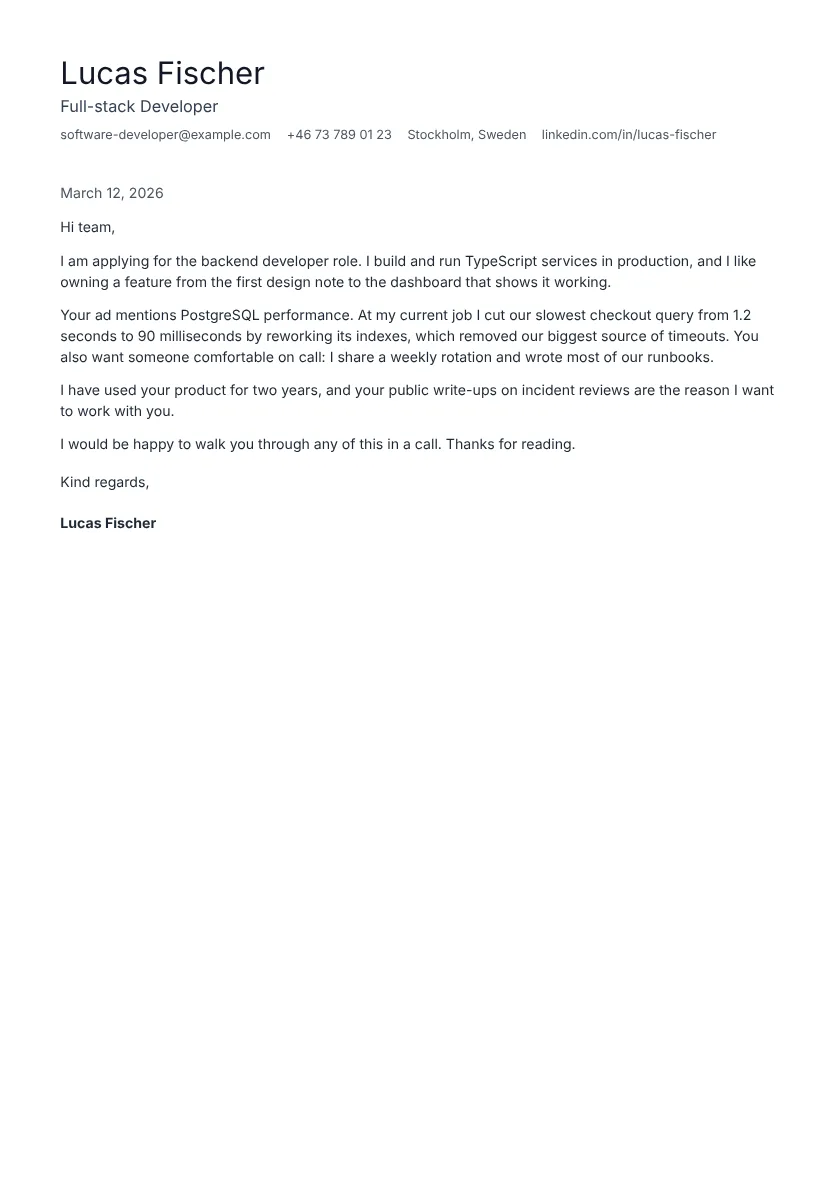
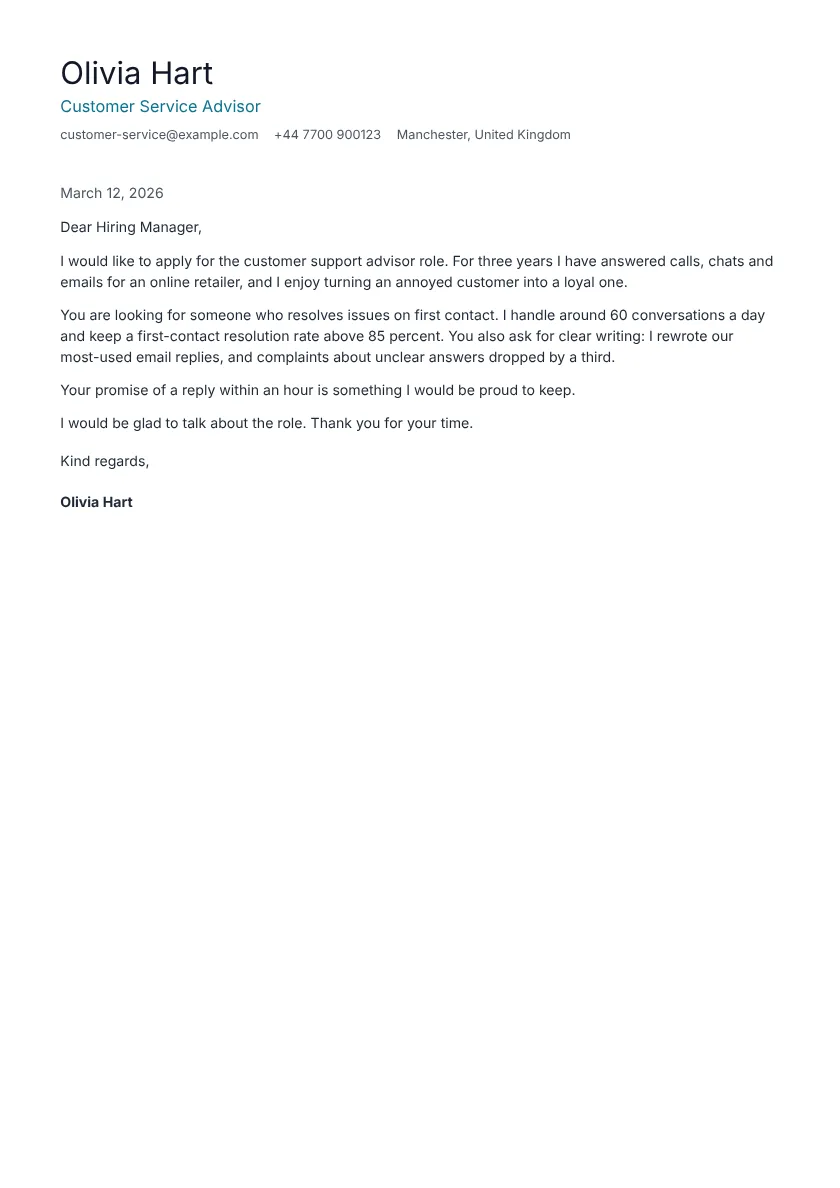
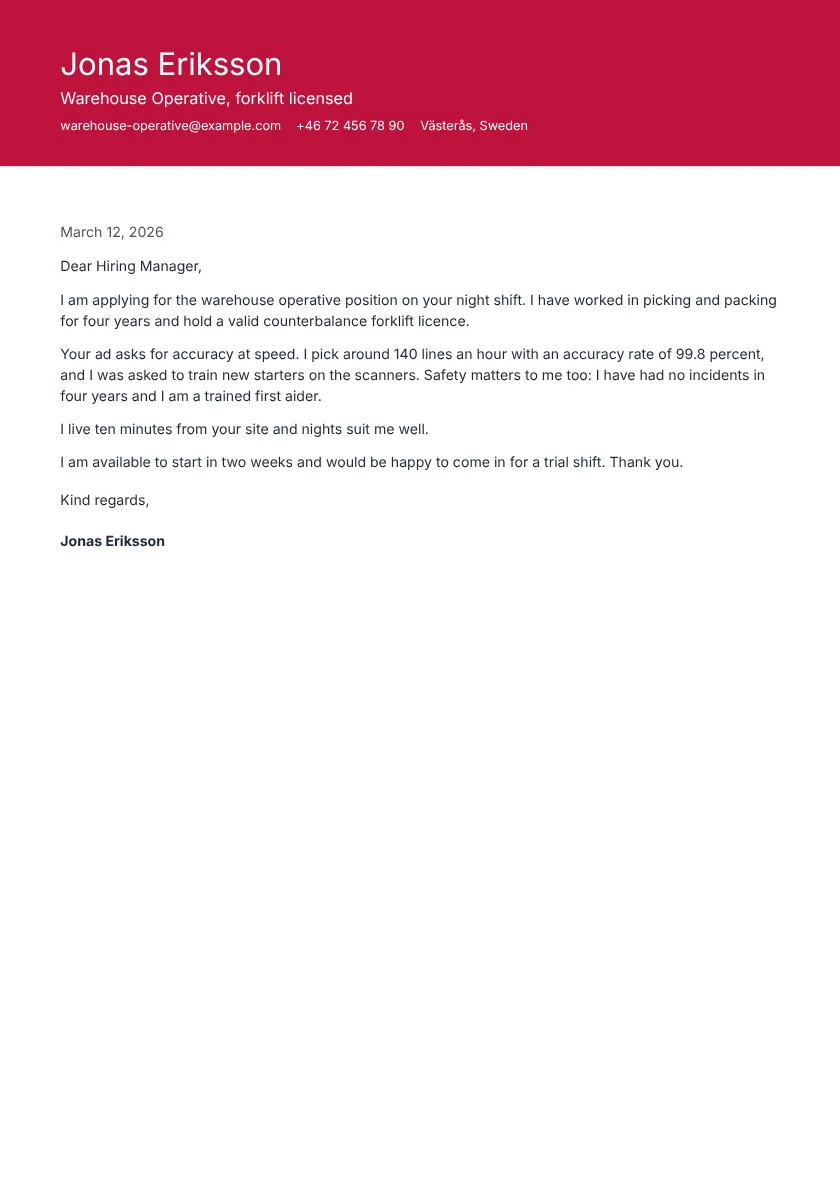
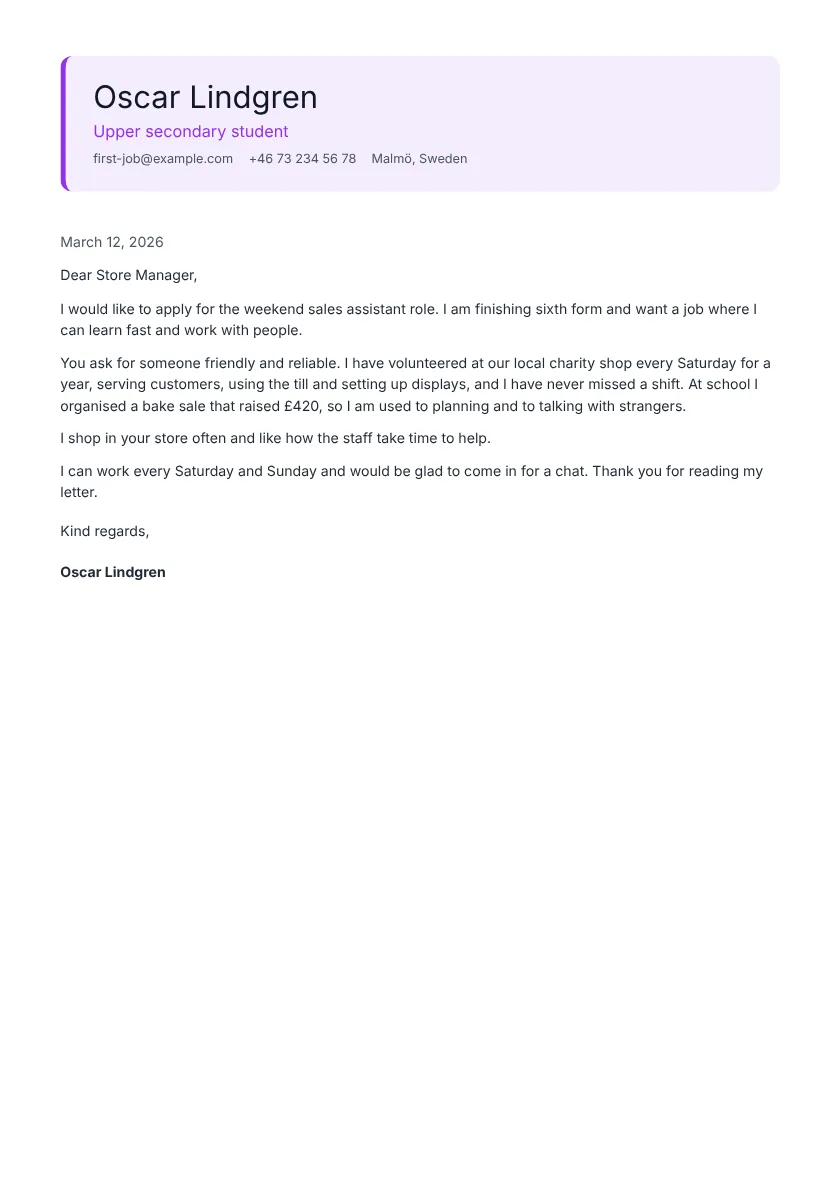
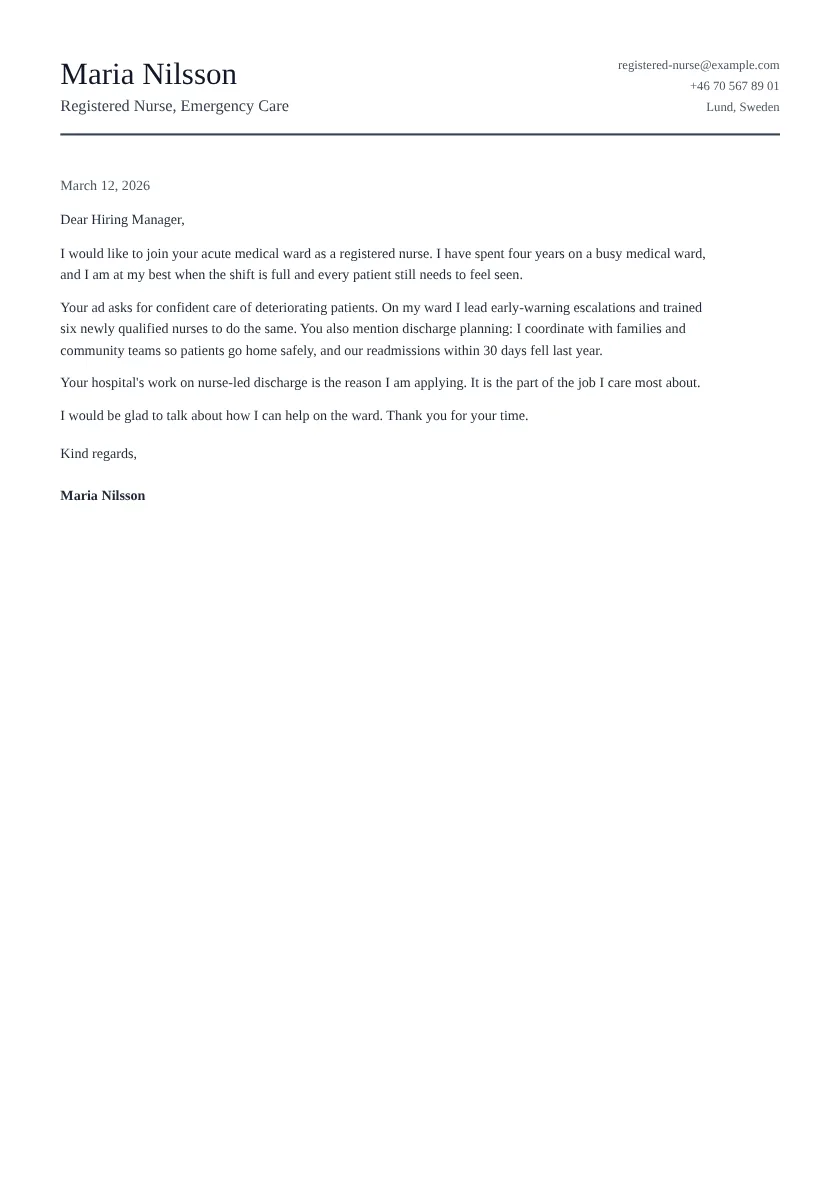
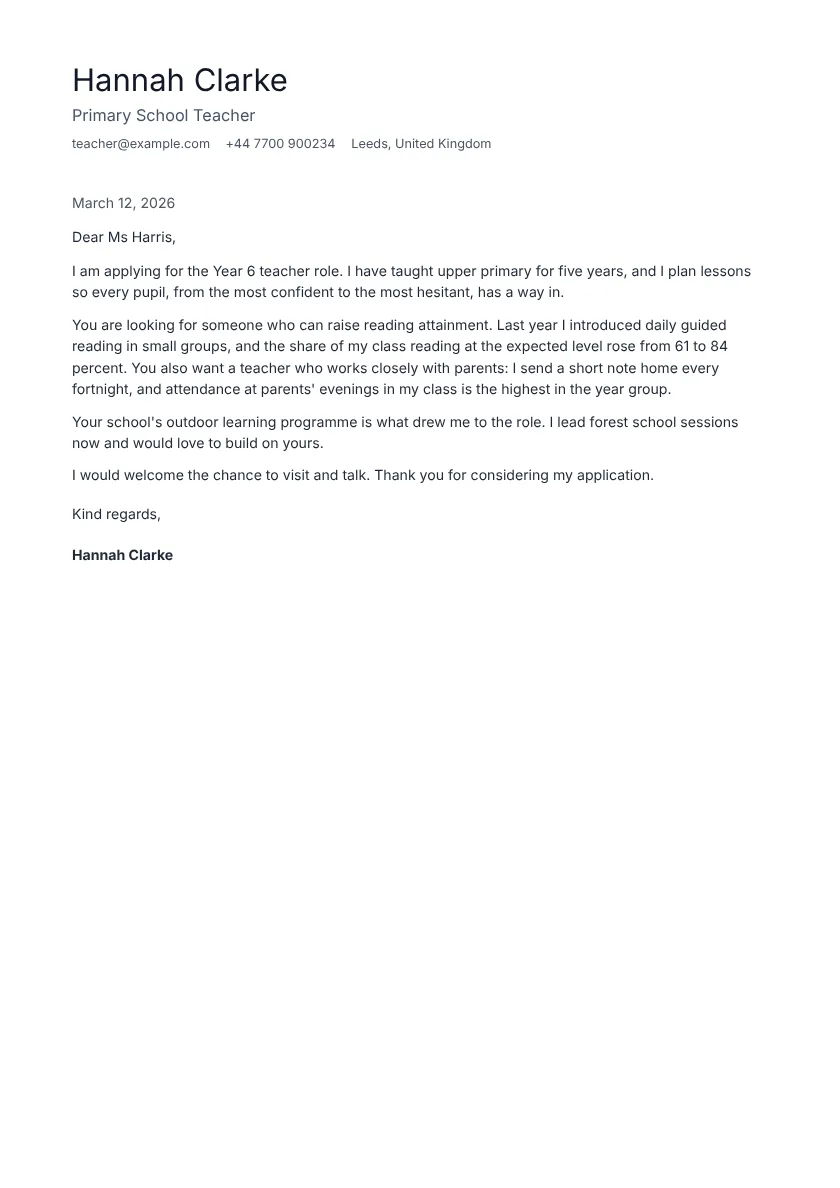
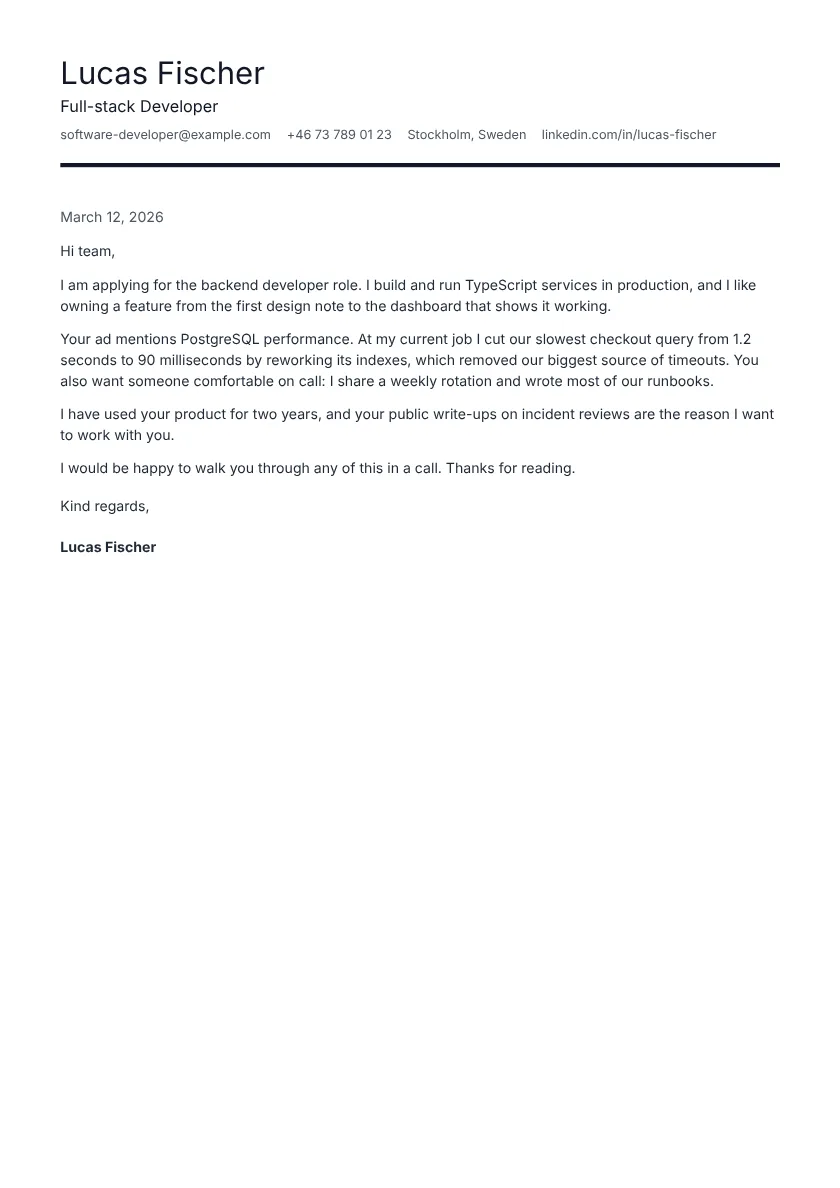
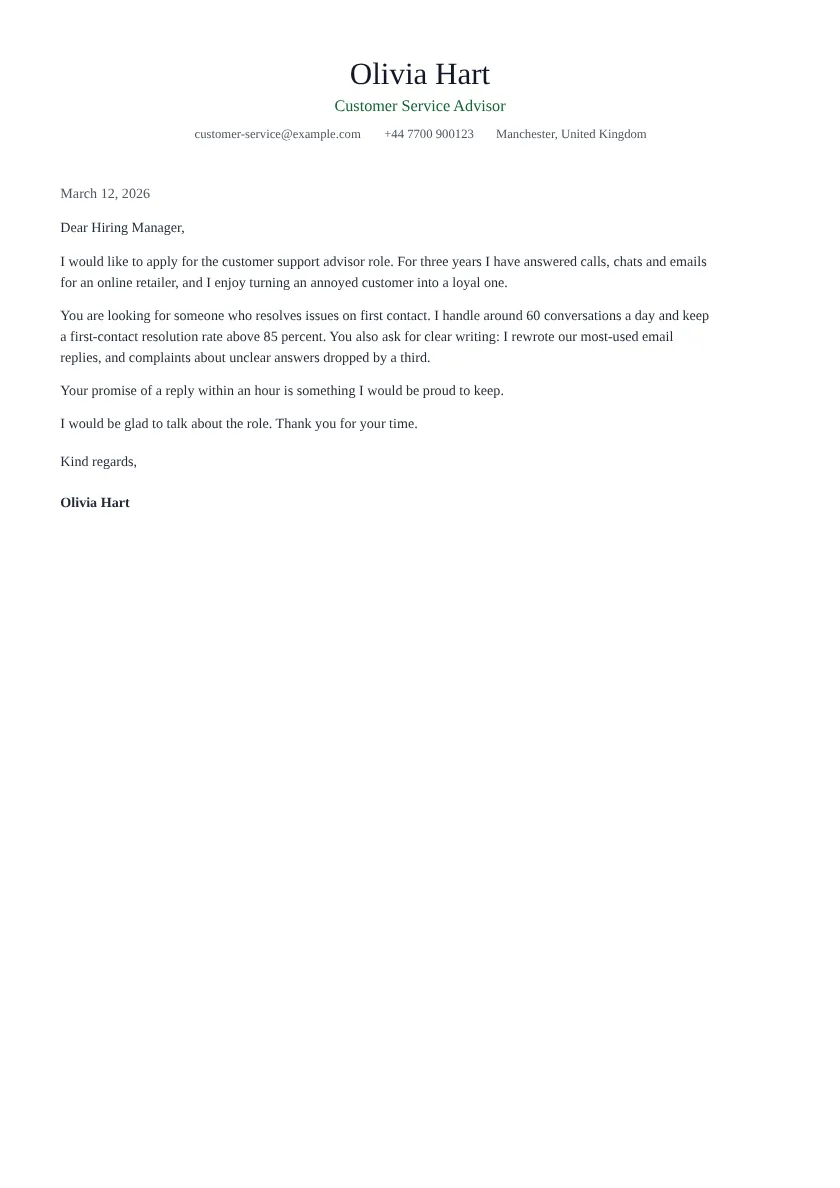
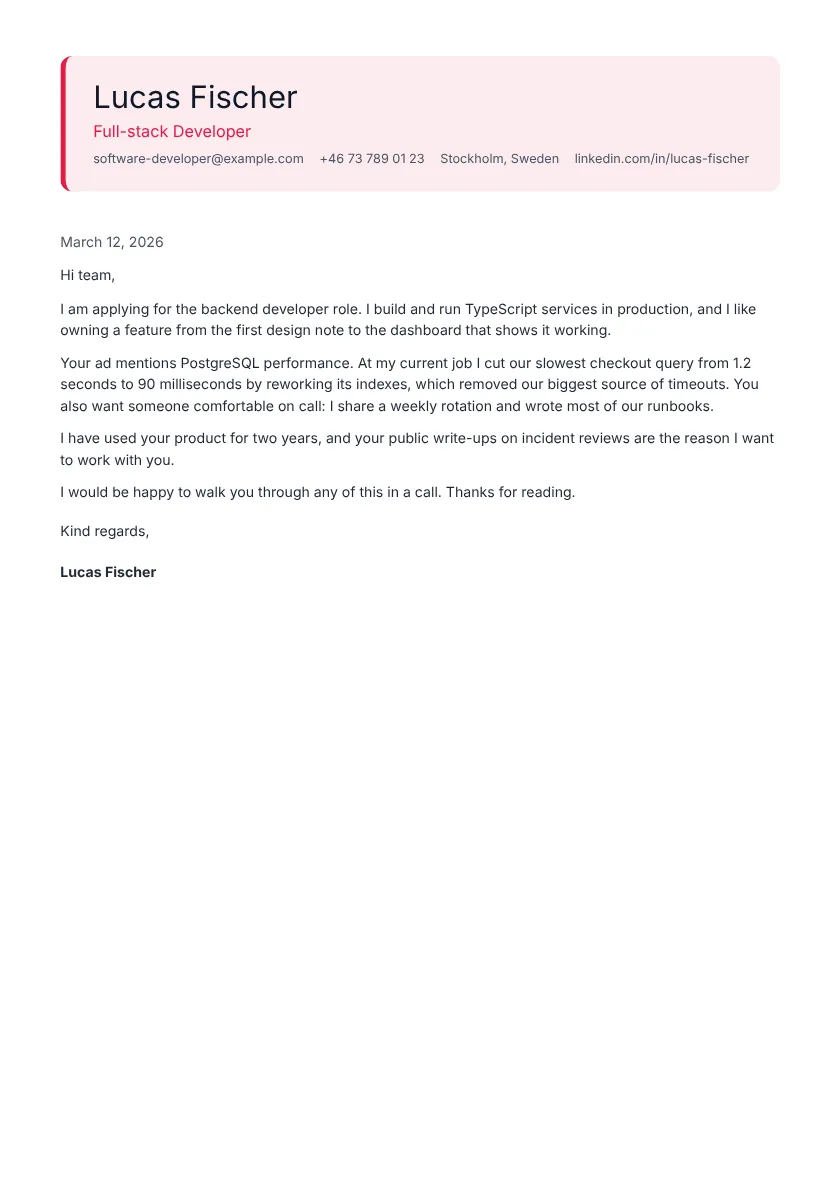
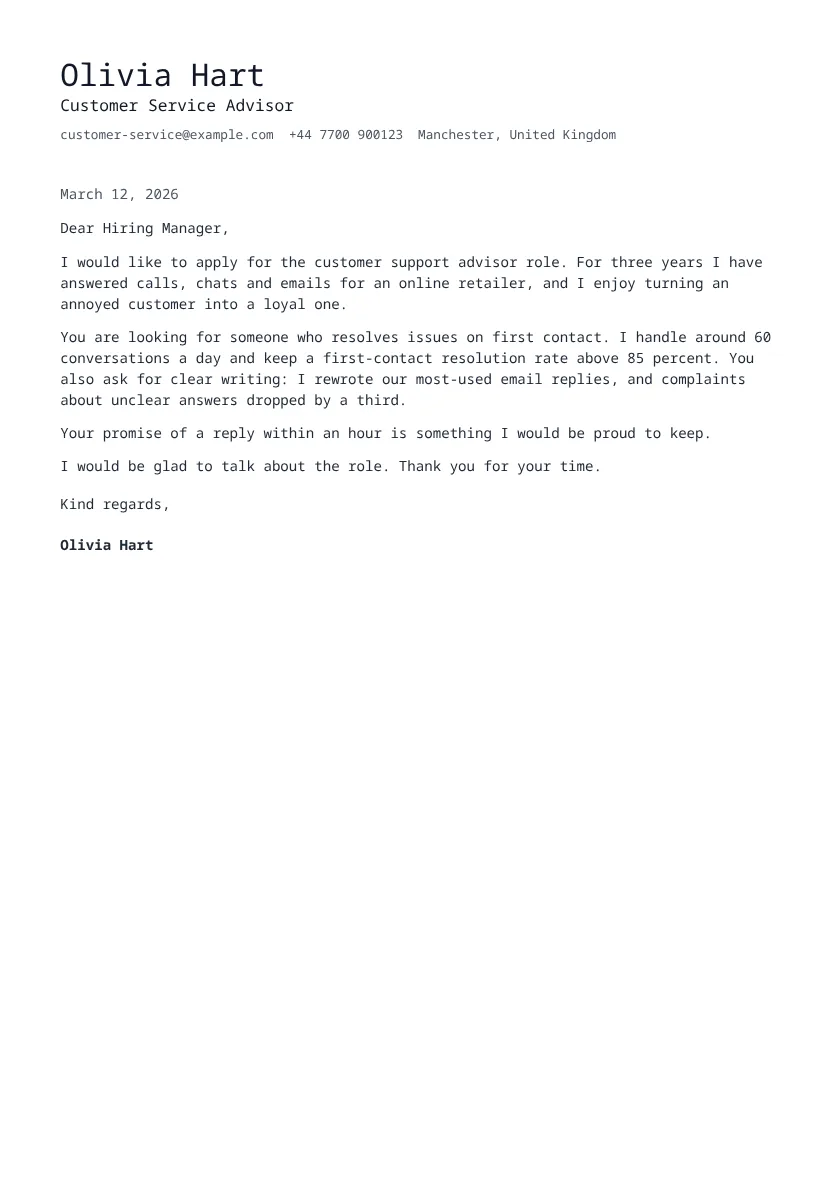
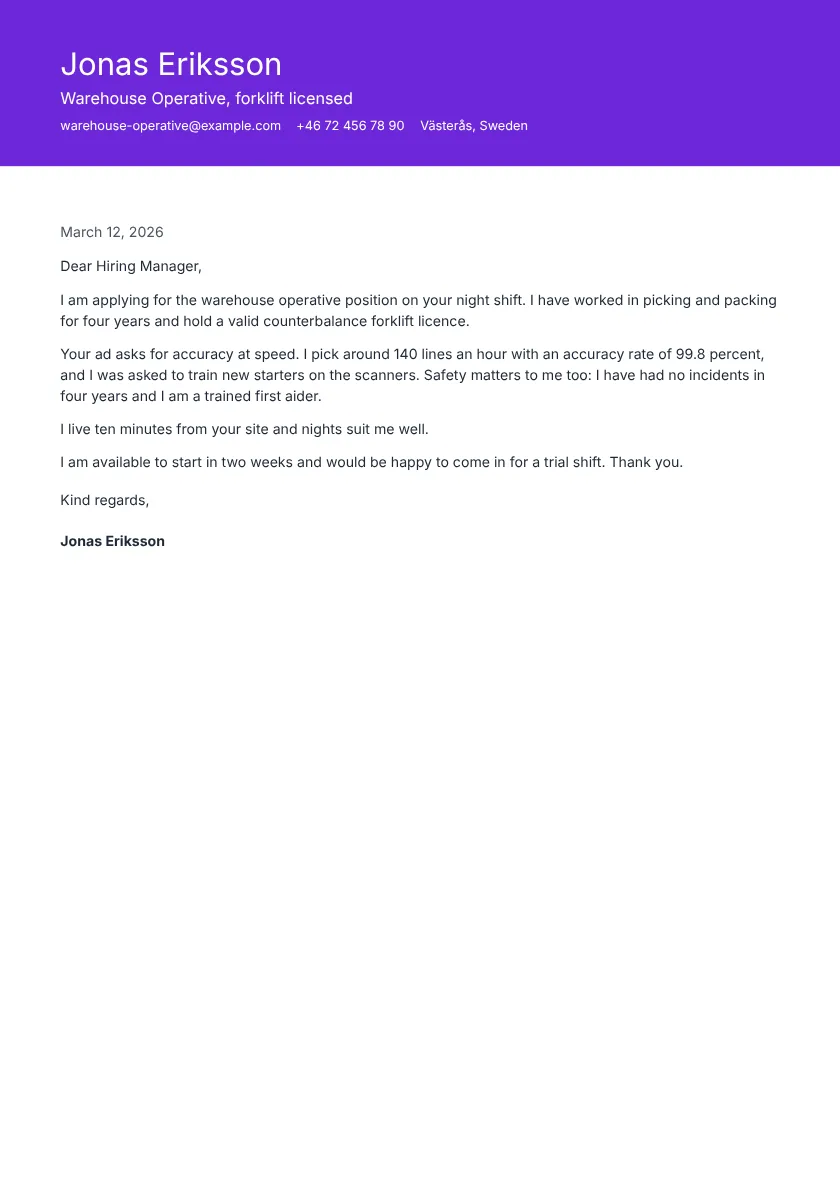
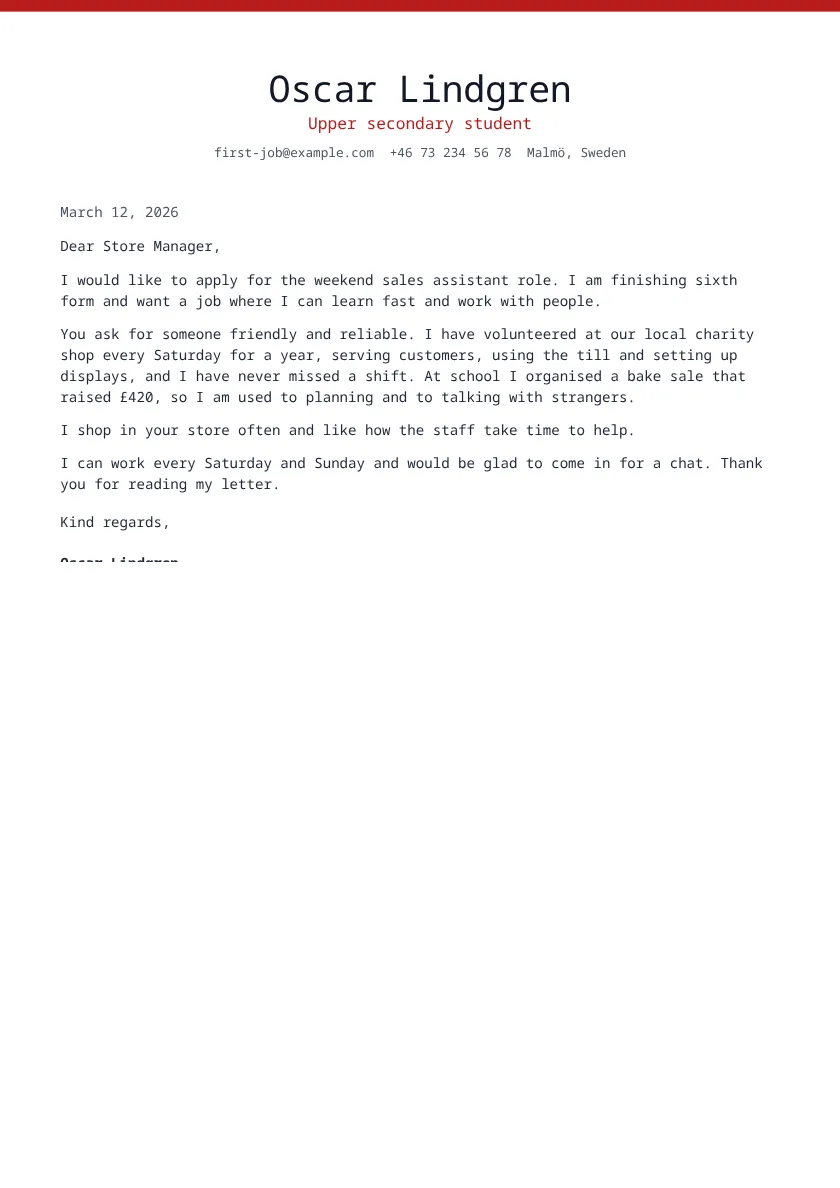
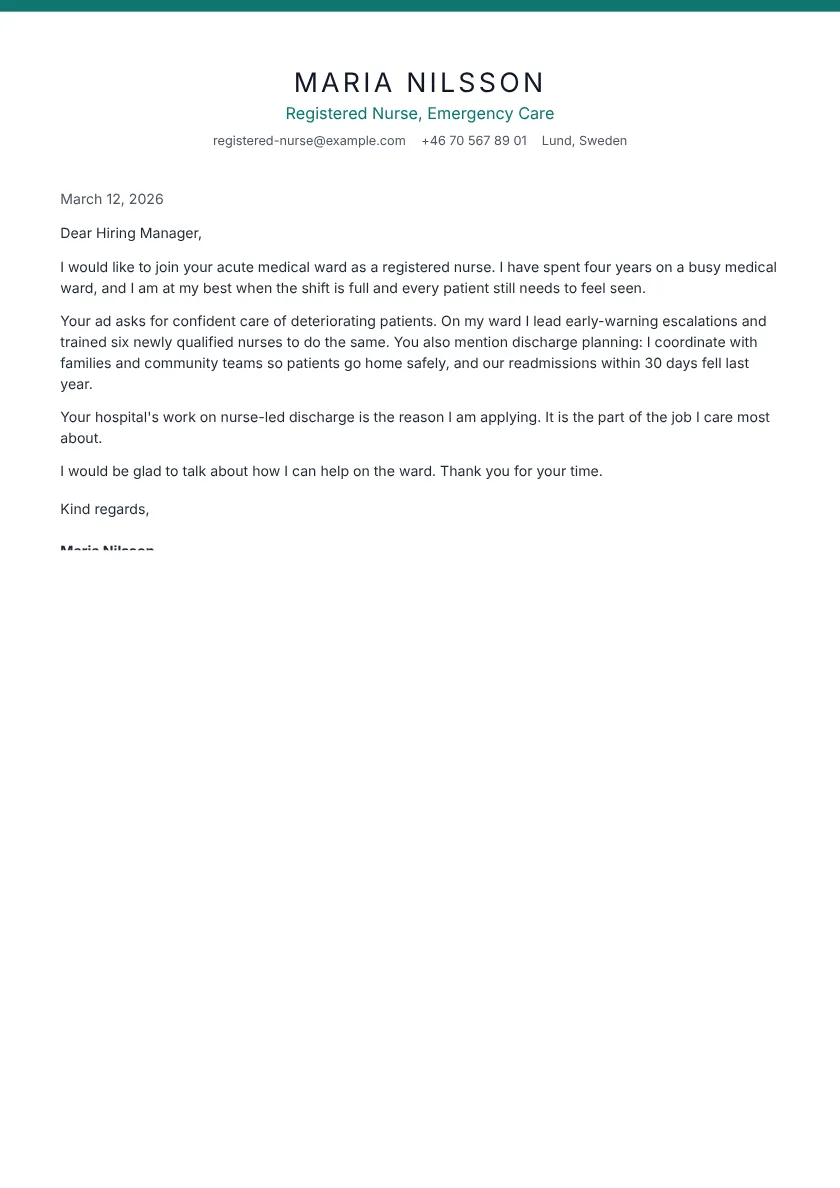
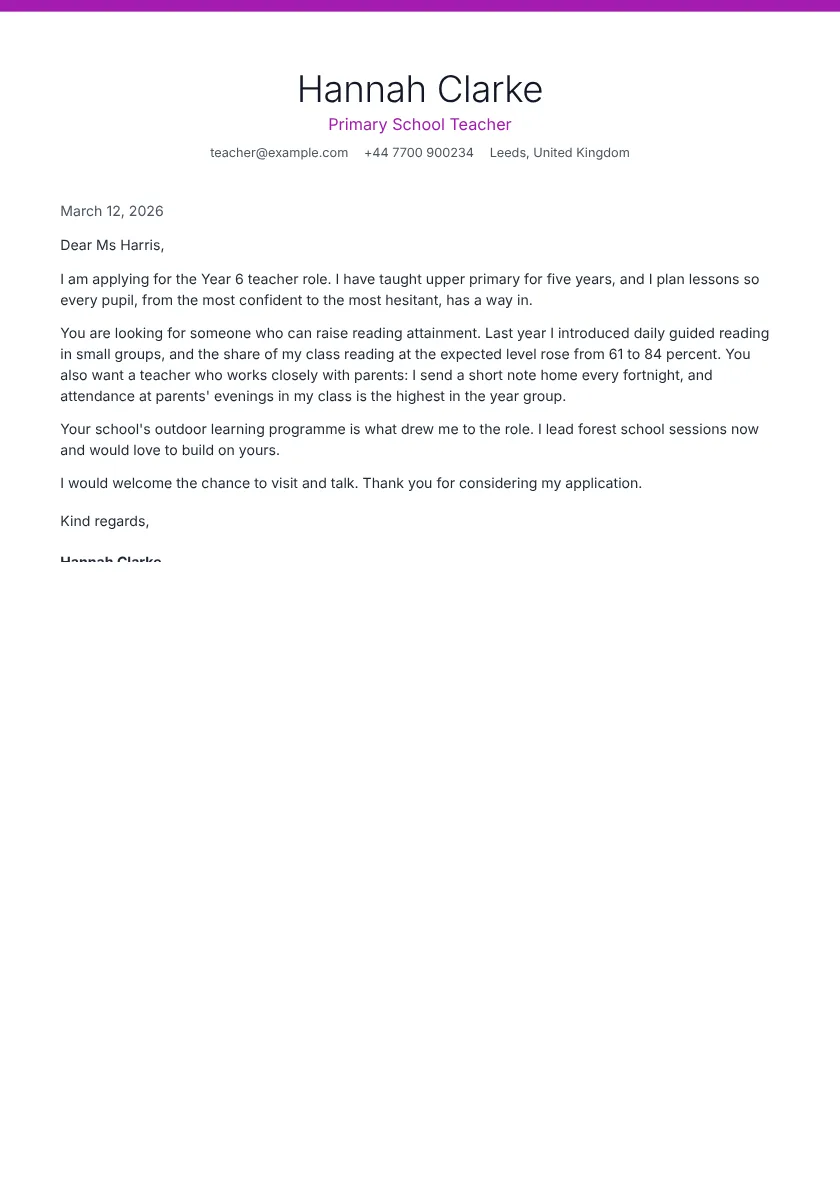
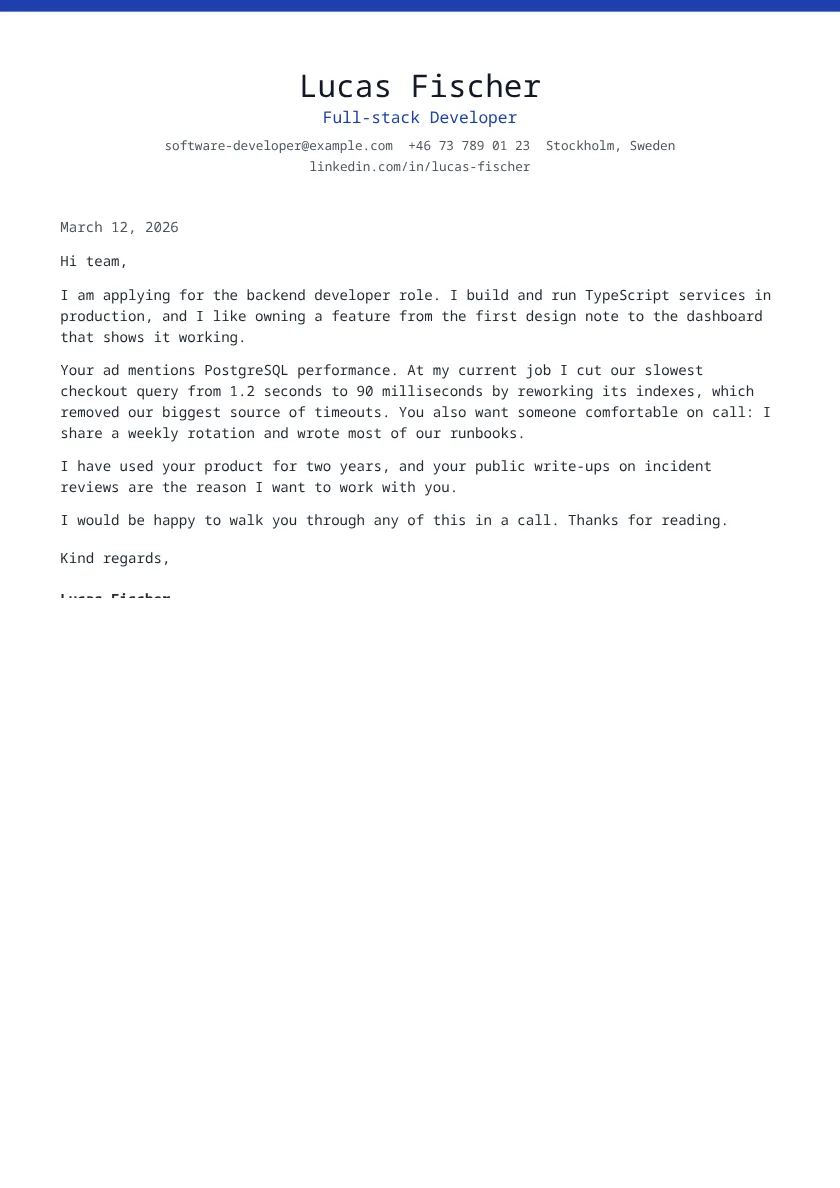
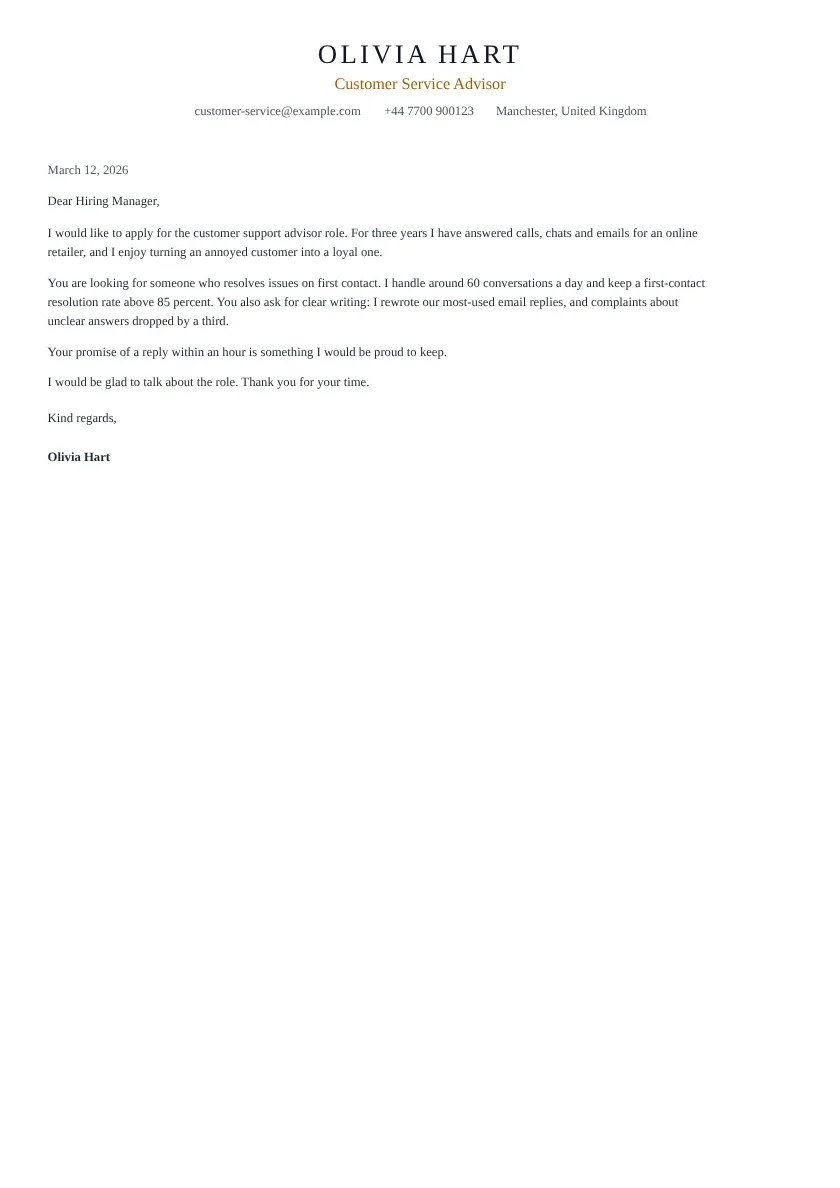
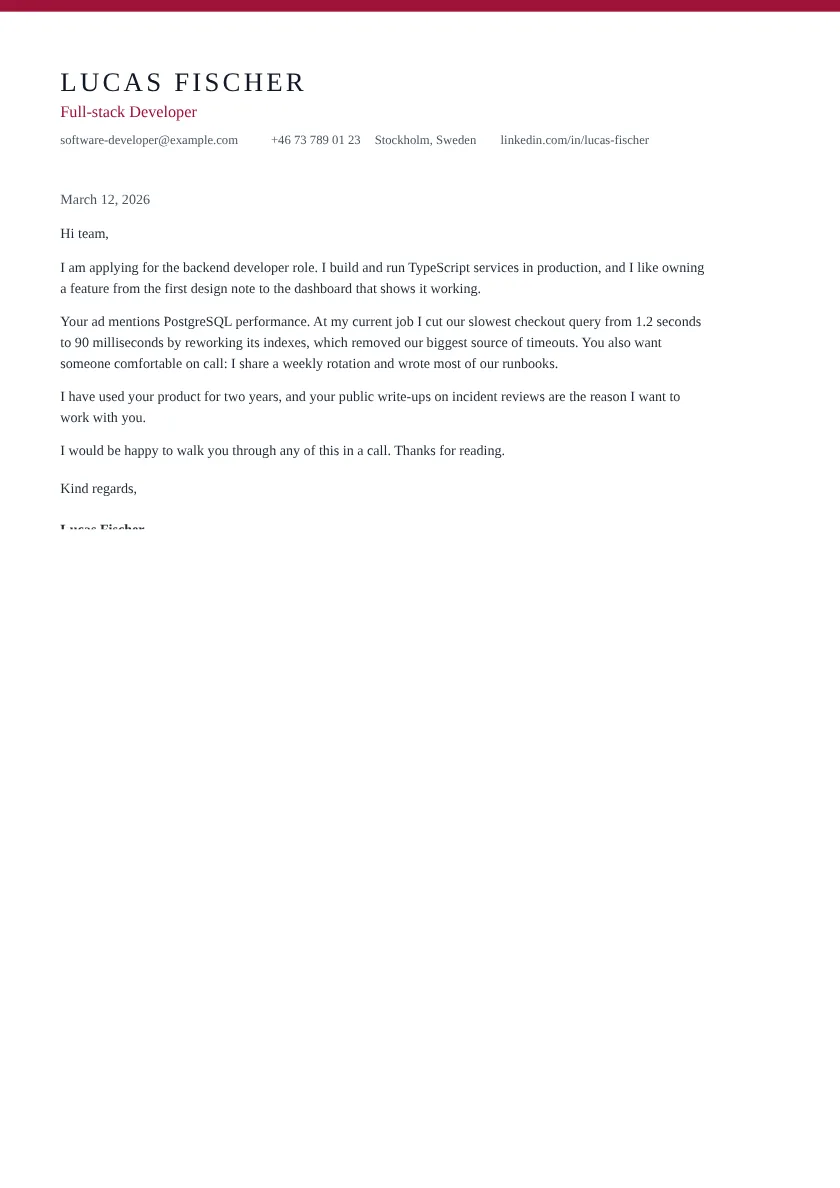
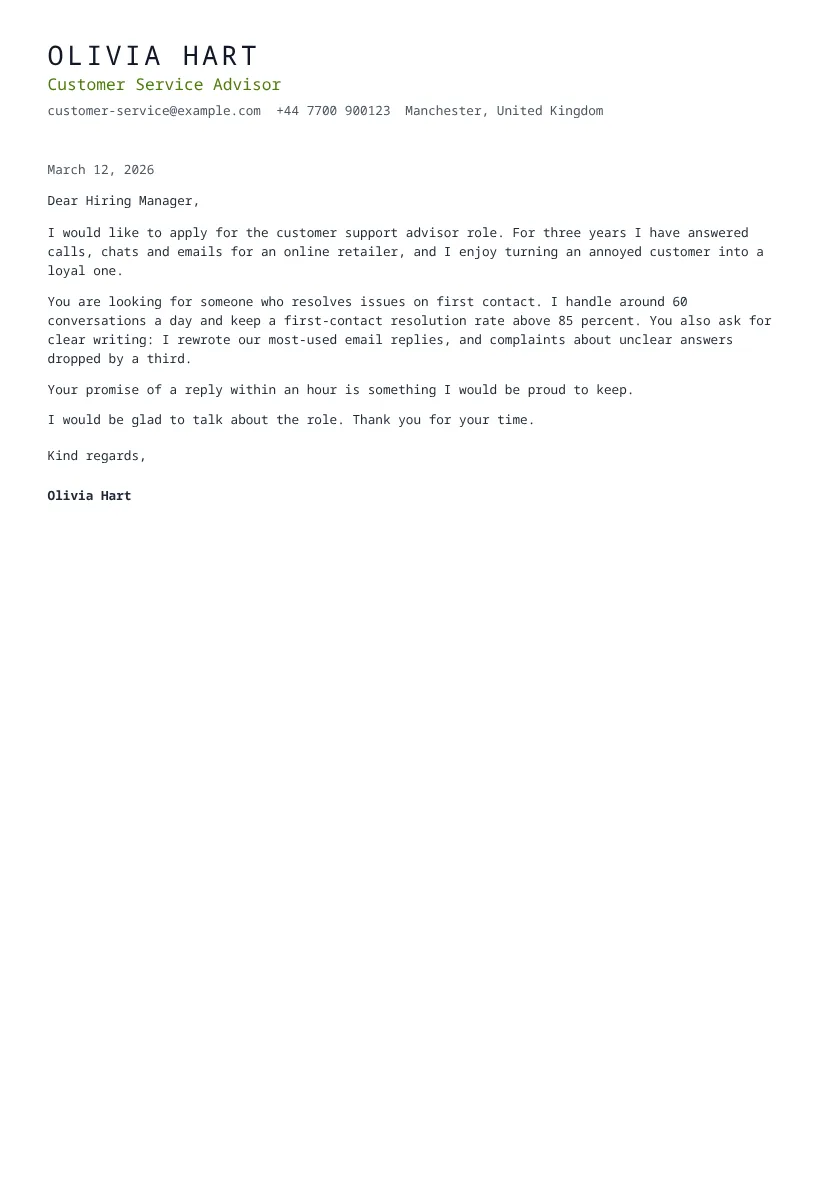
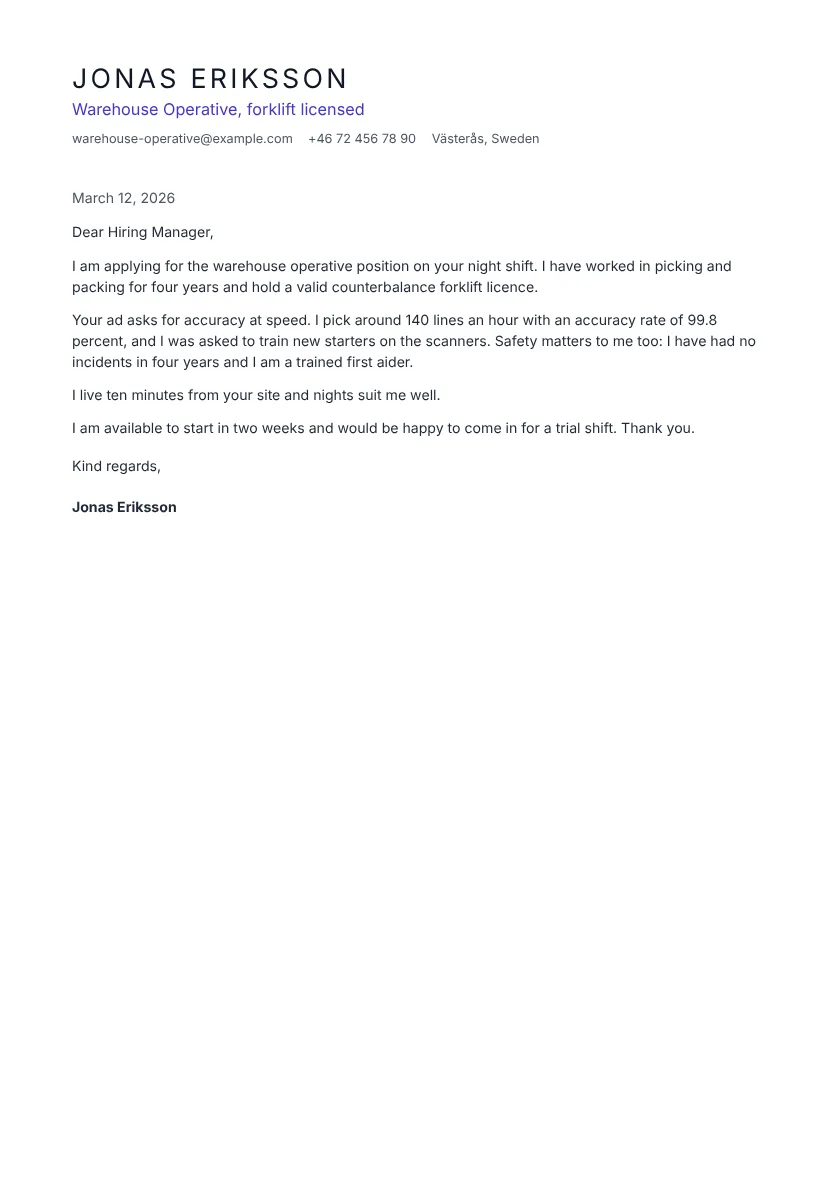
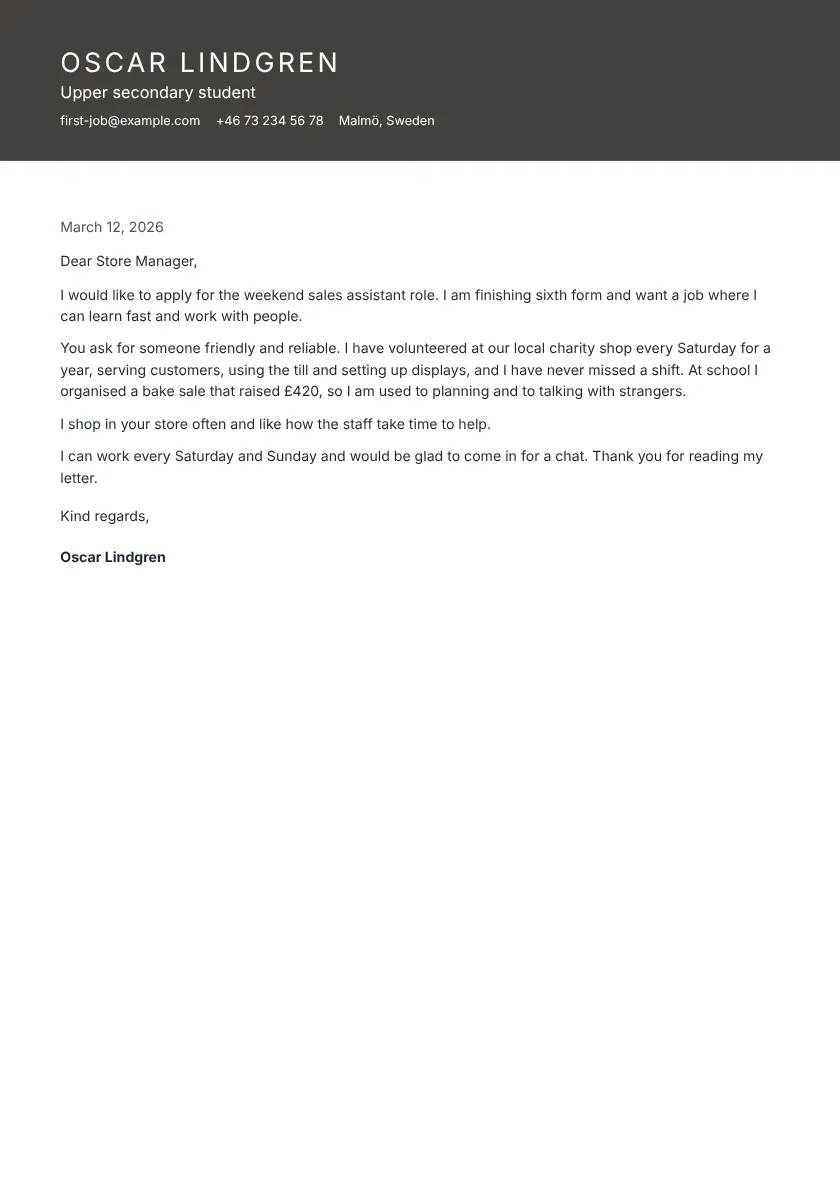
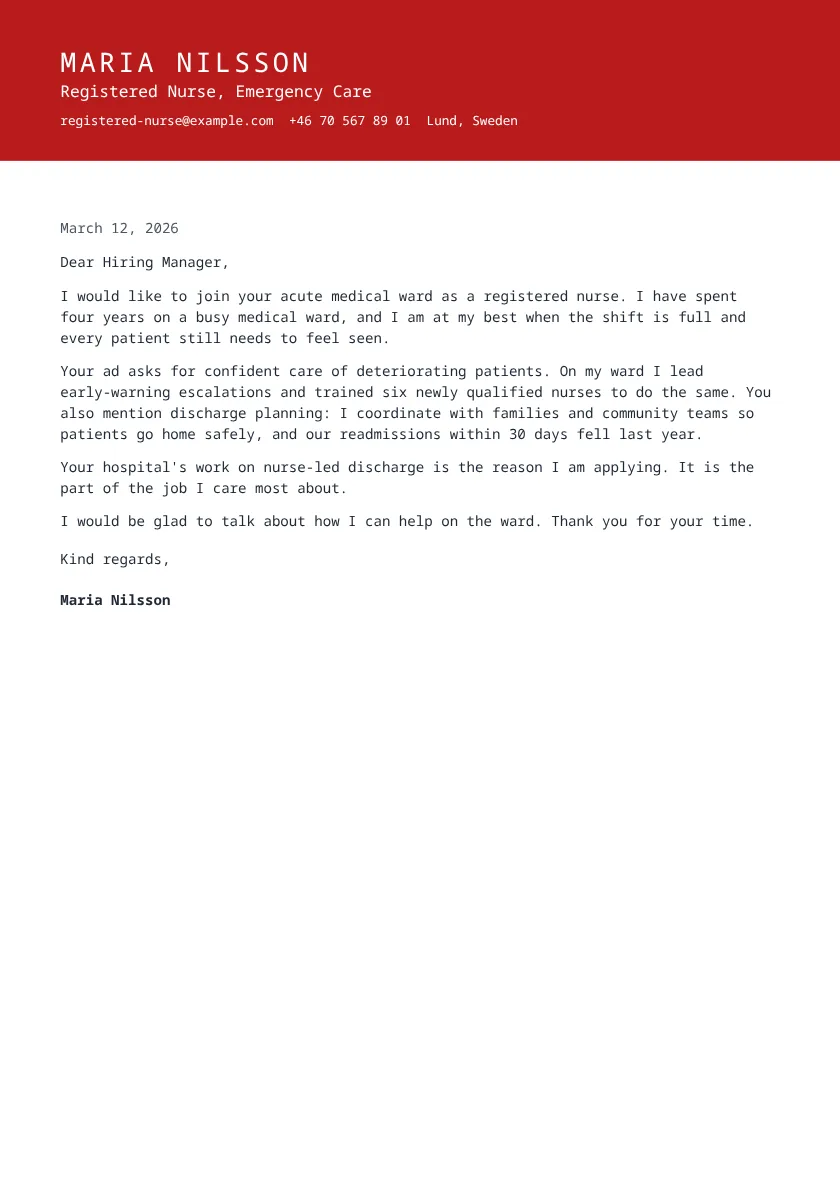
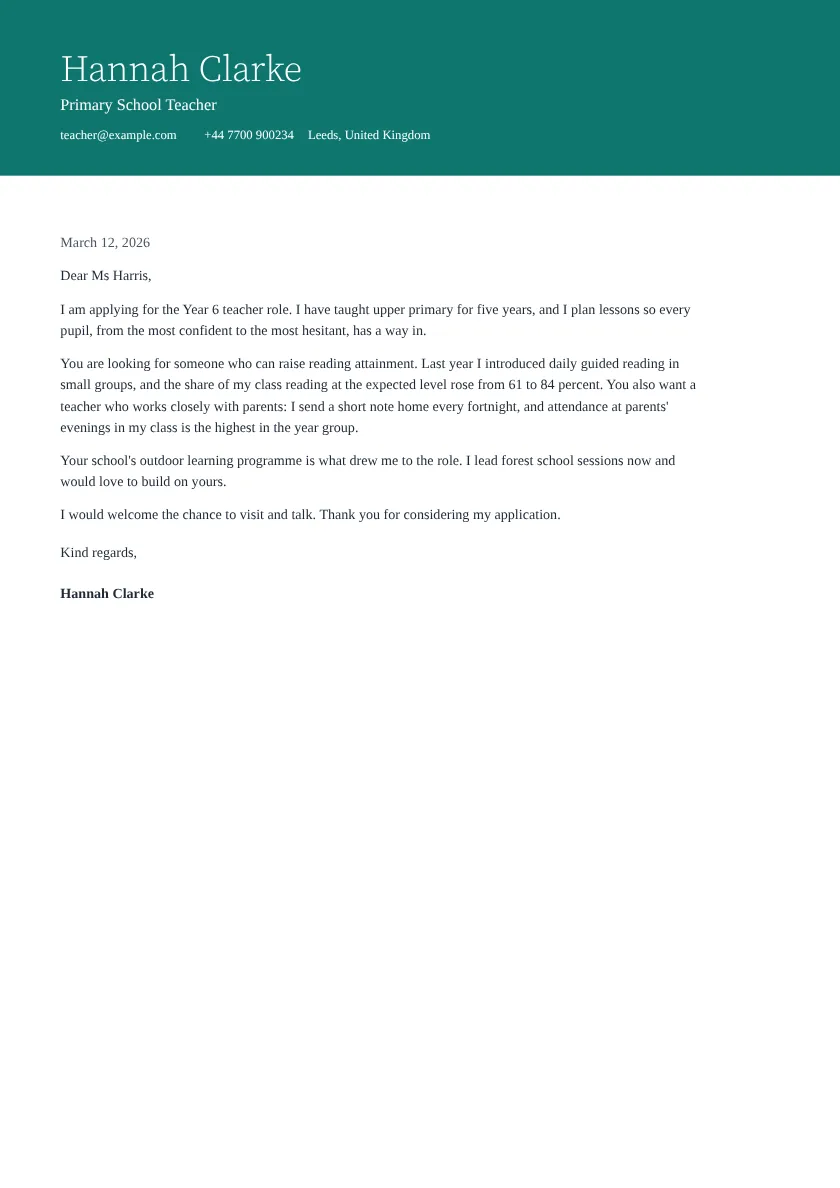
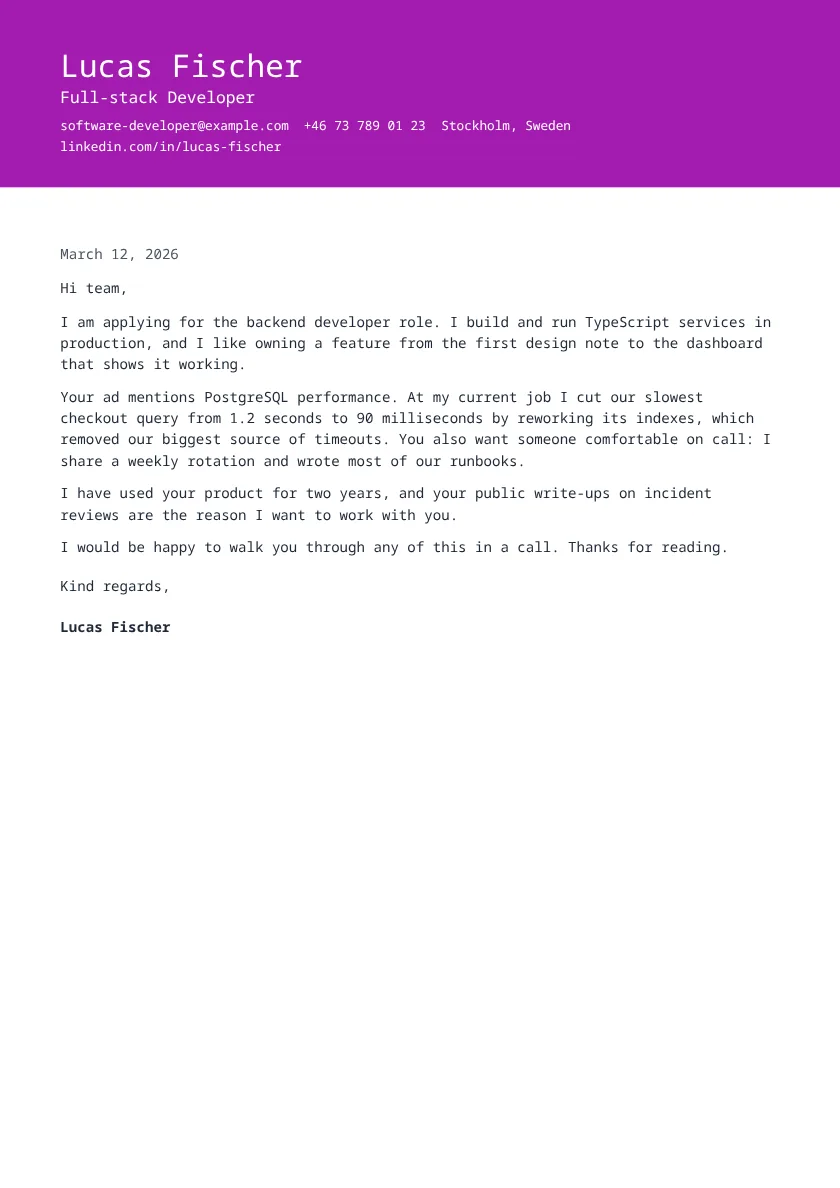
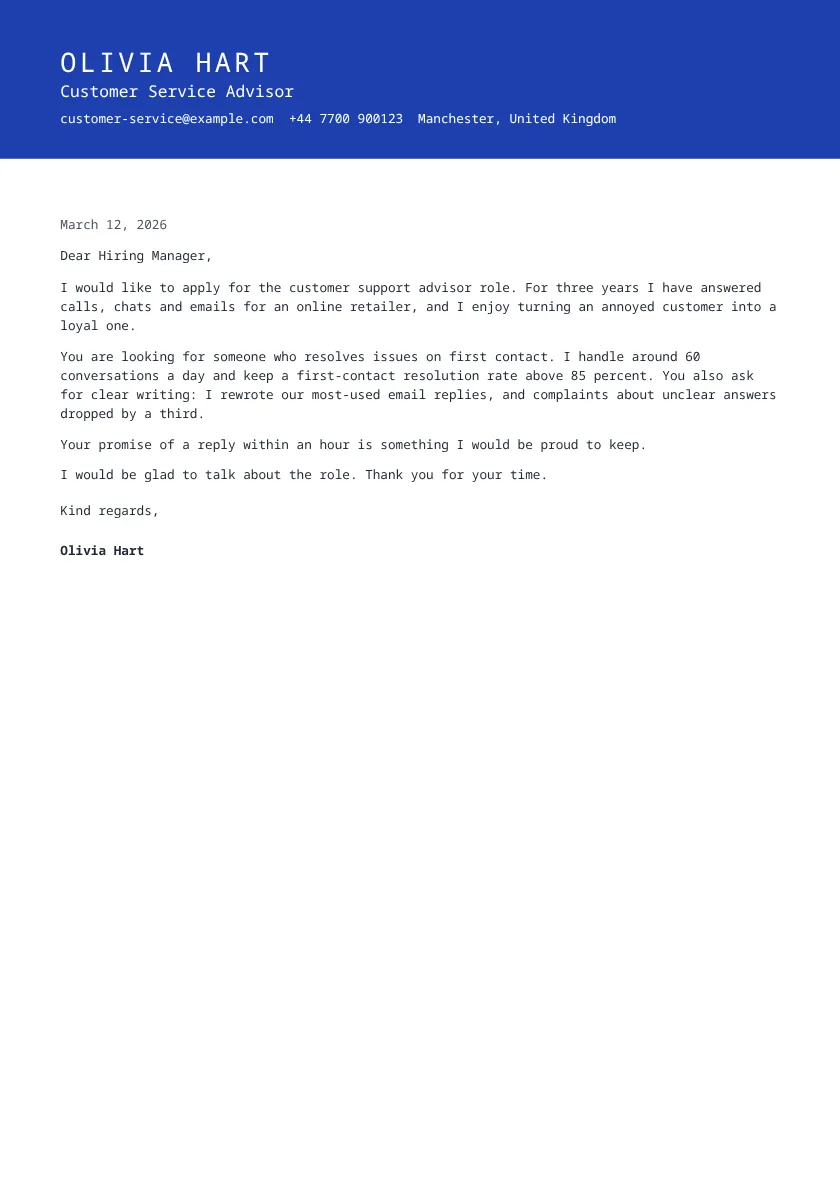
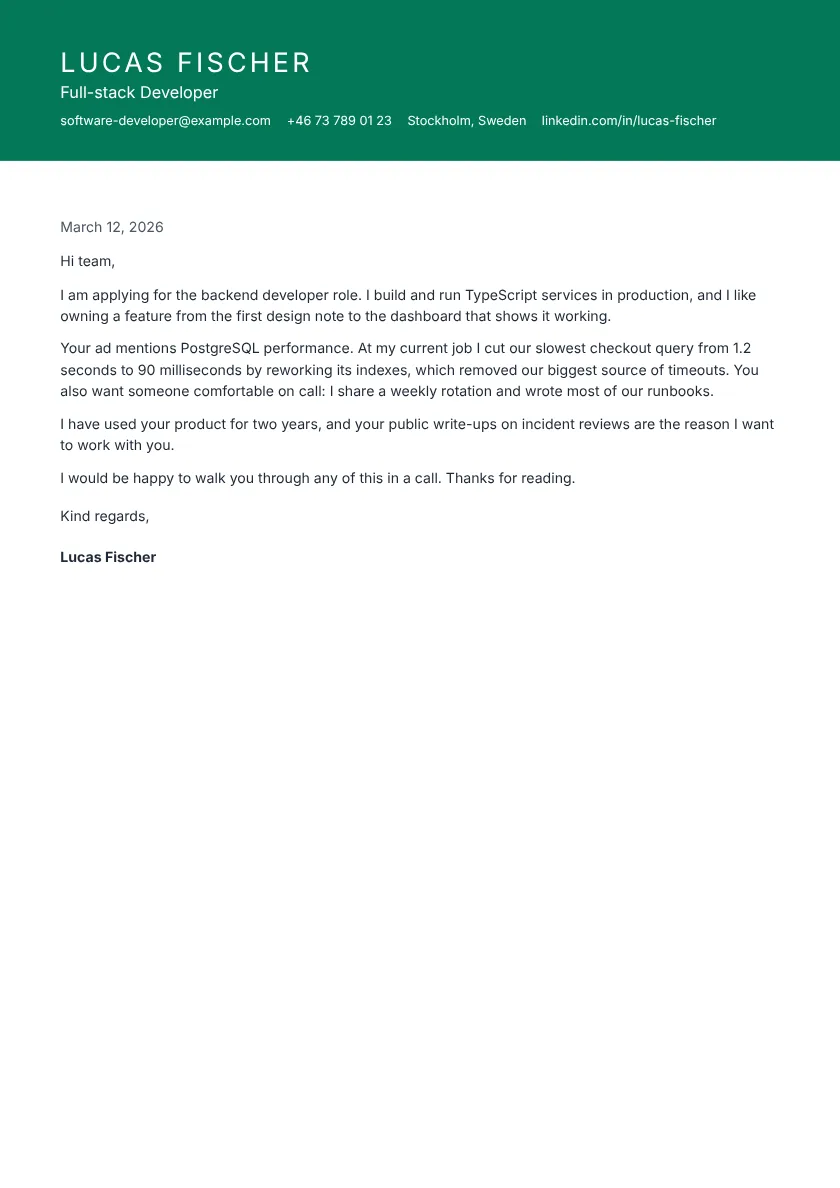
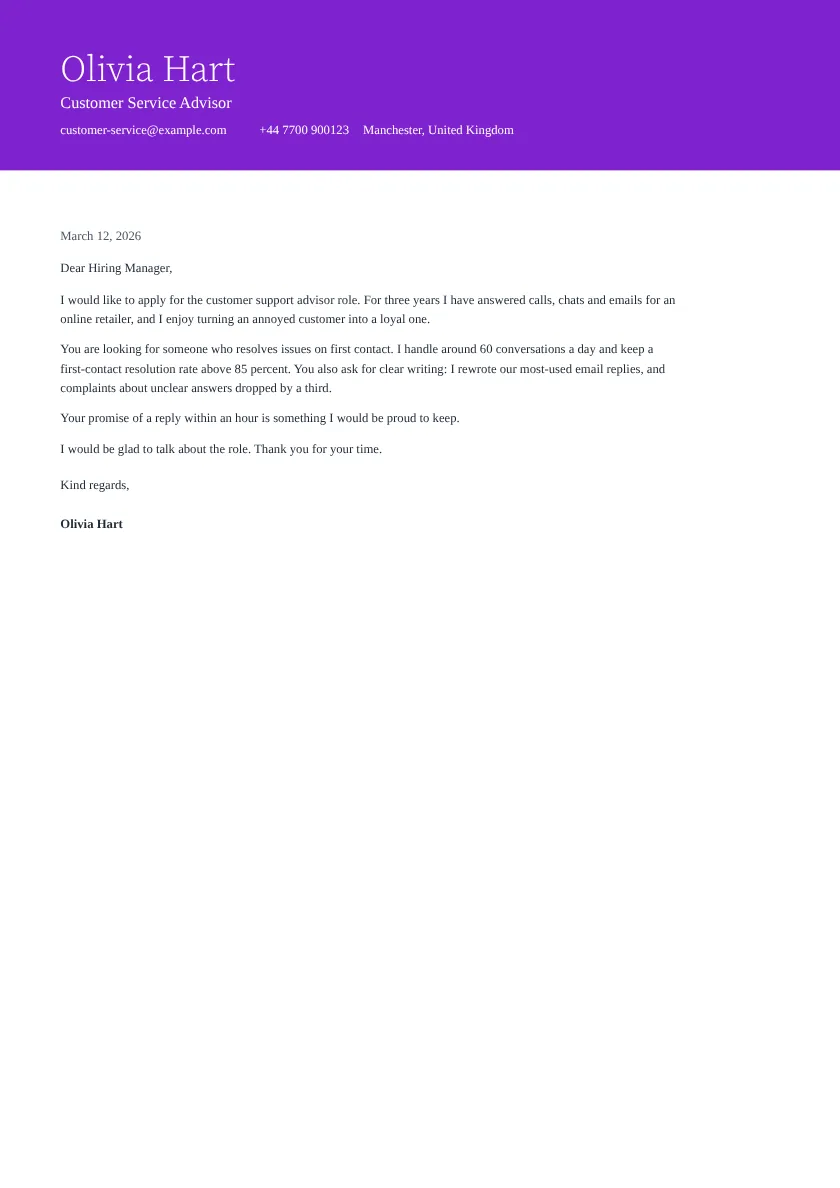
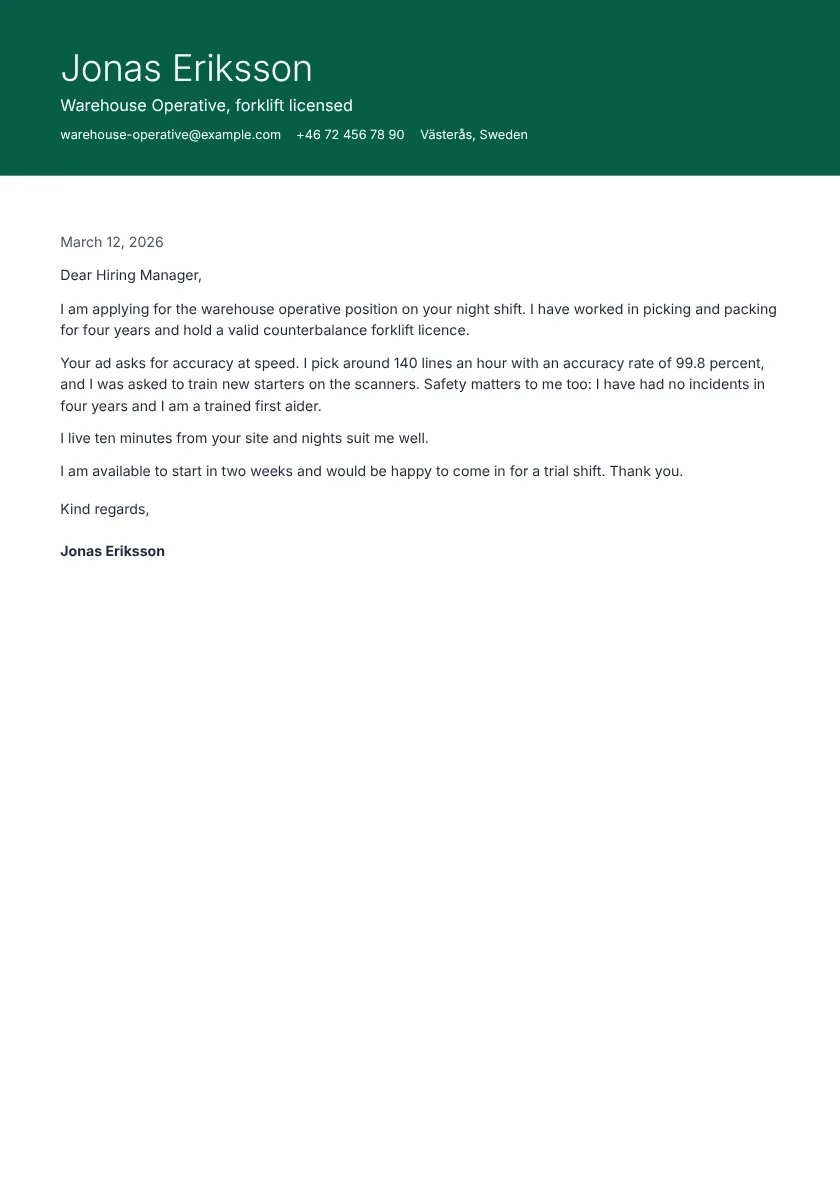
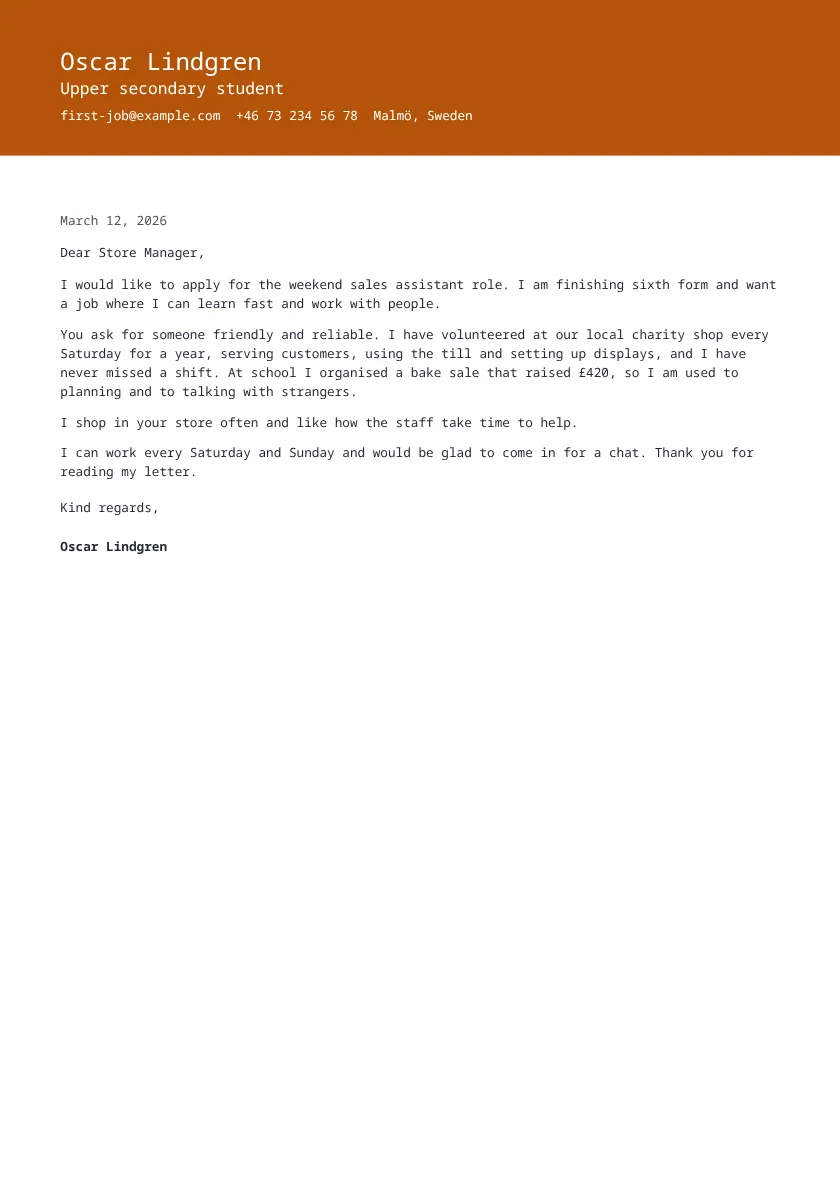
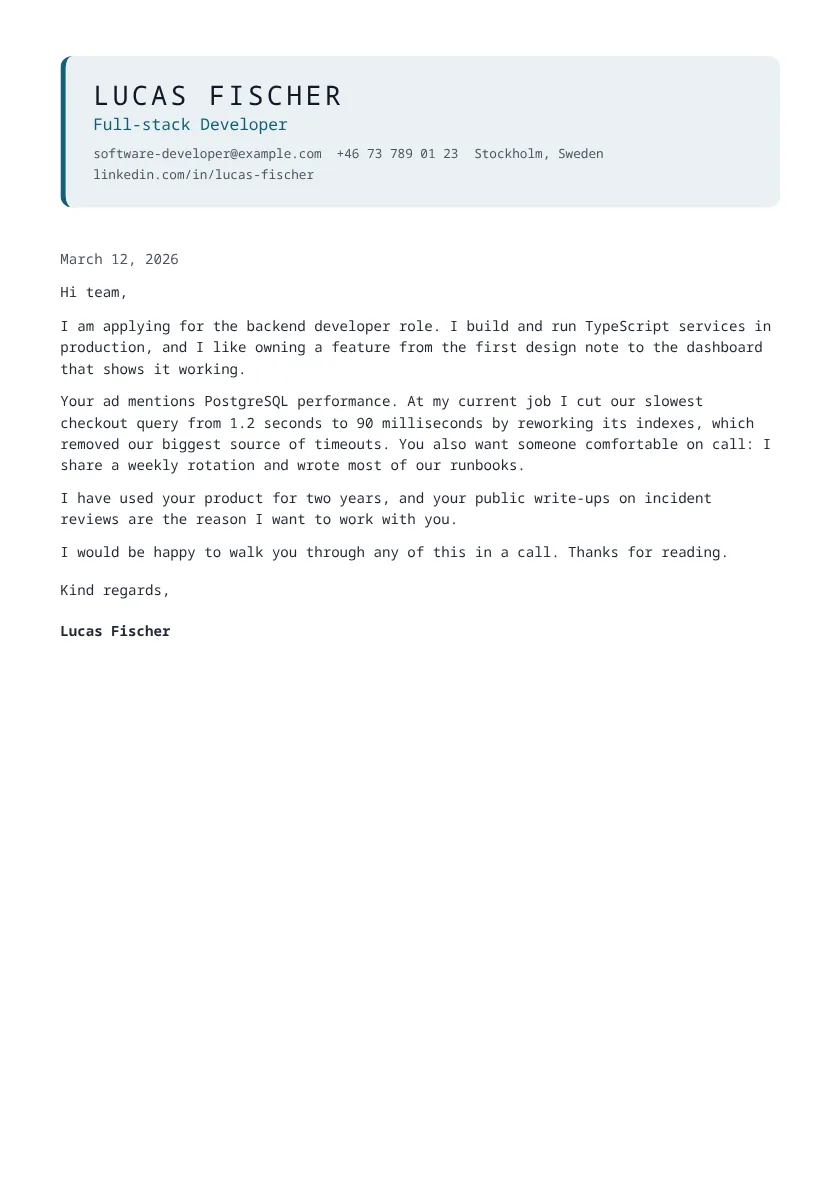
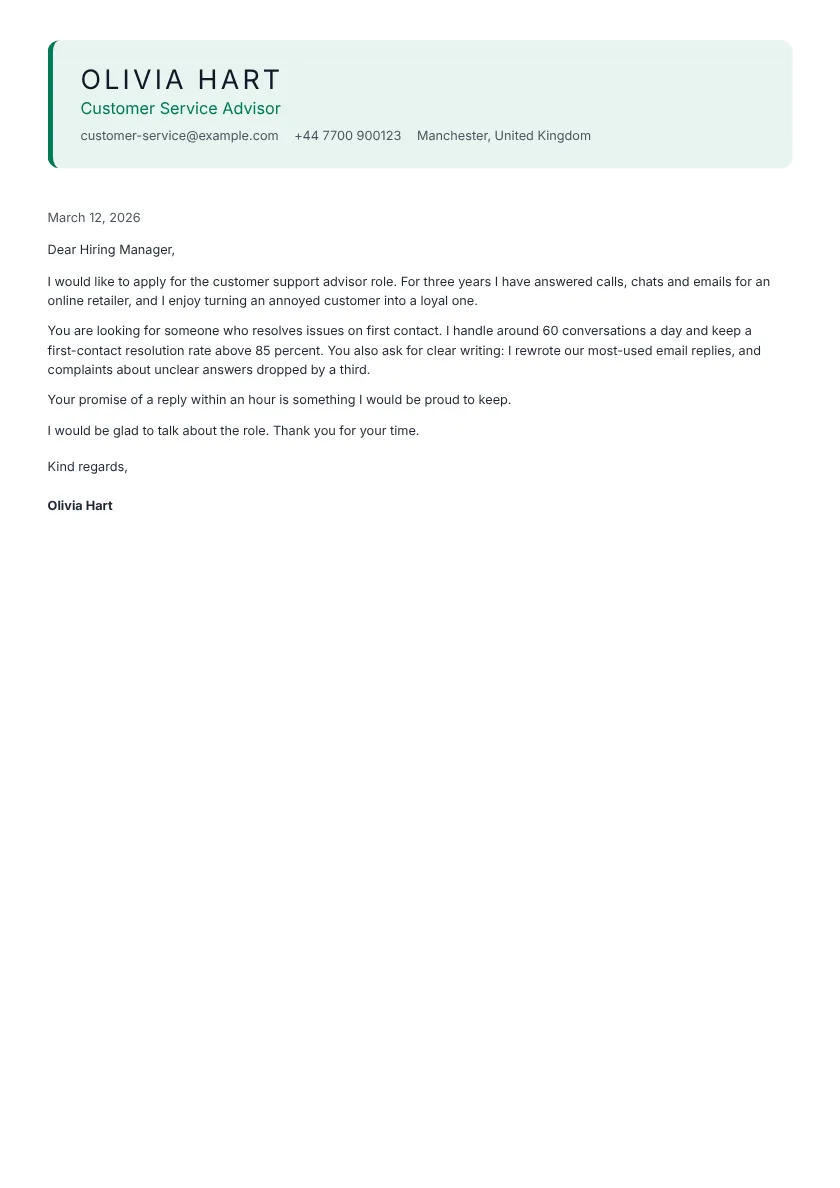
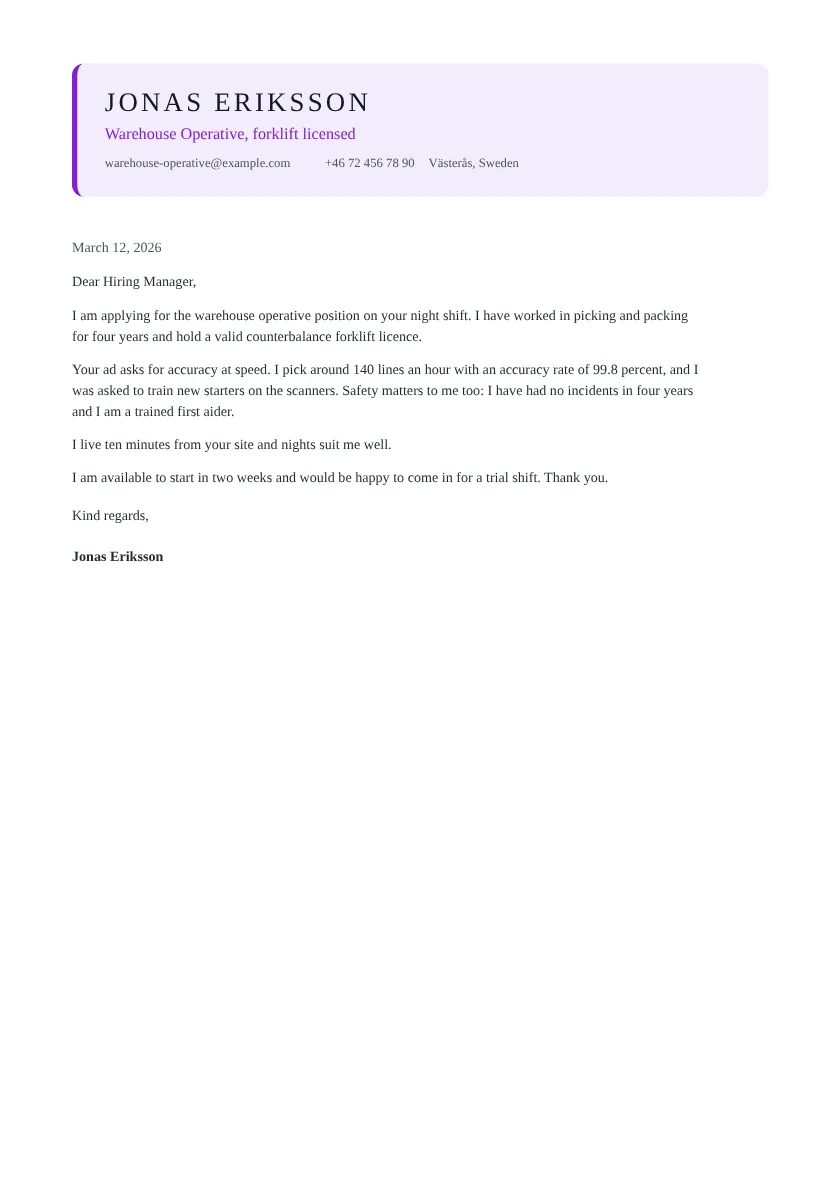
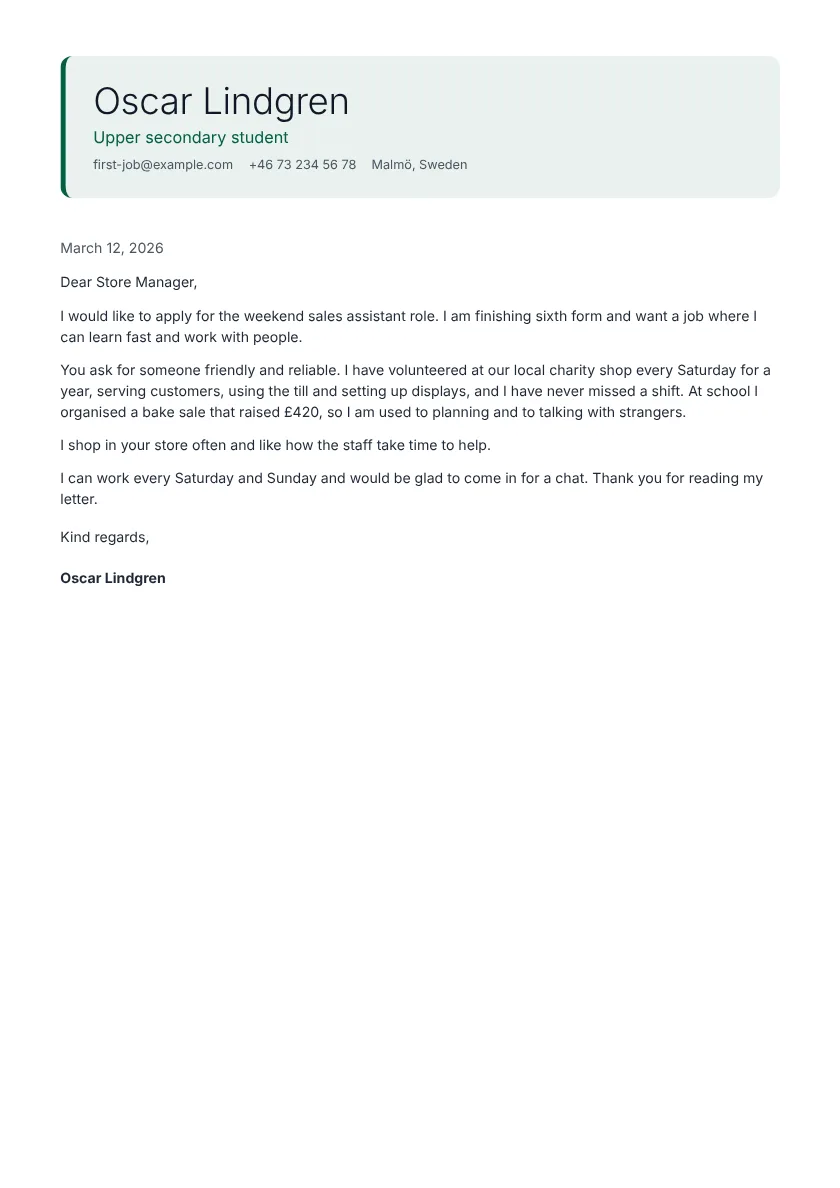
Pick a design that matches
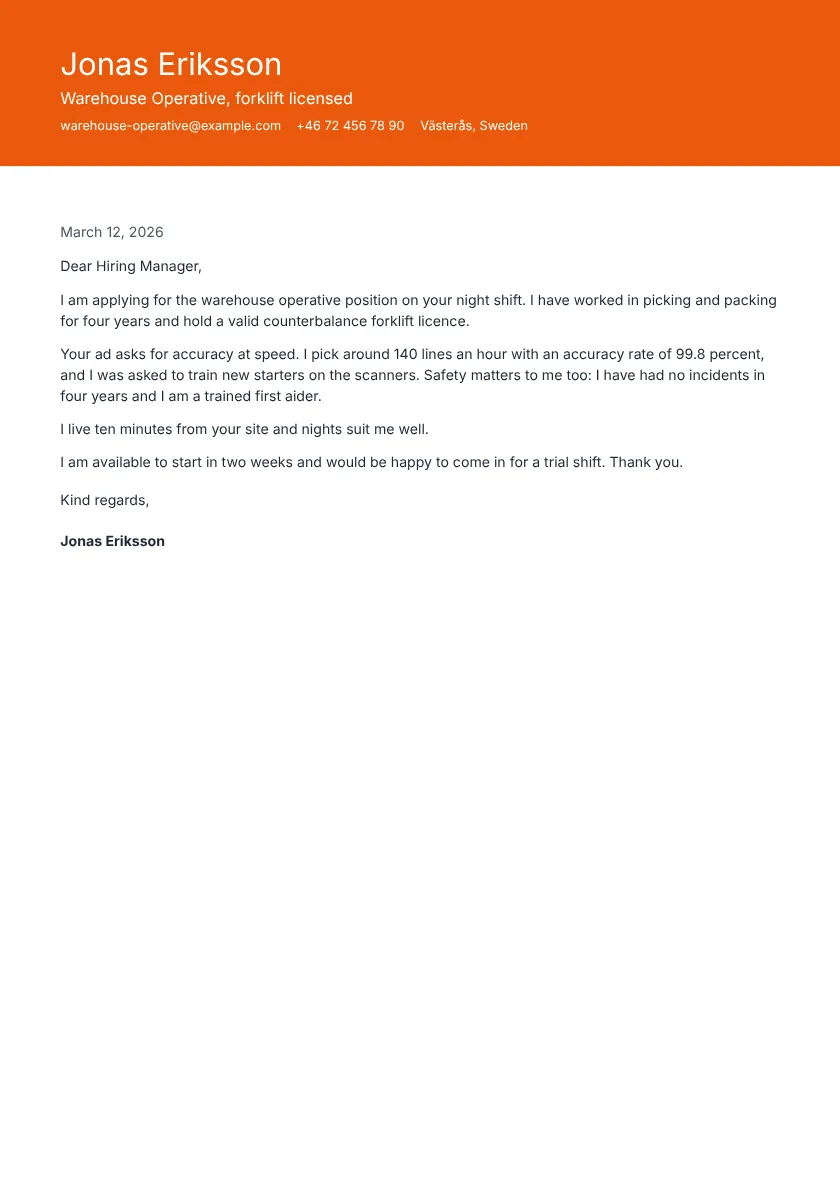
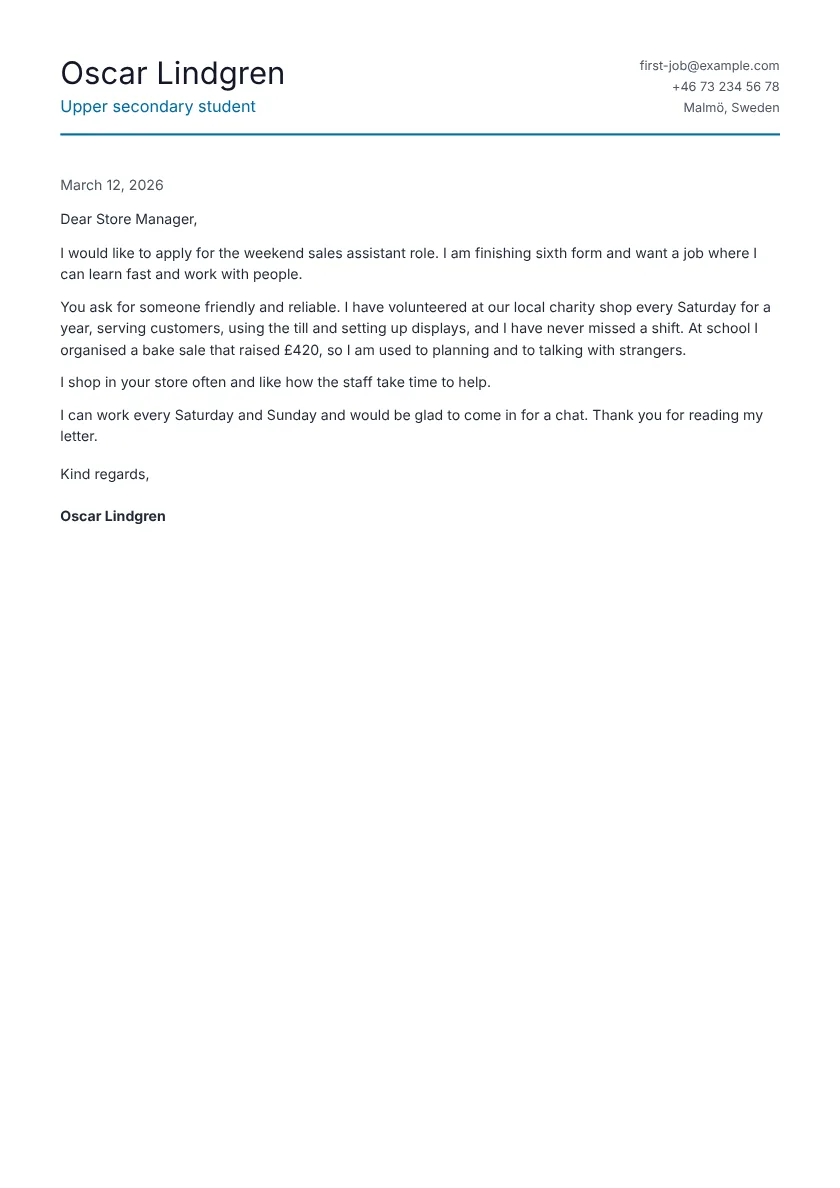
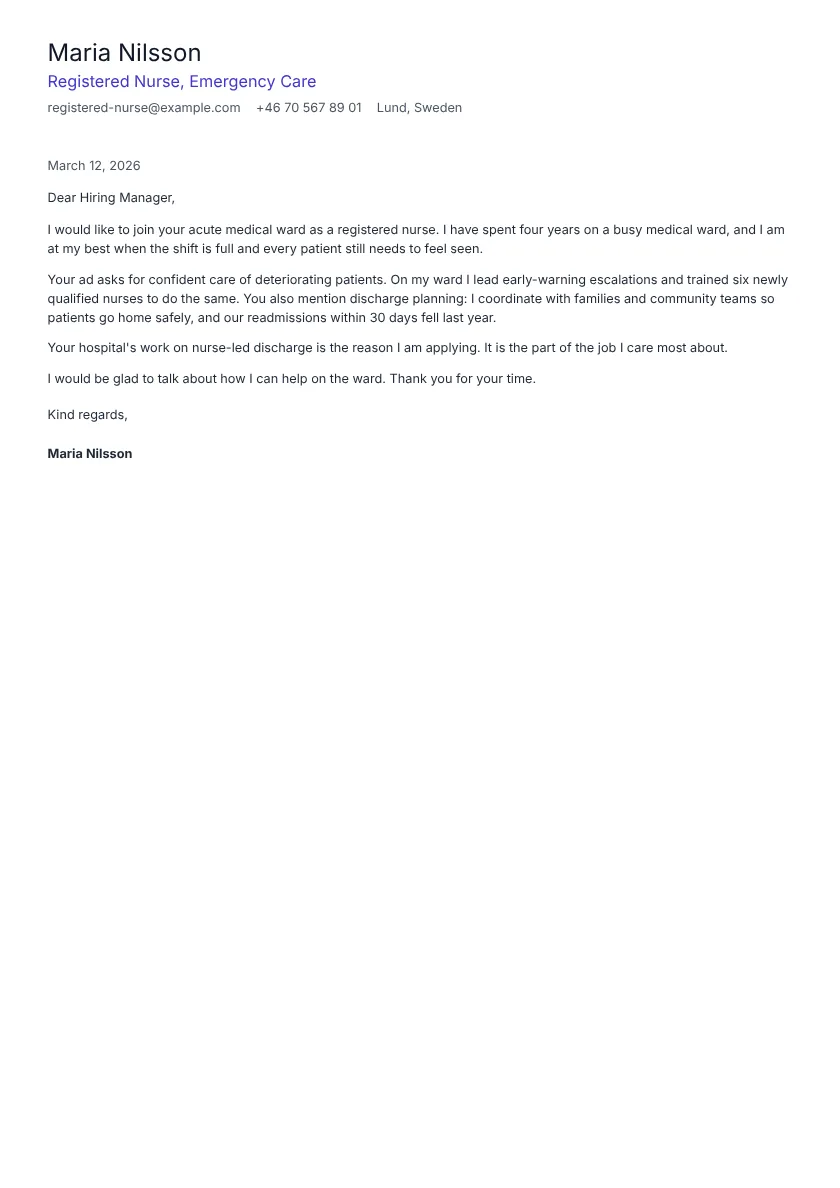
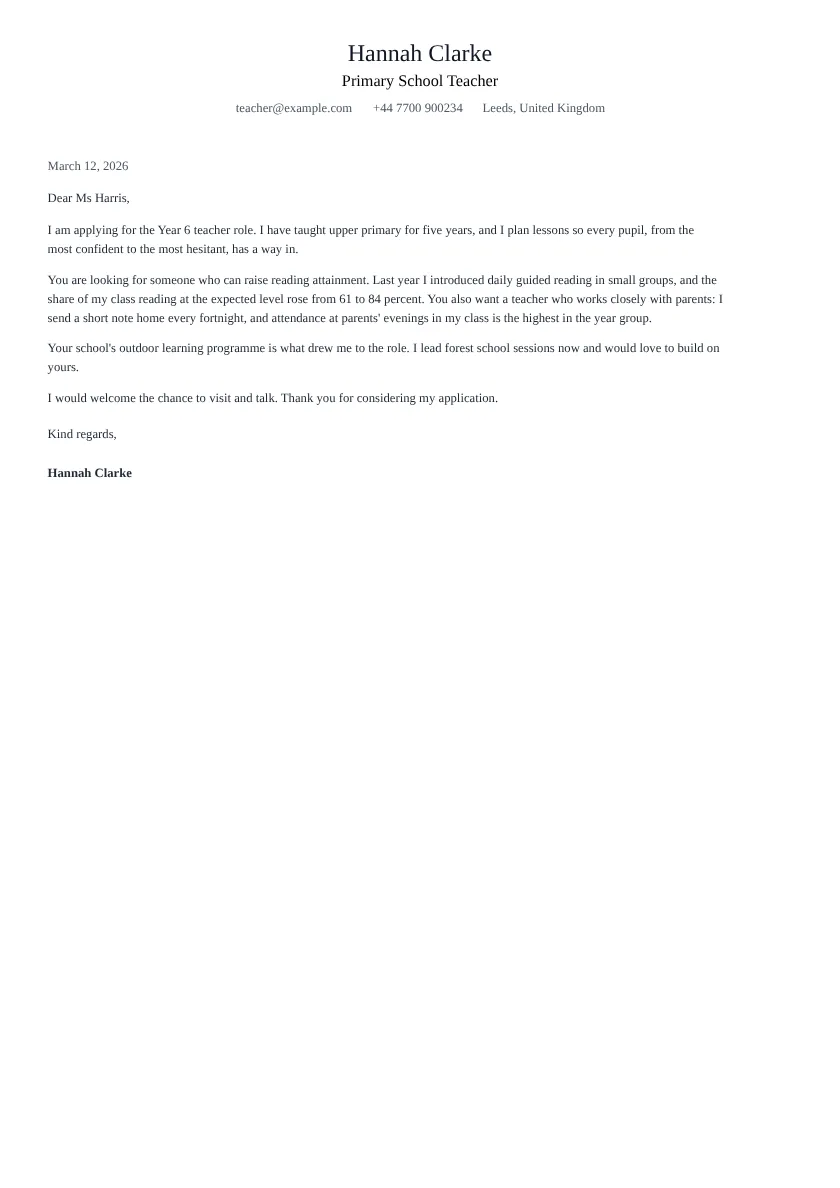
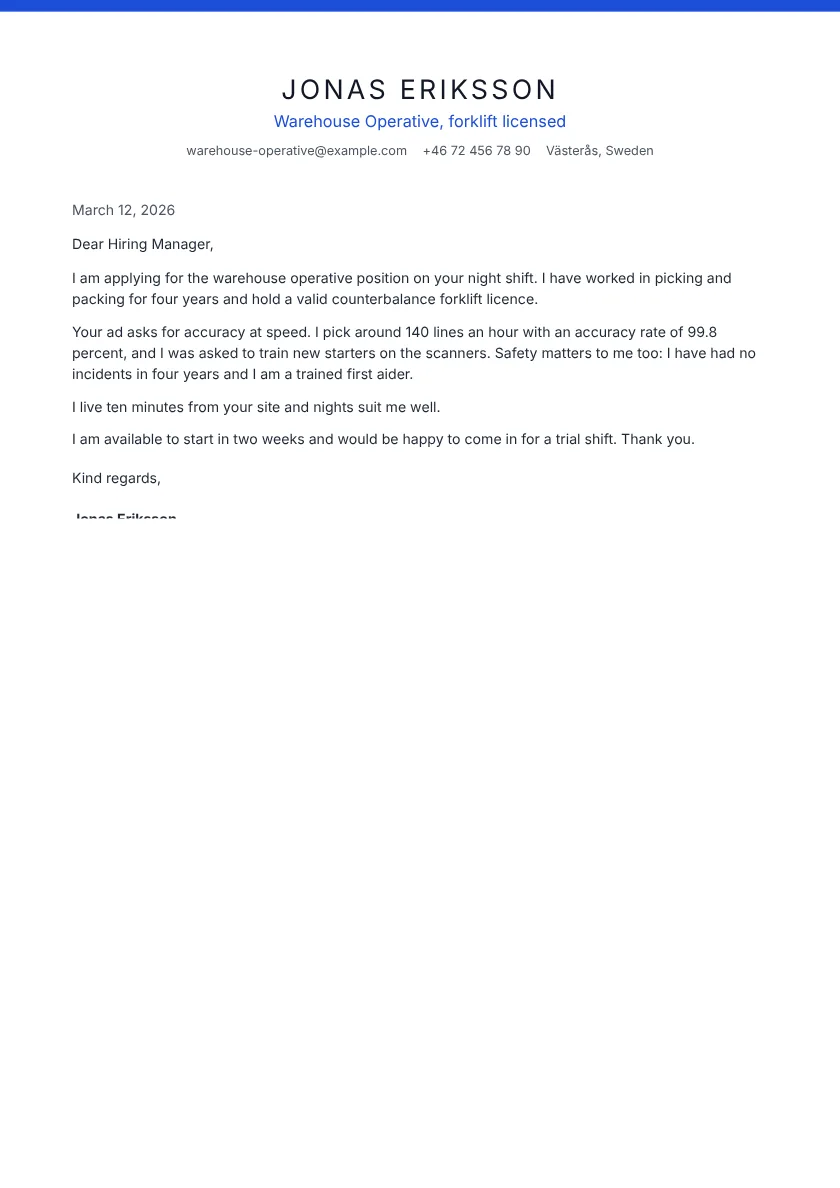
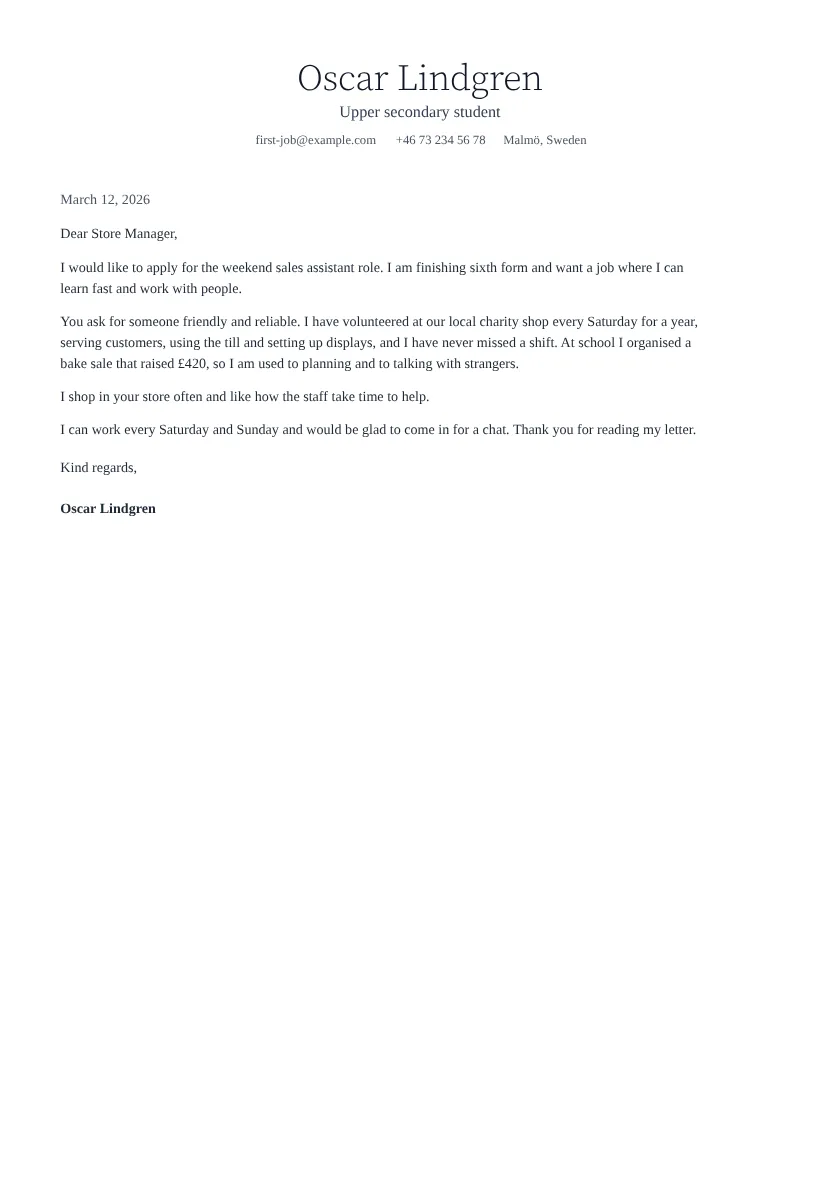
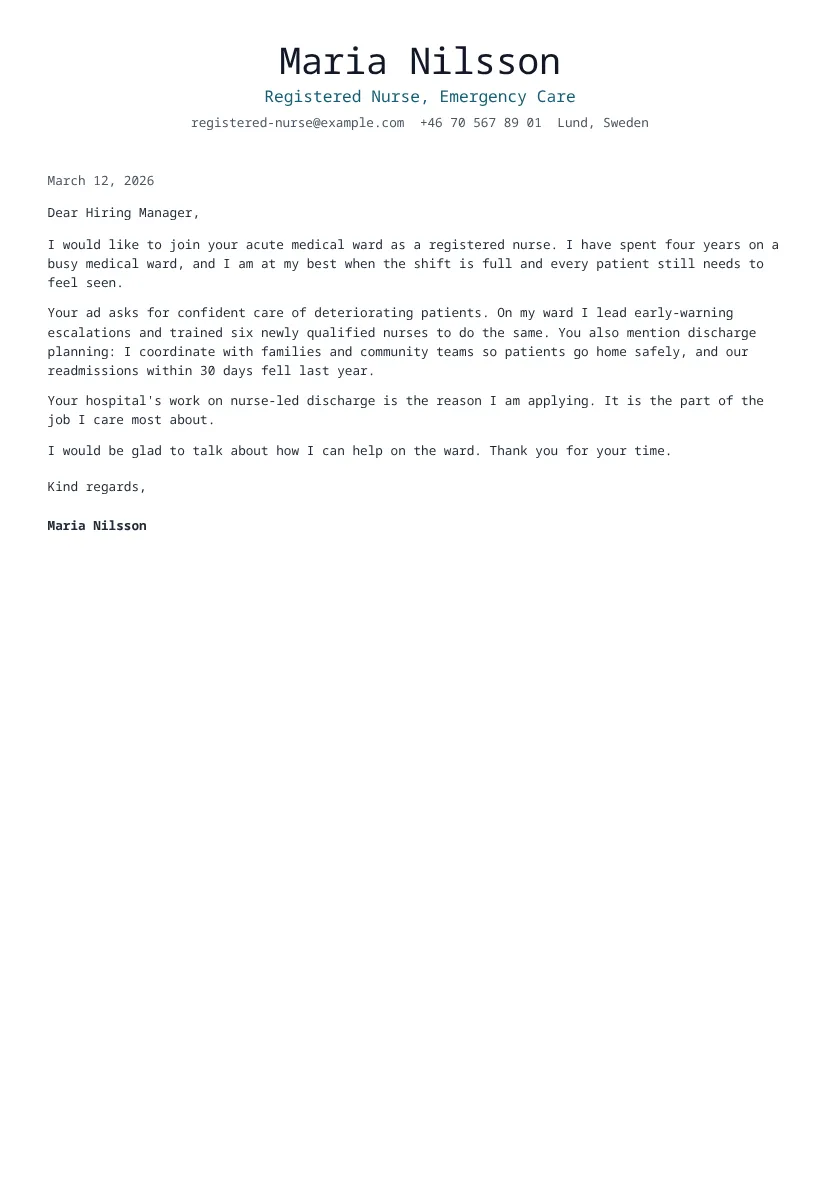
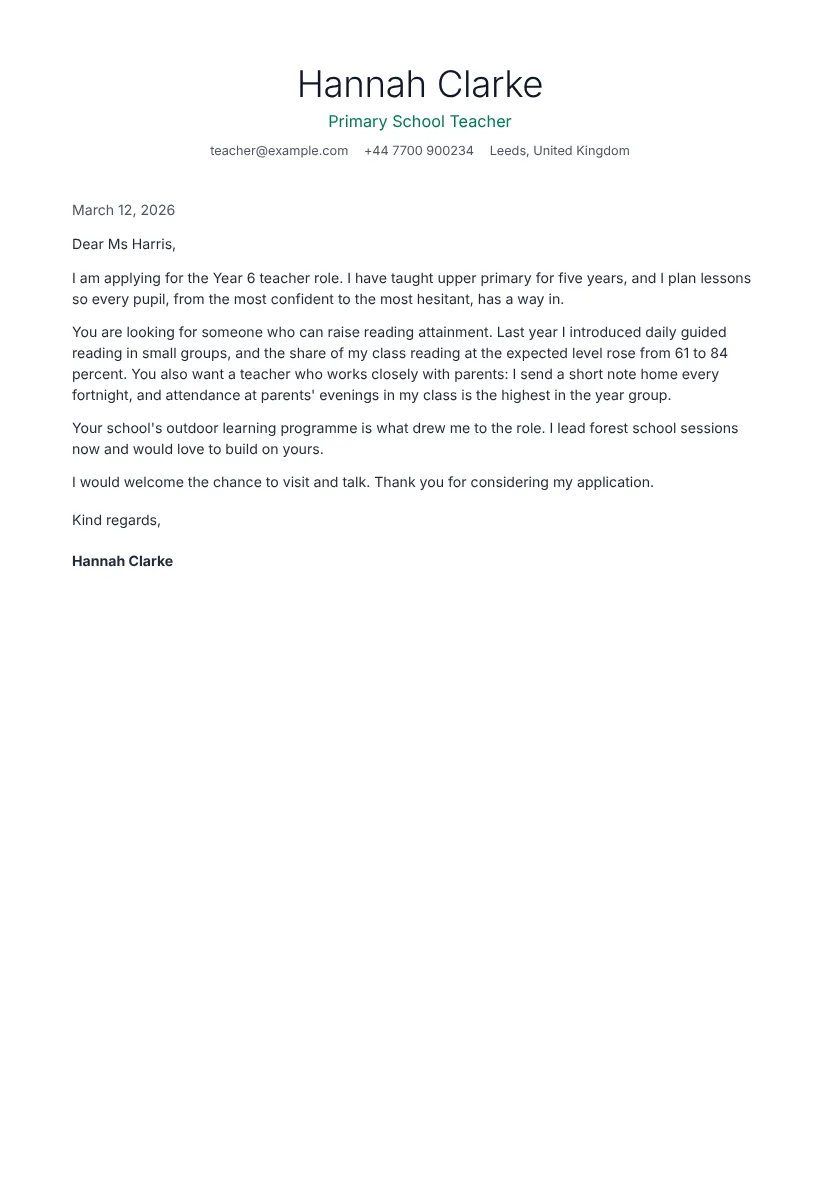
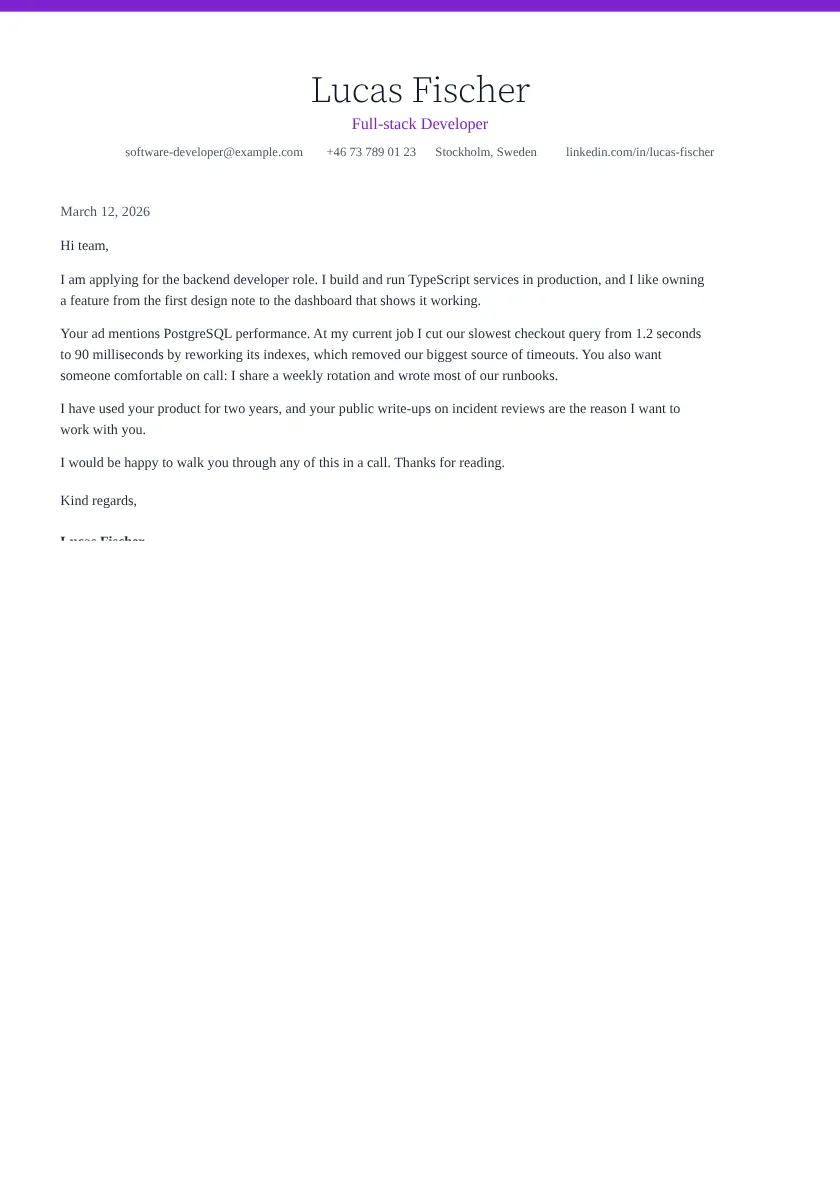
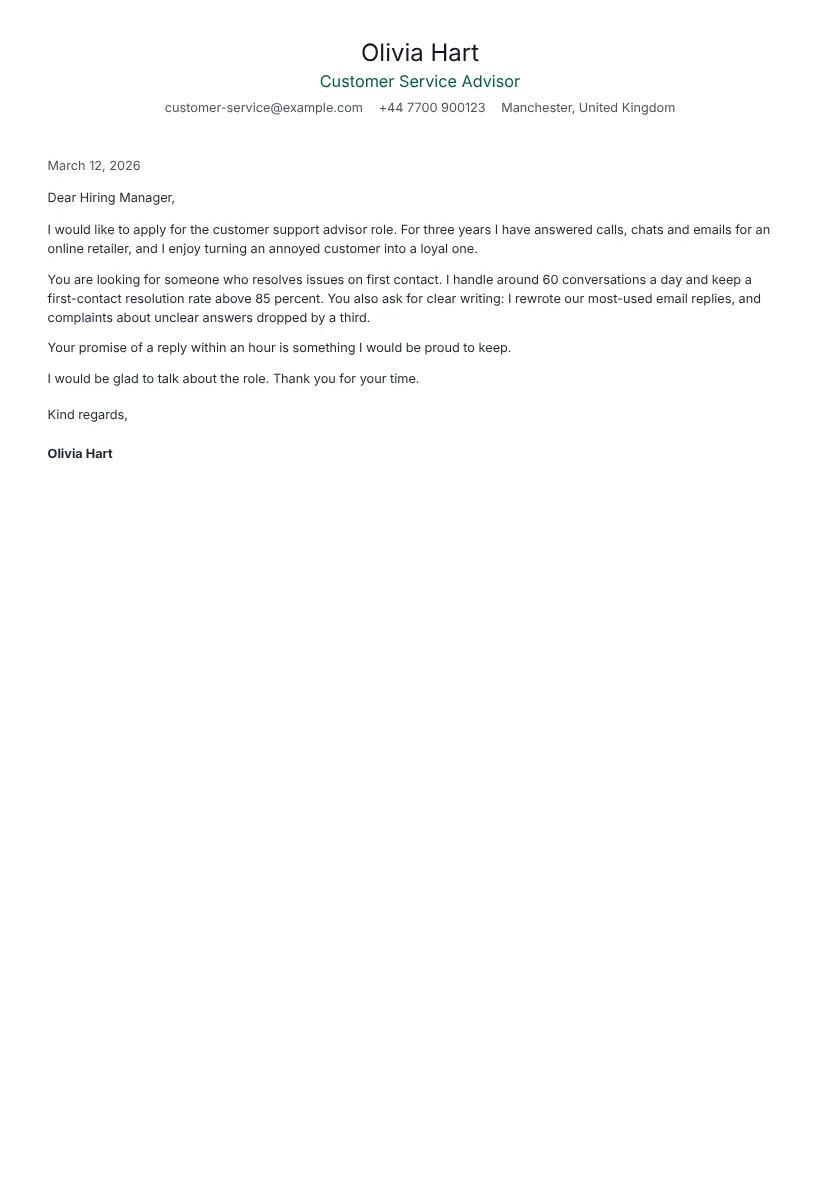
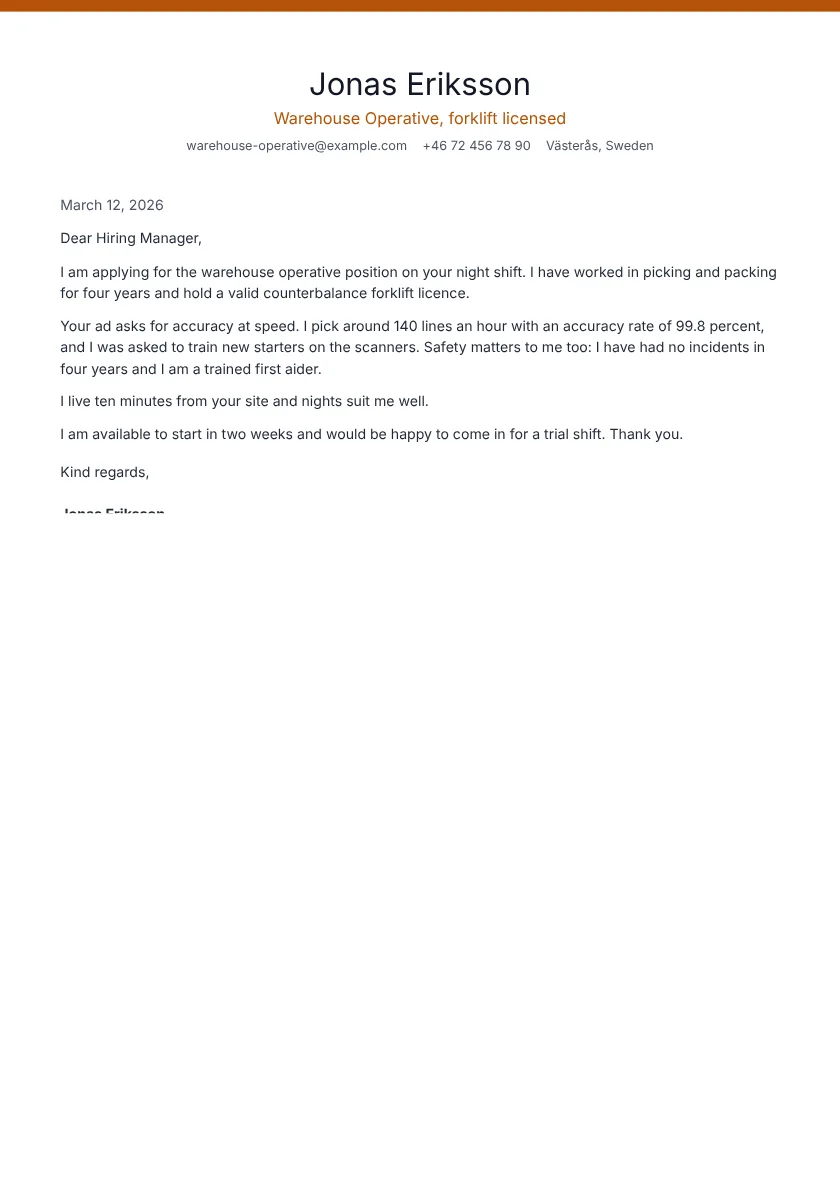
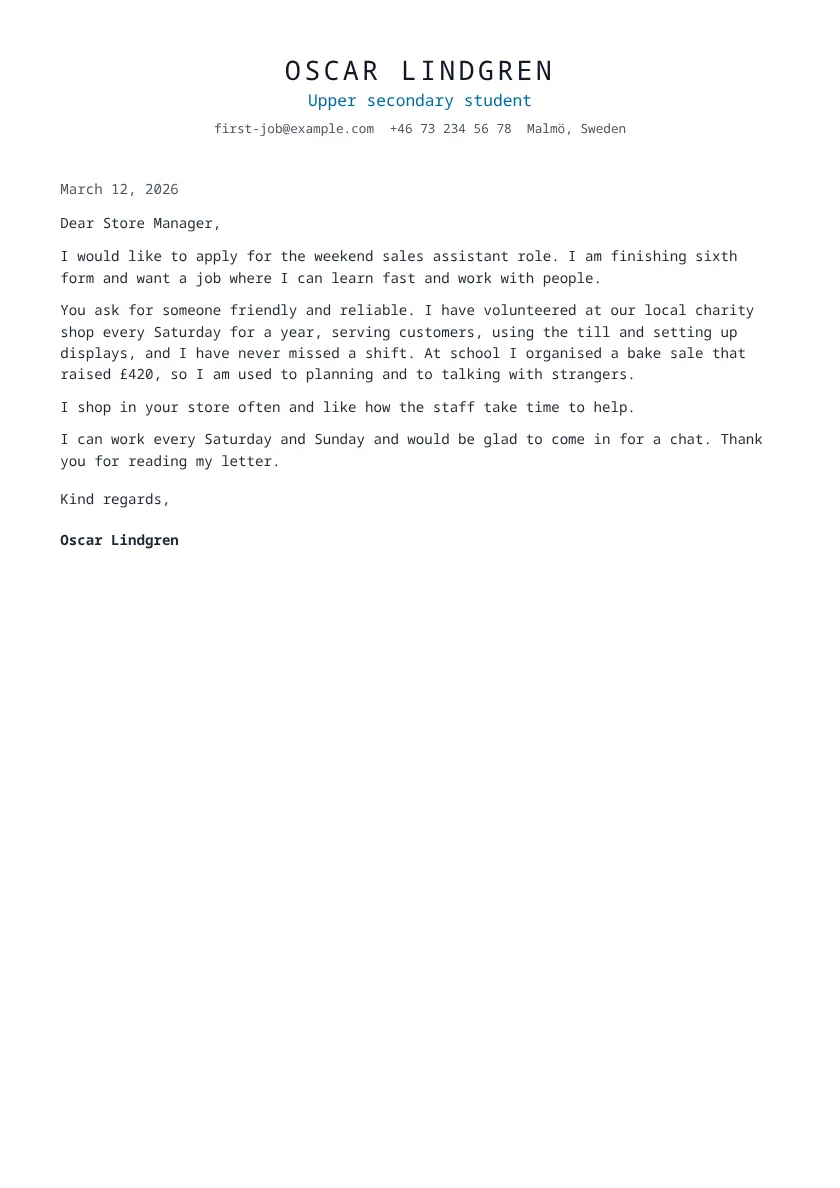
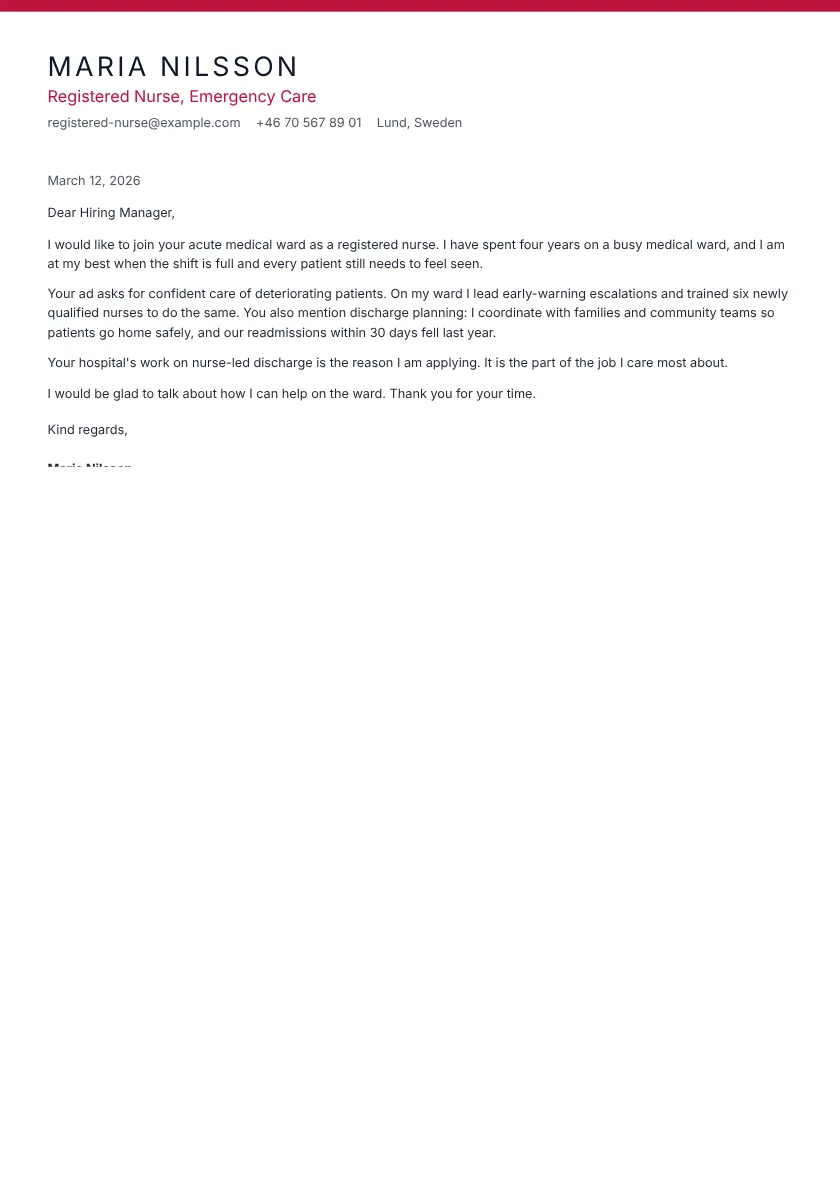
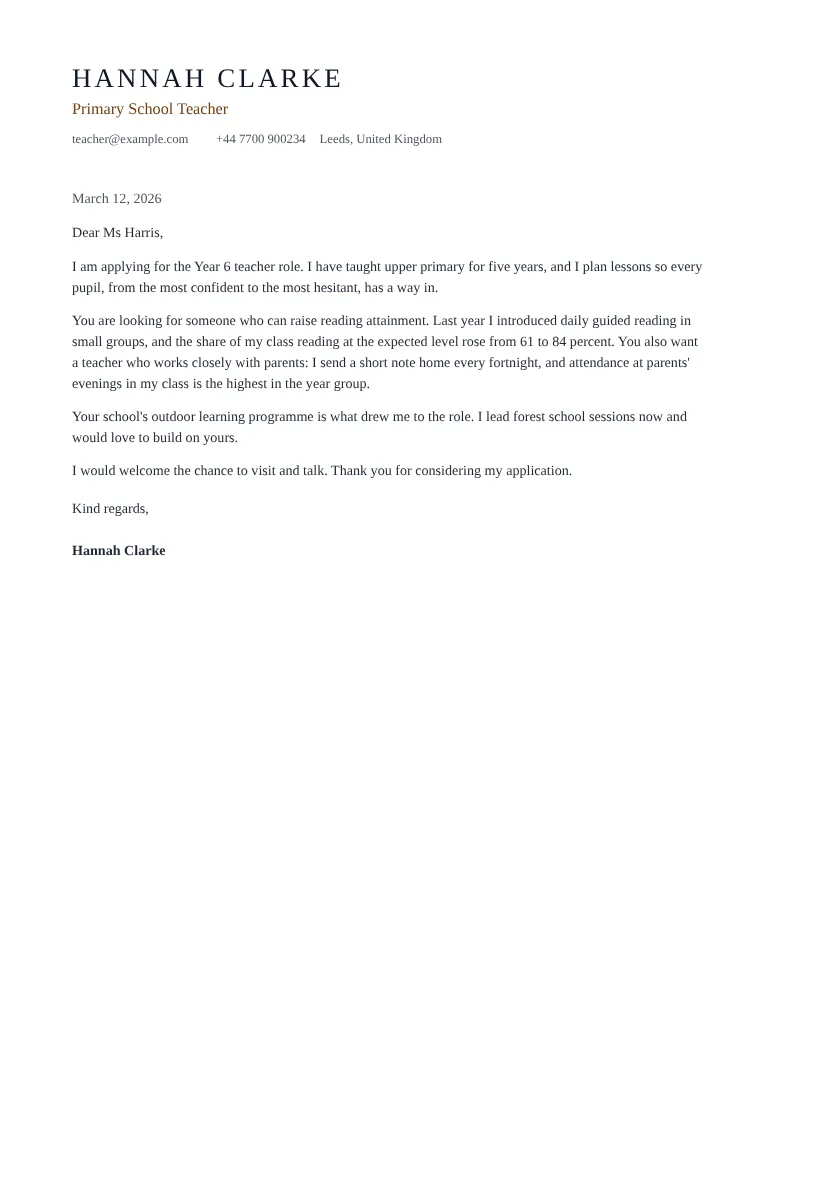
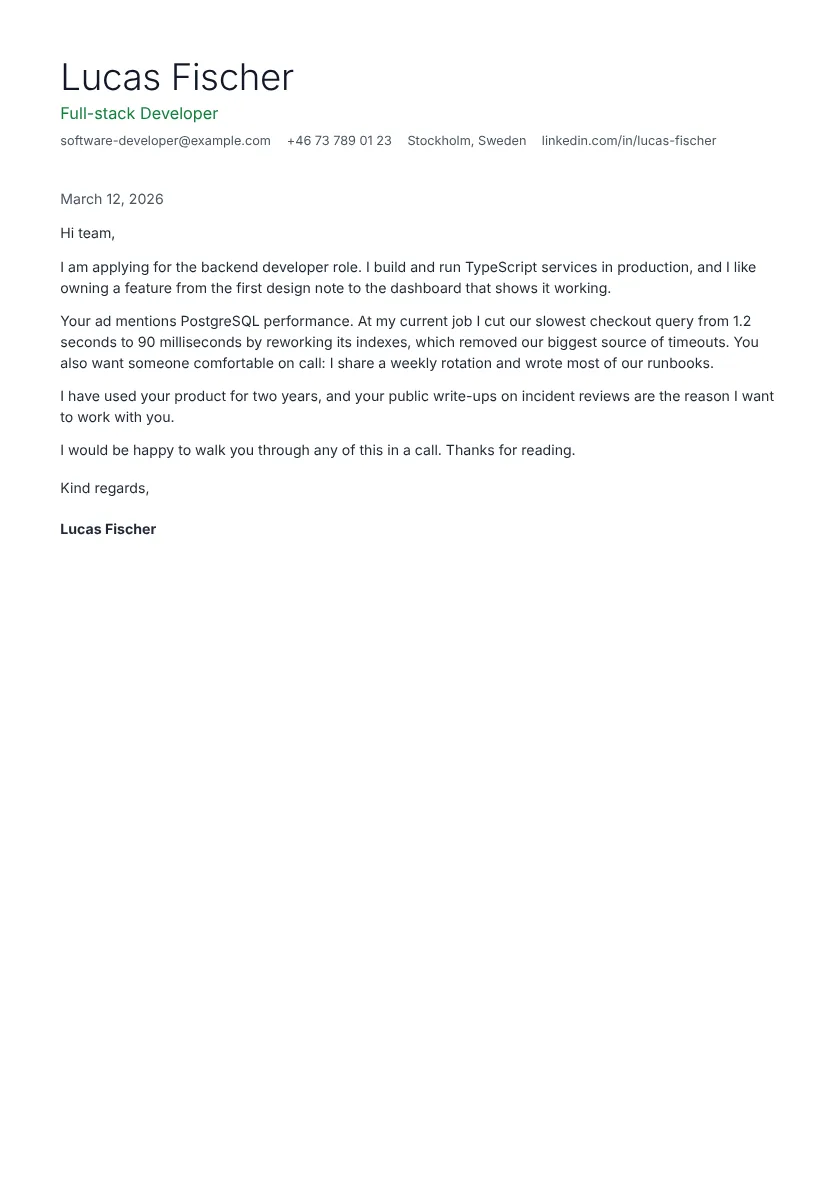
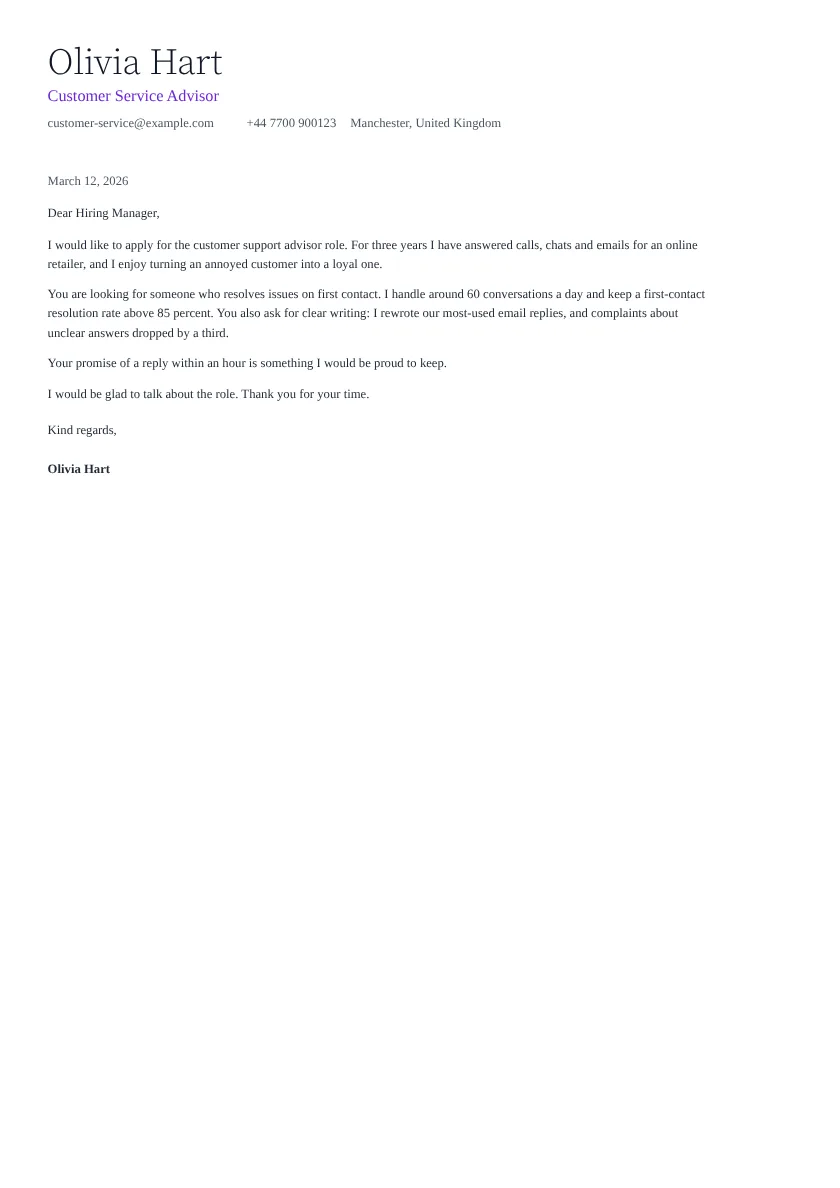
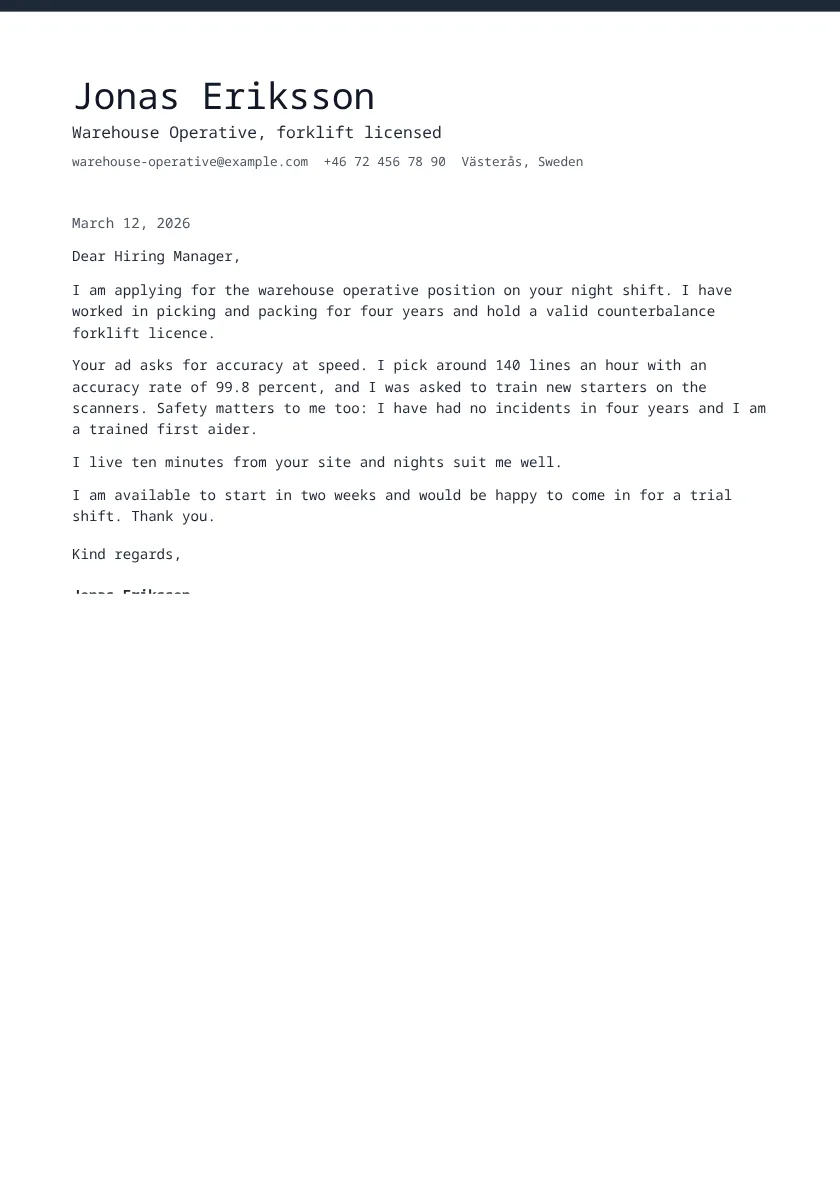
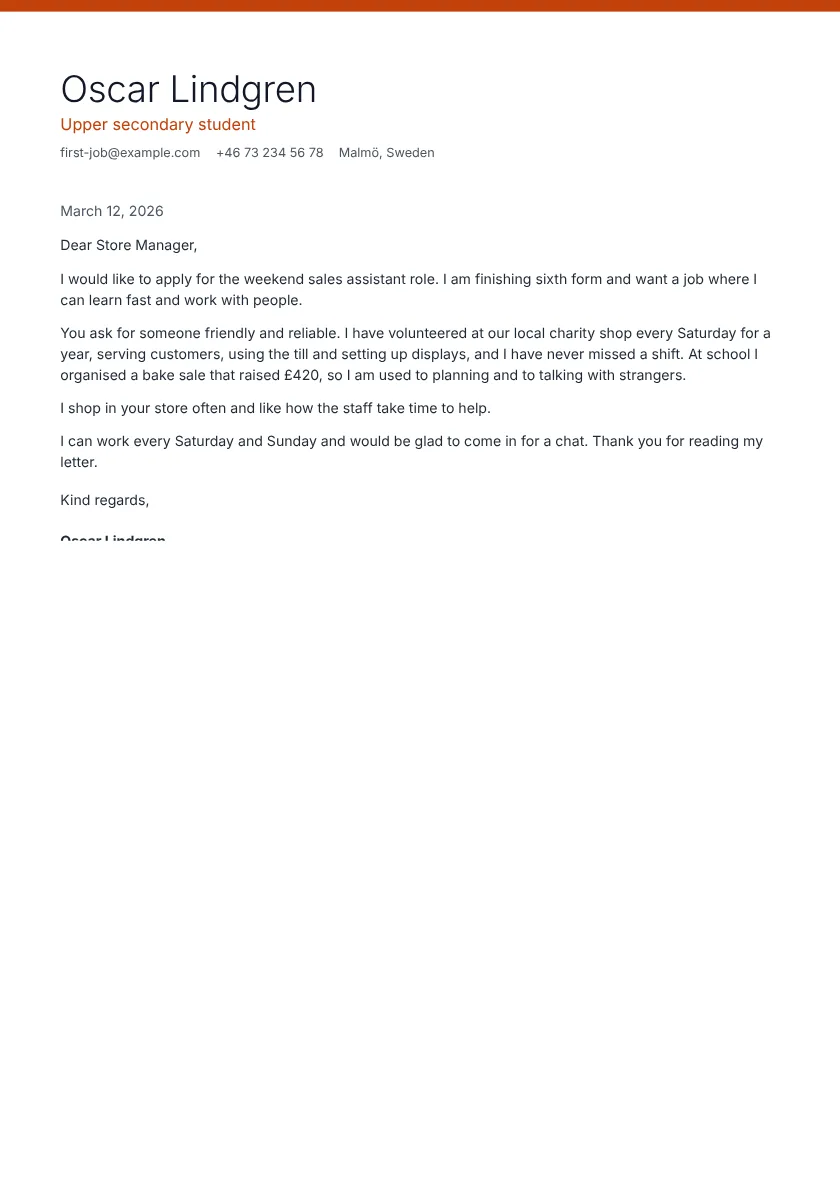
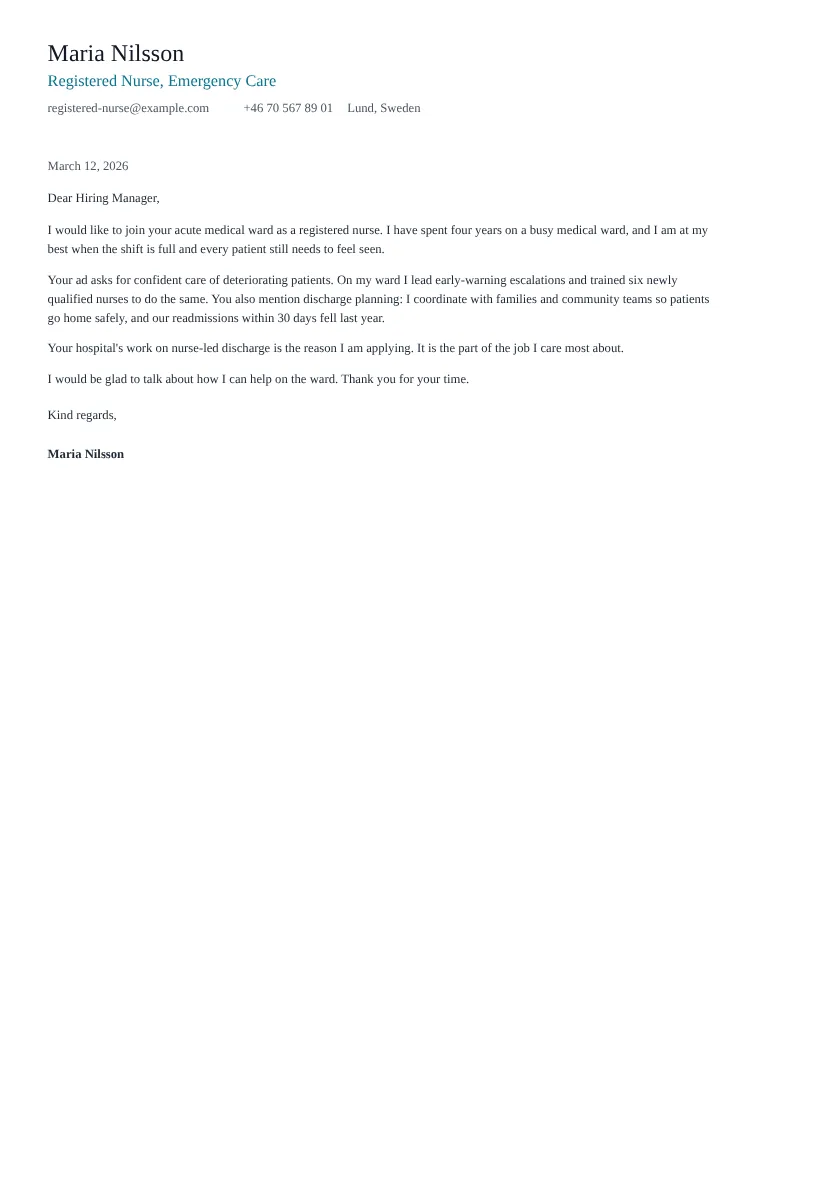
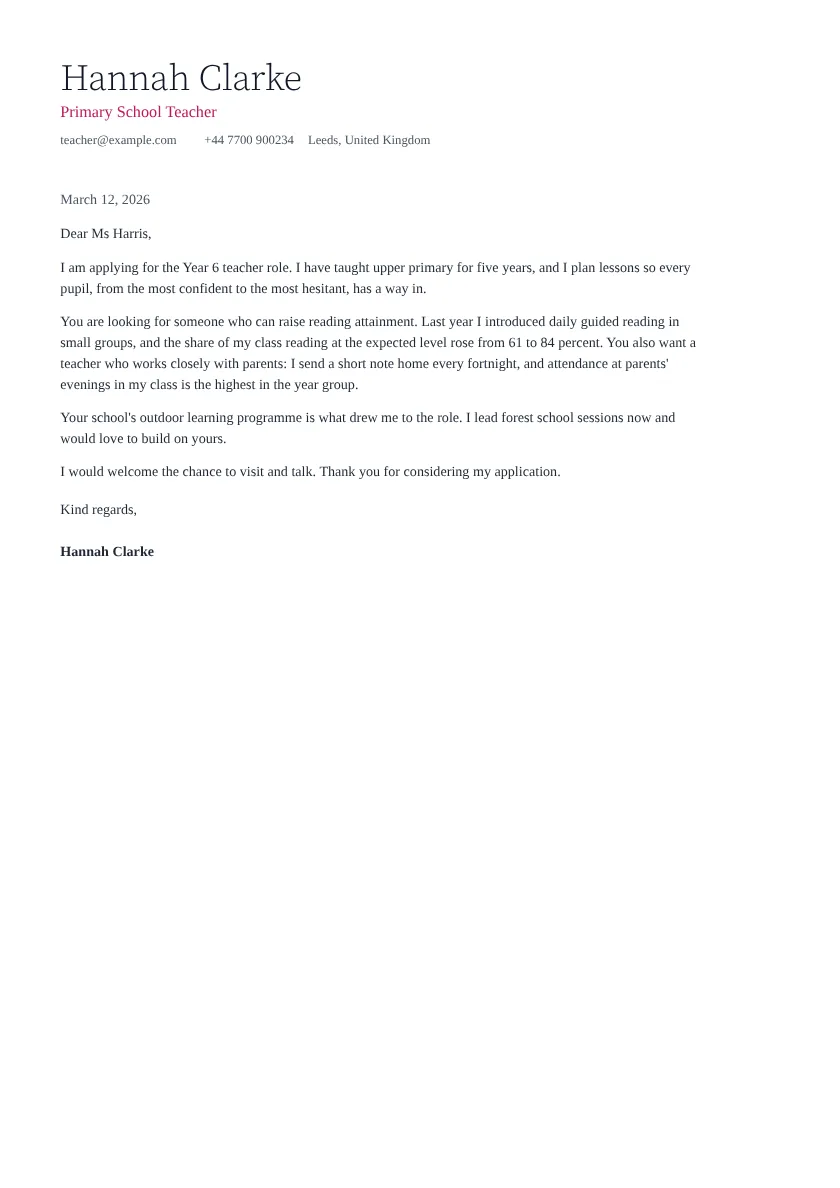
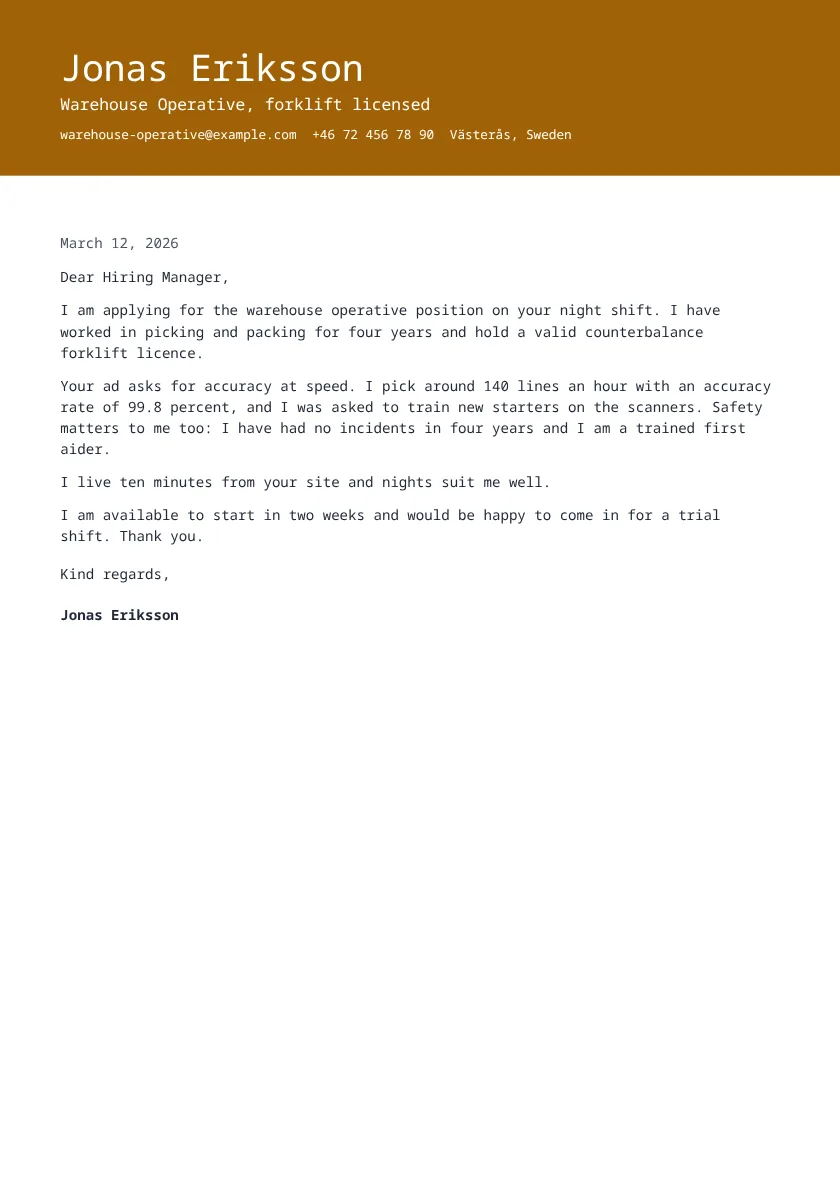
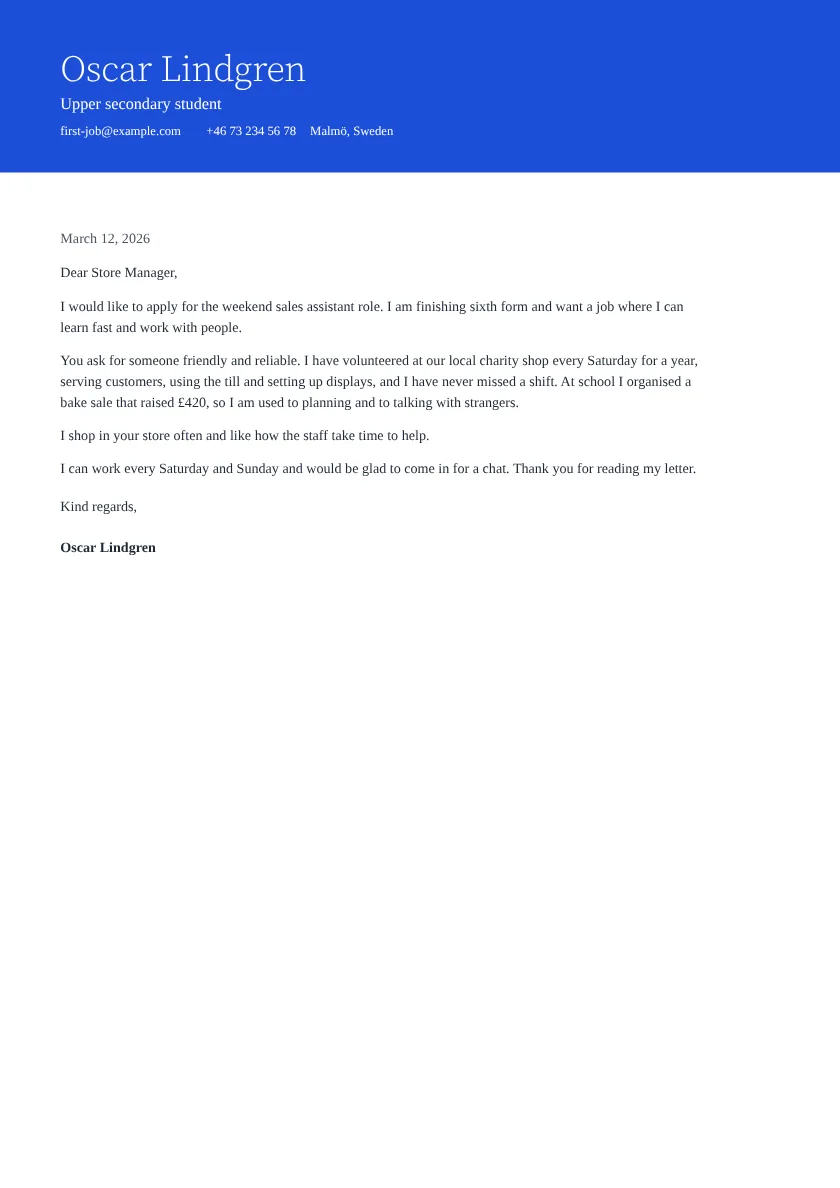
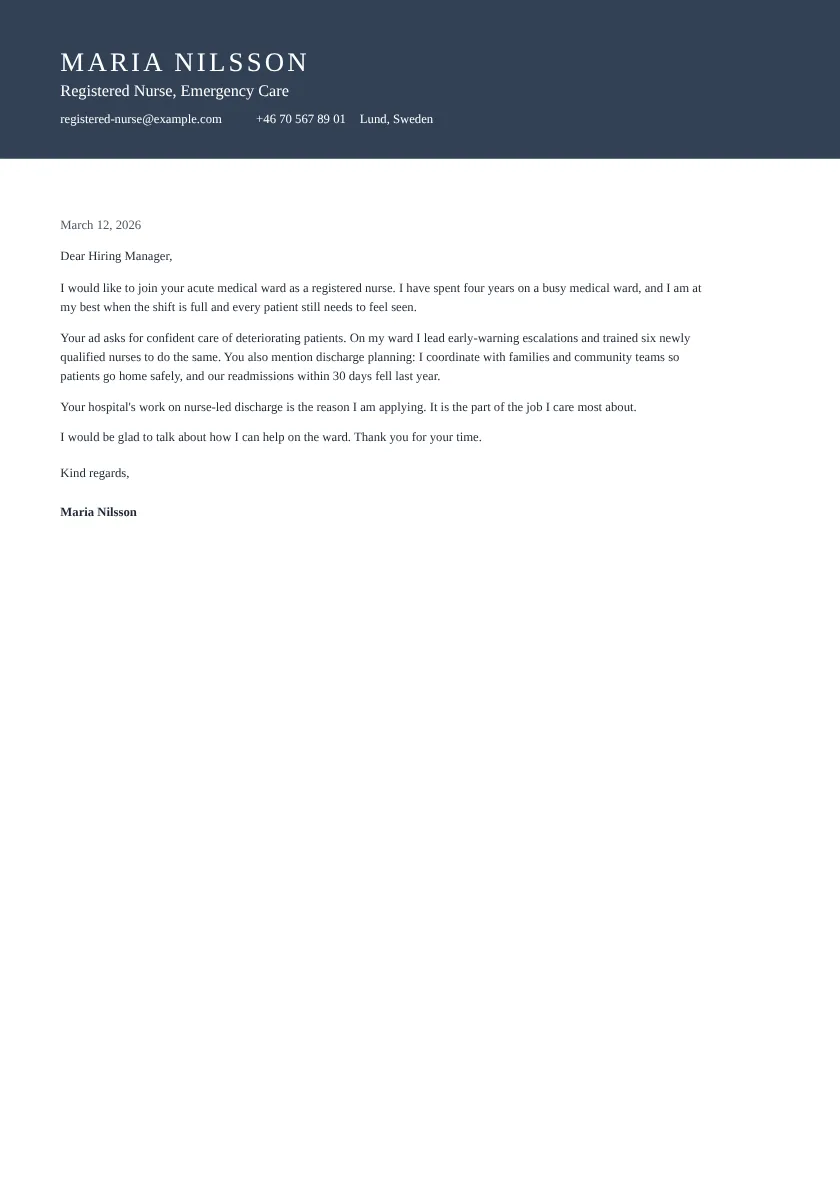
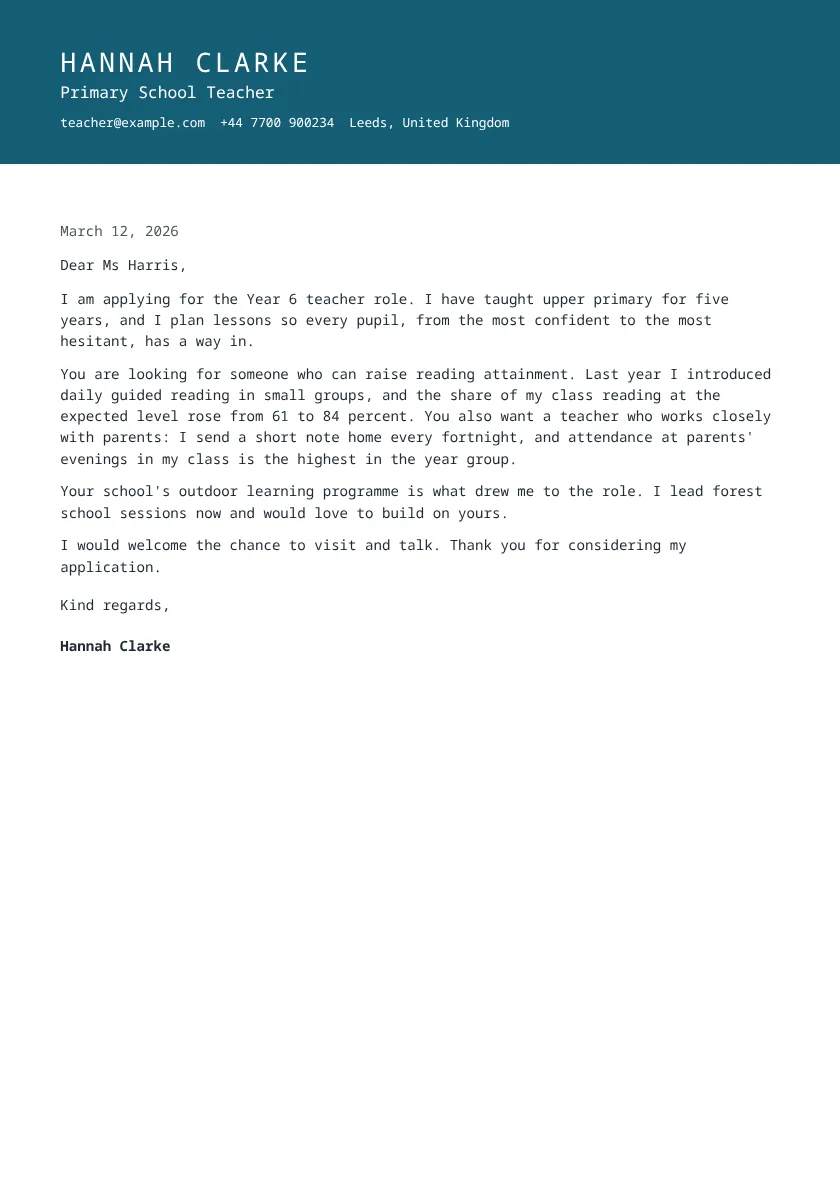
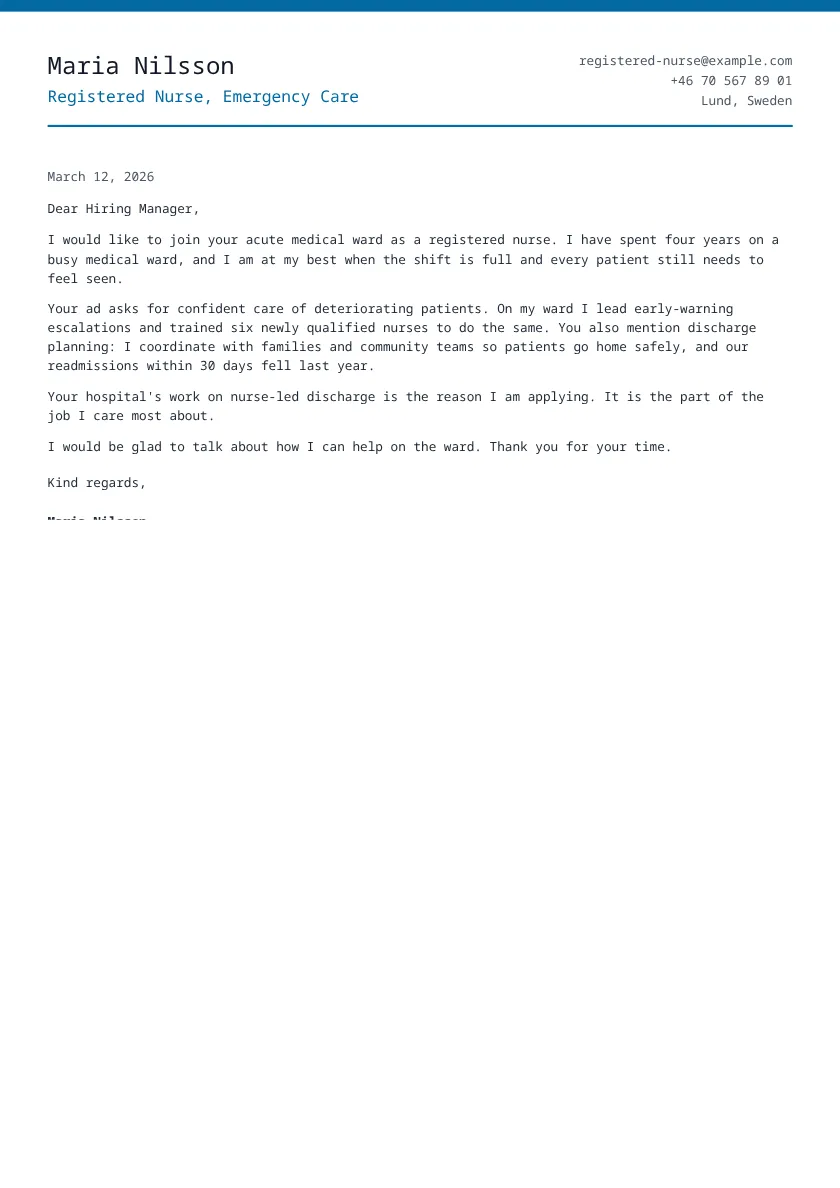
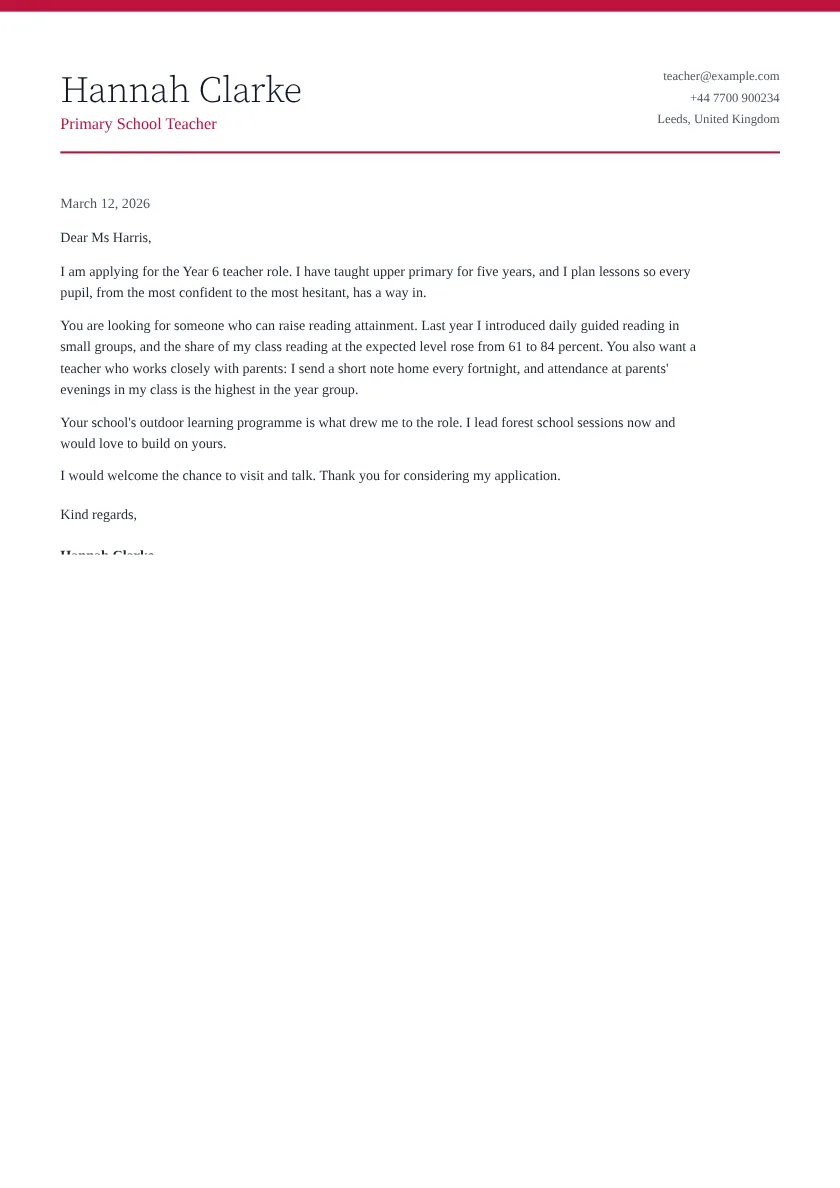
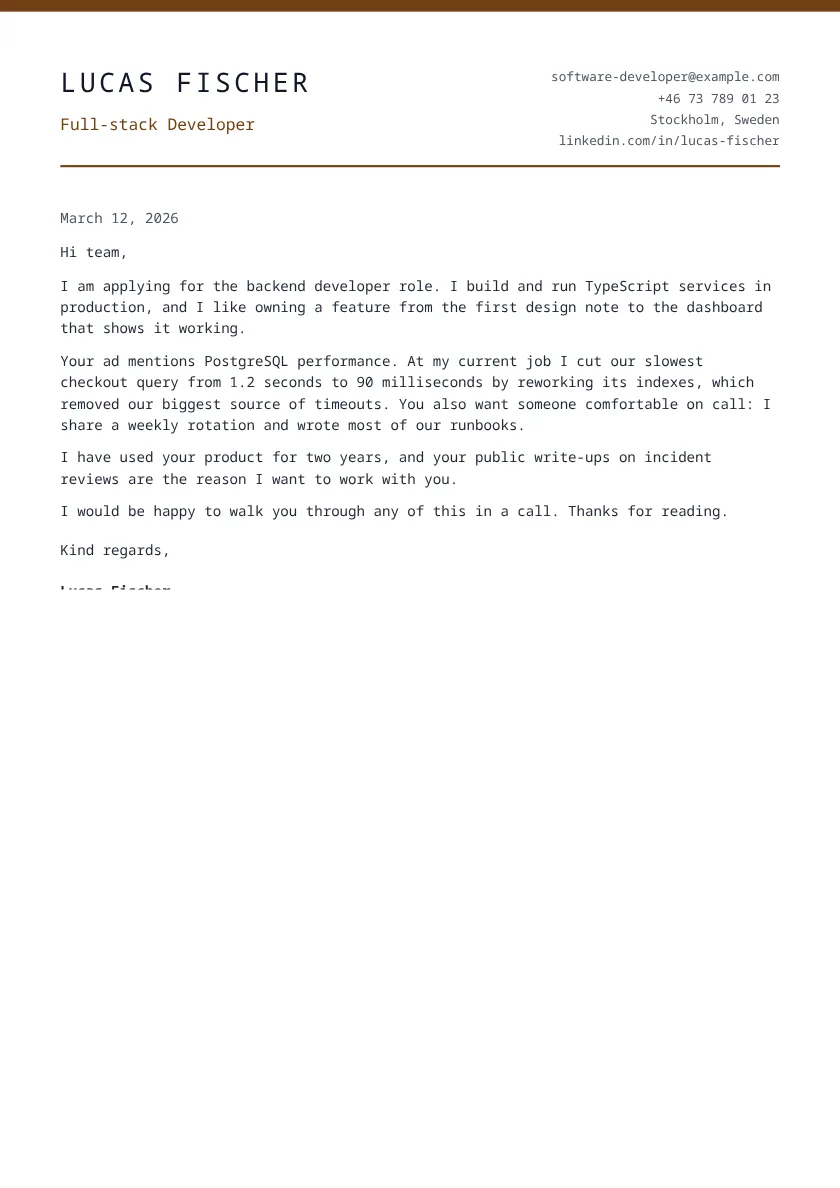
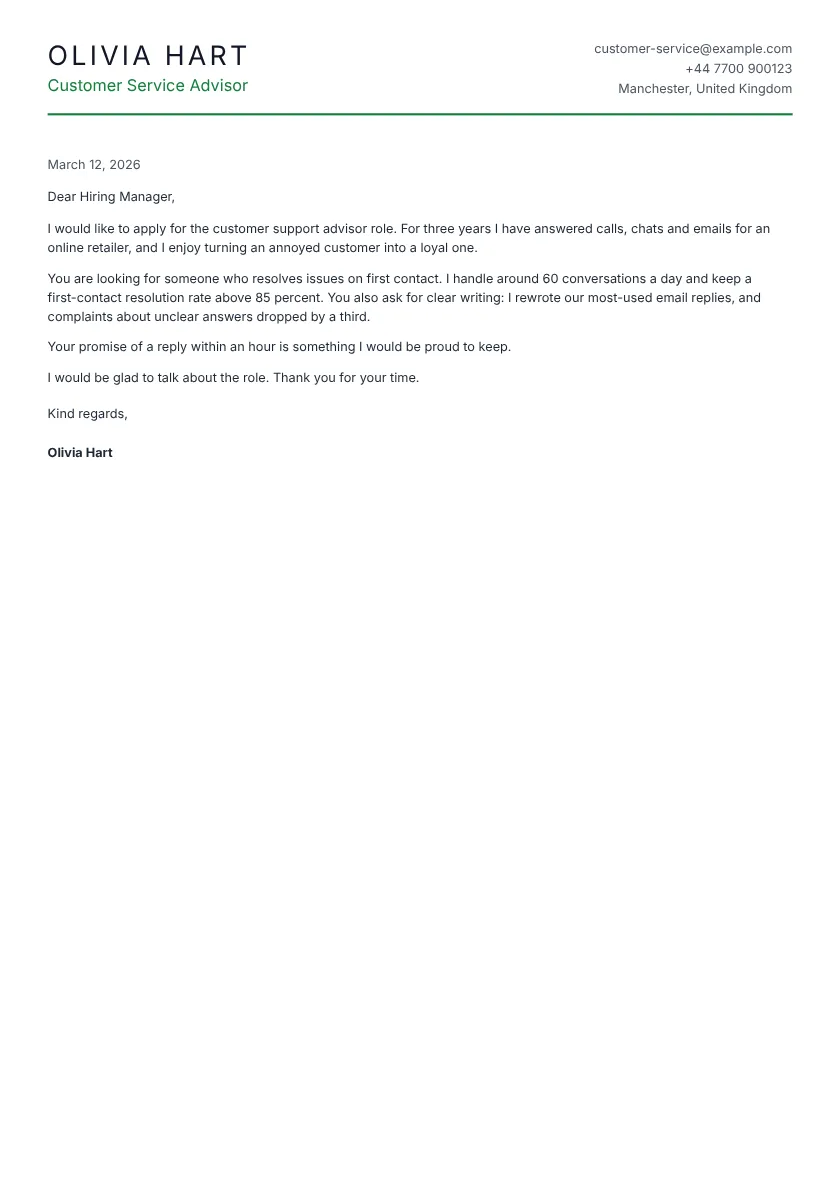
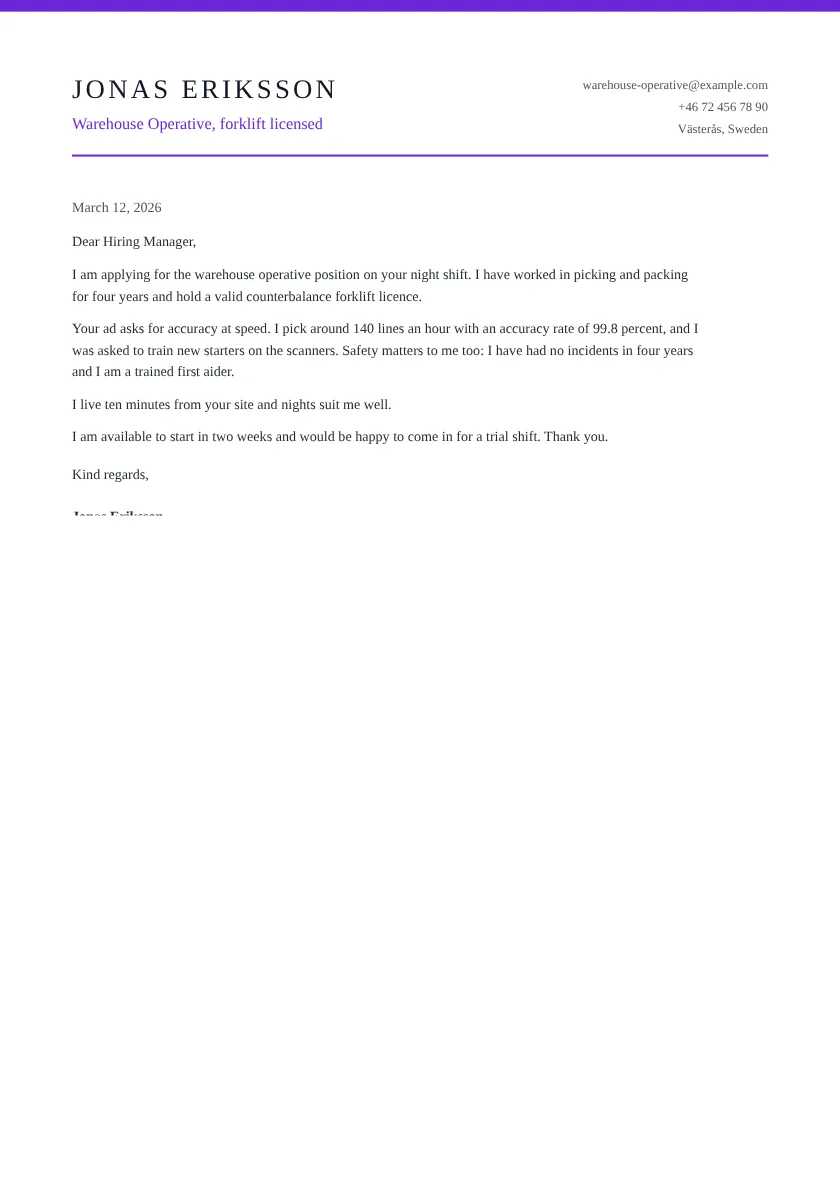
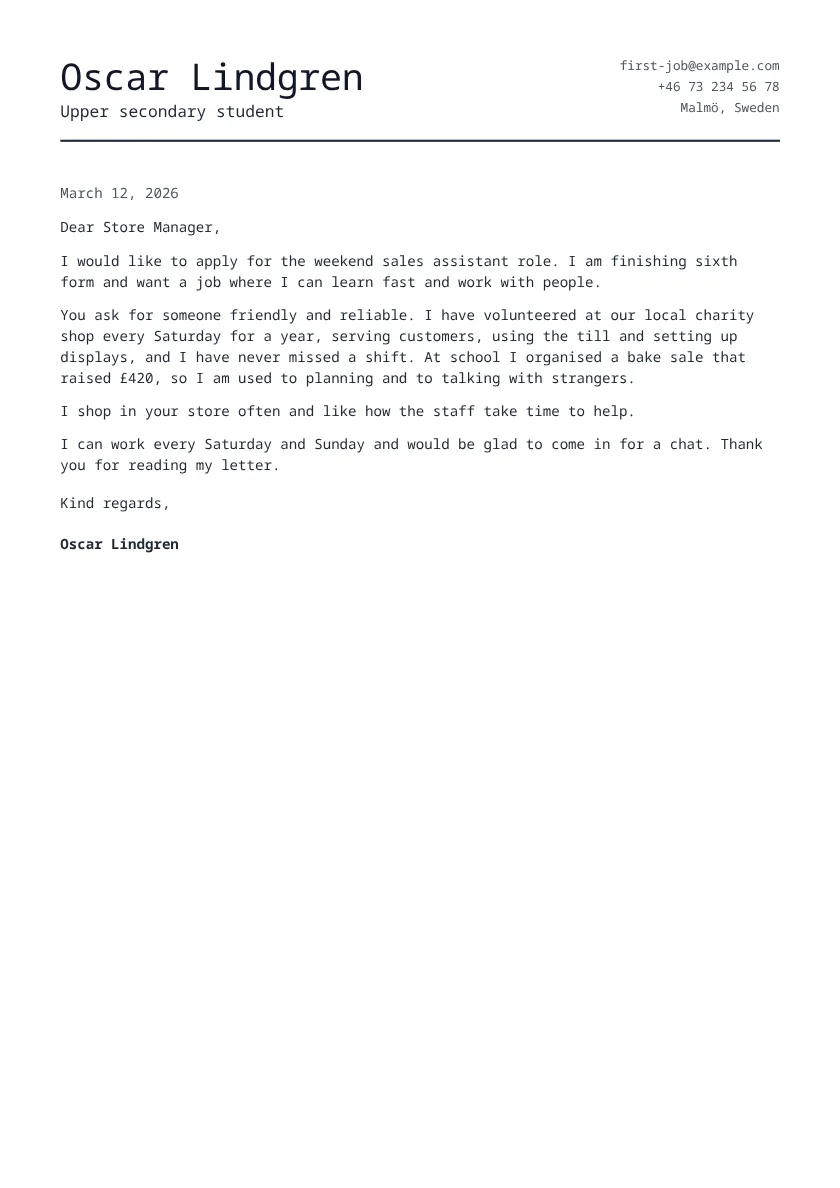
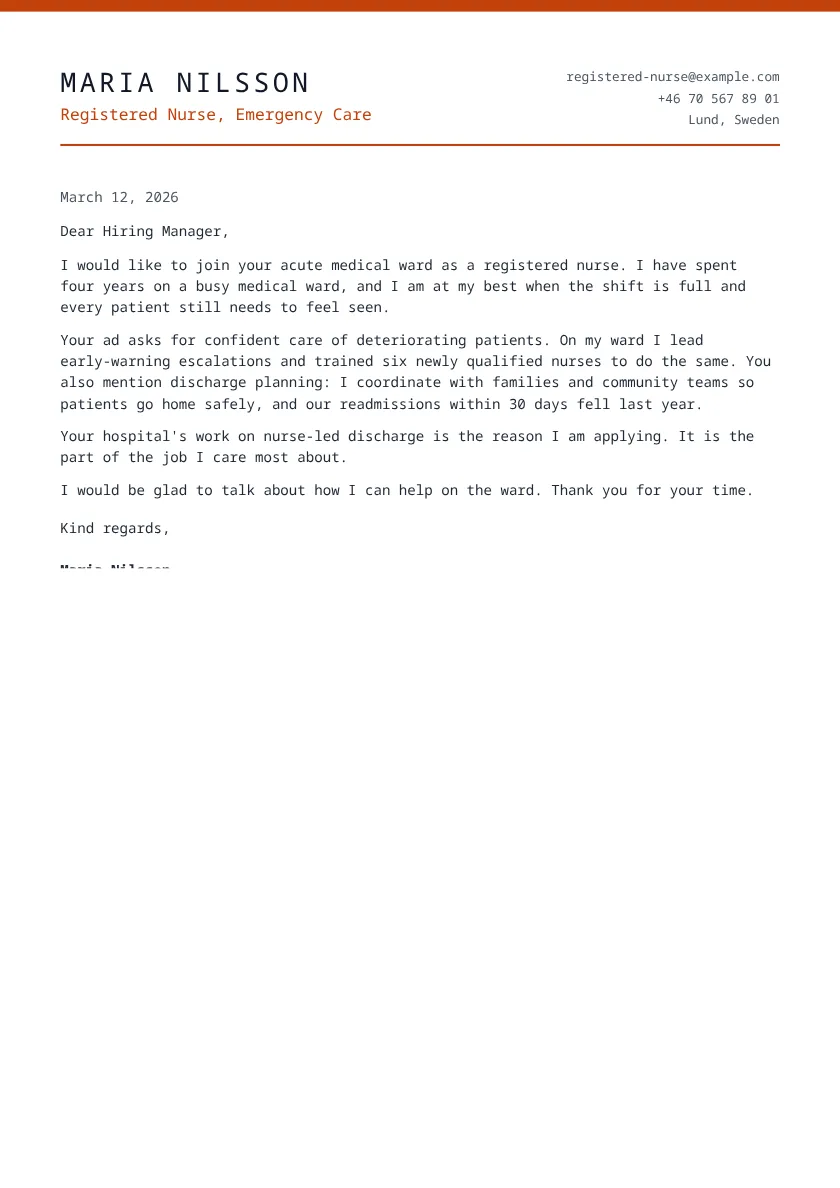
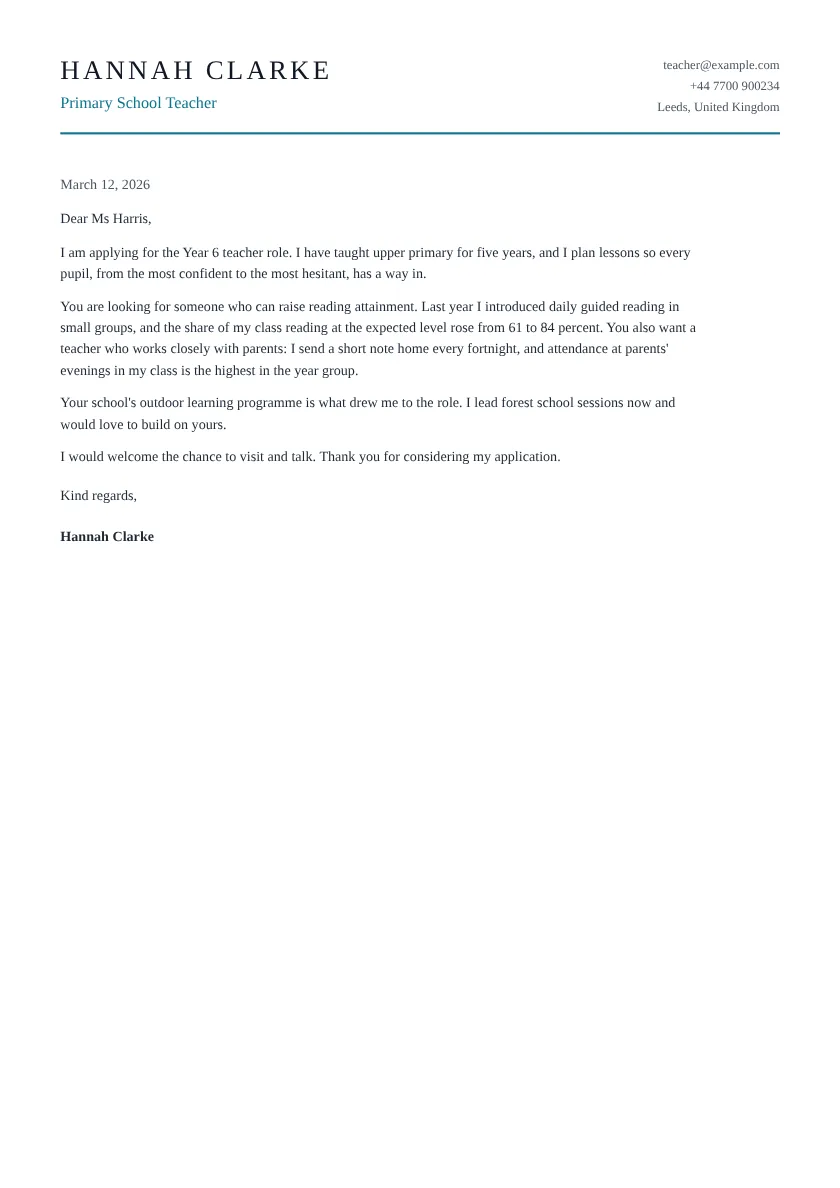
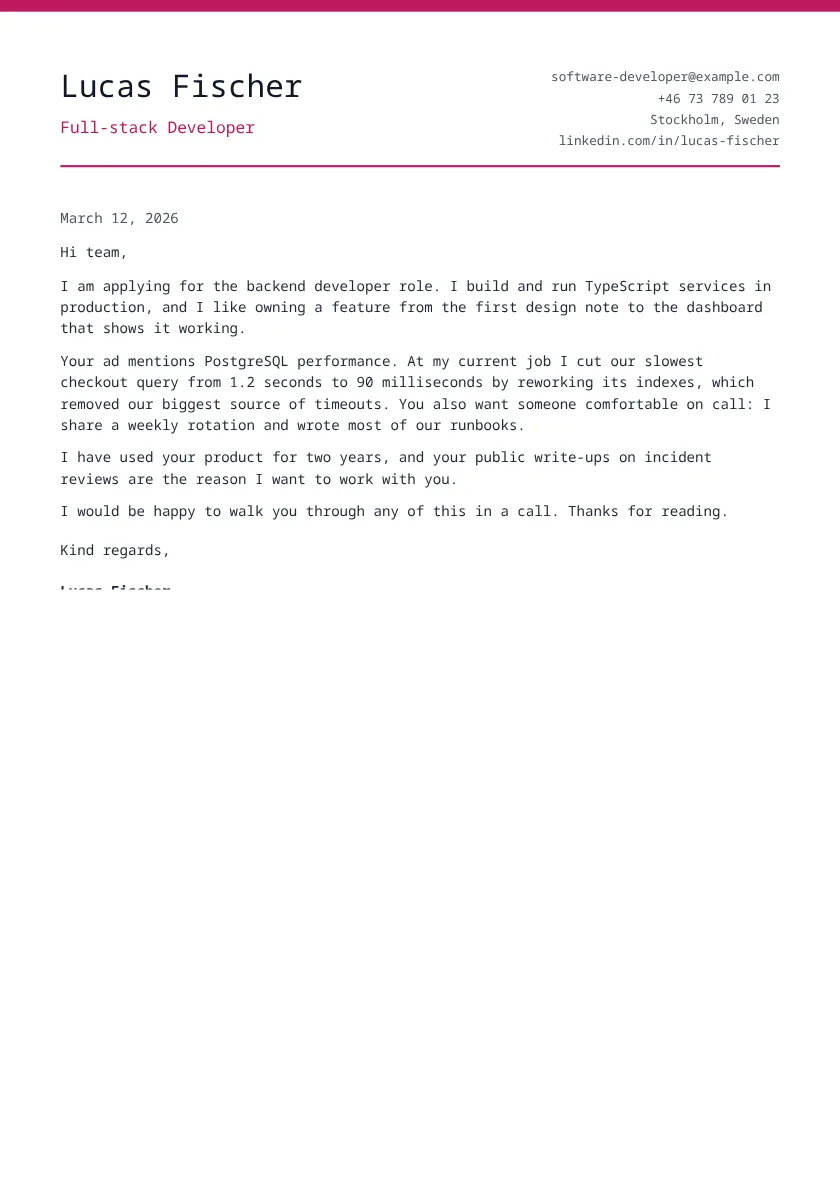
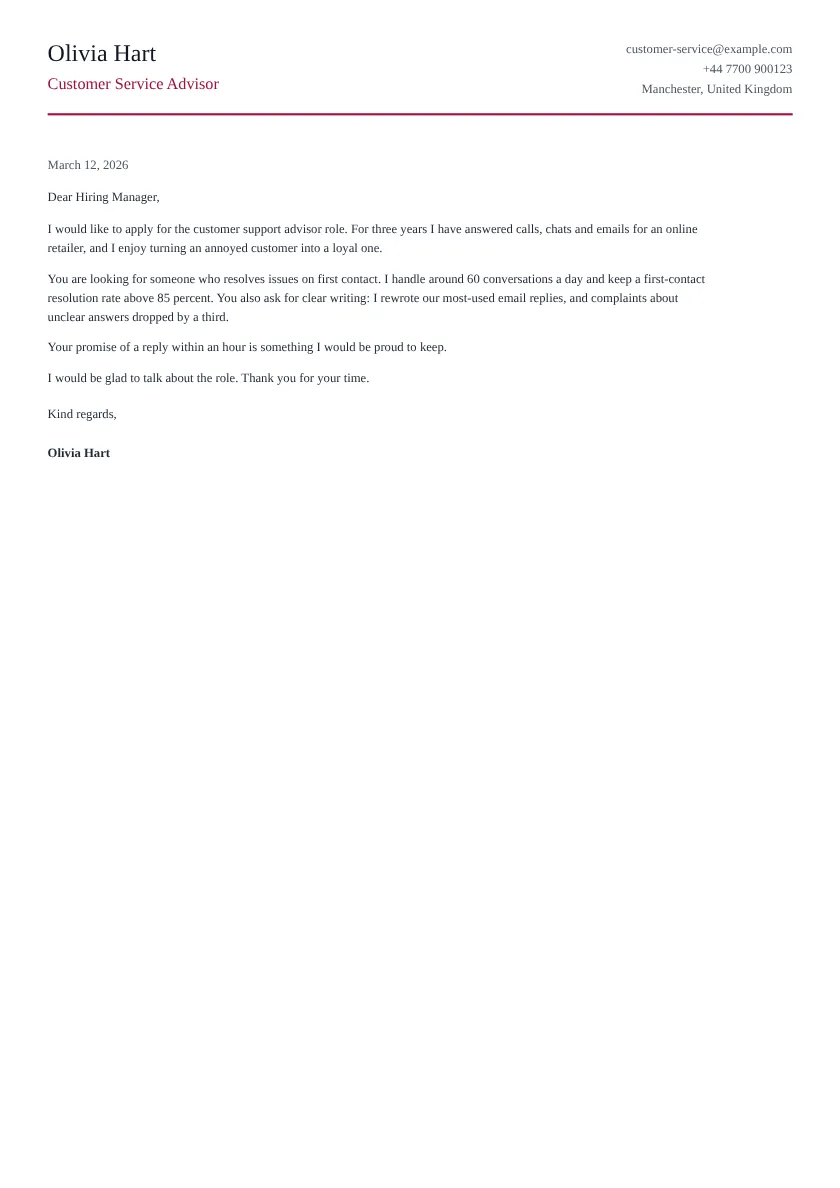
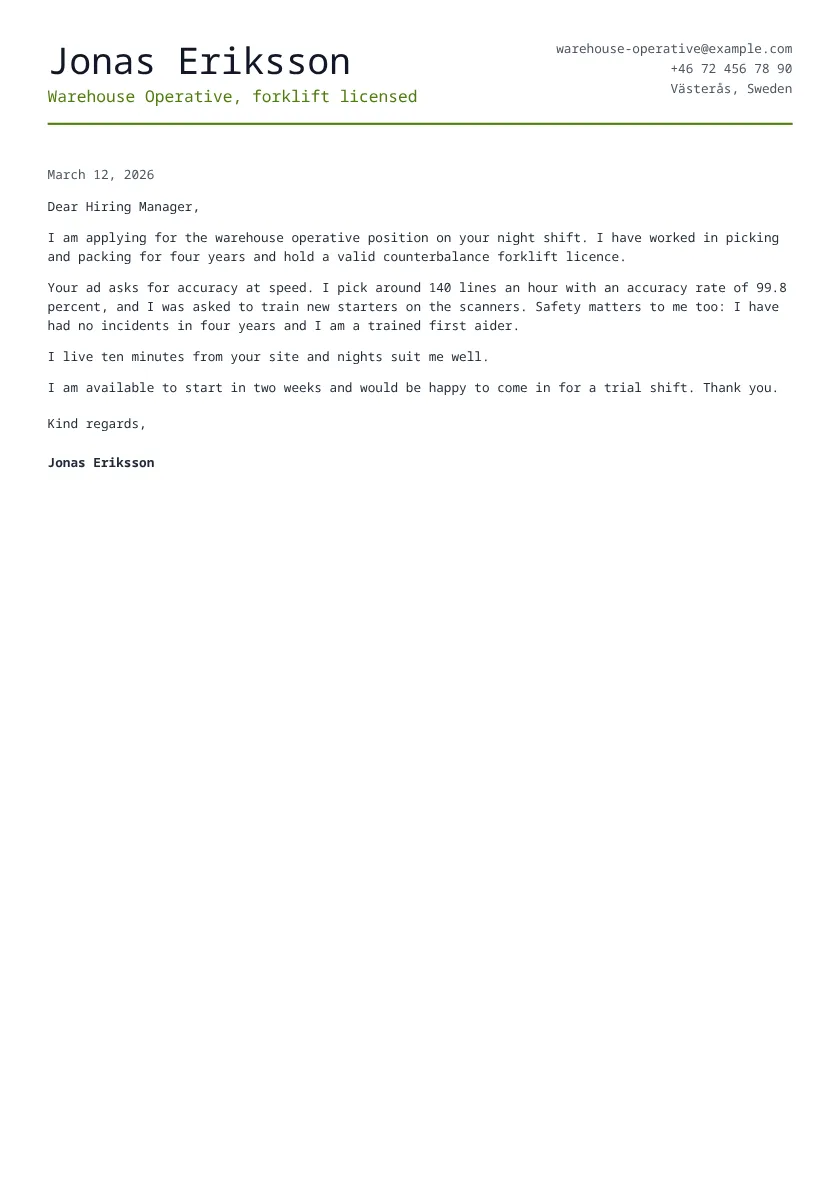
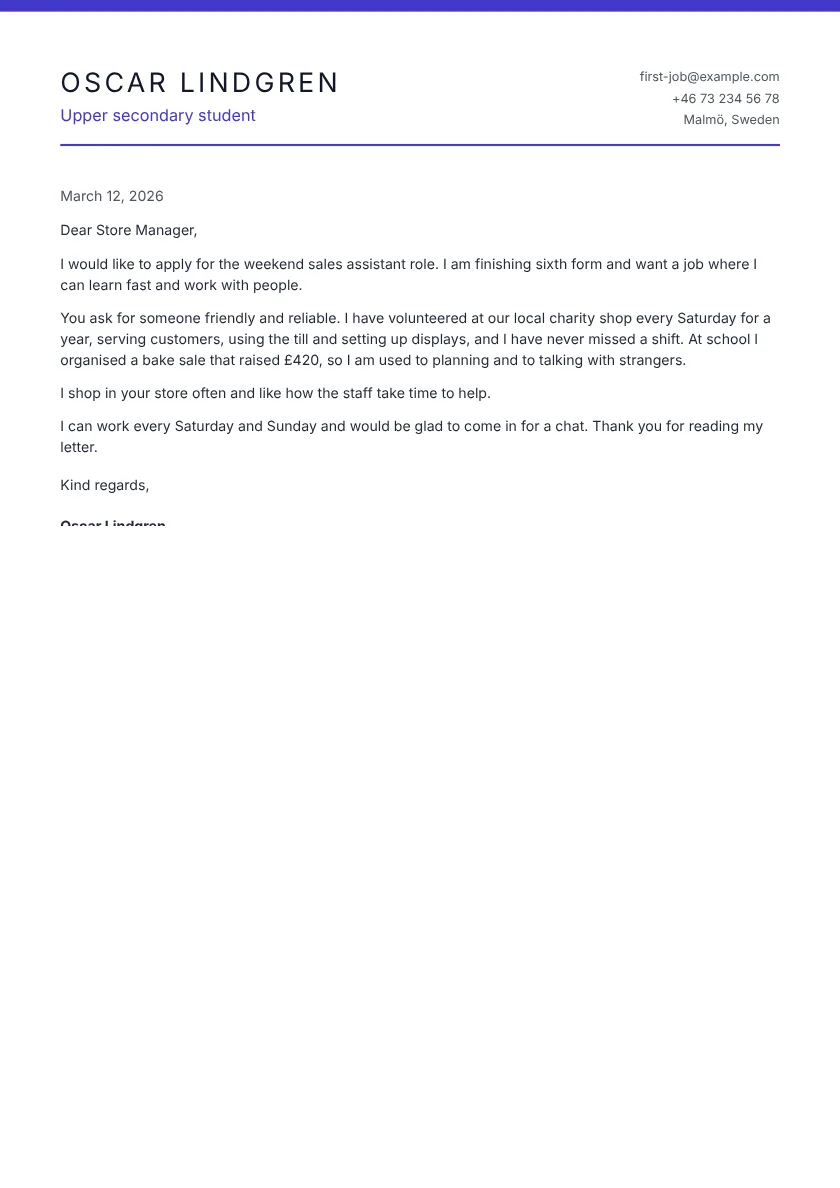
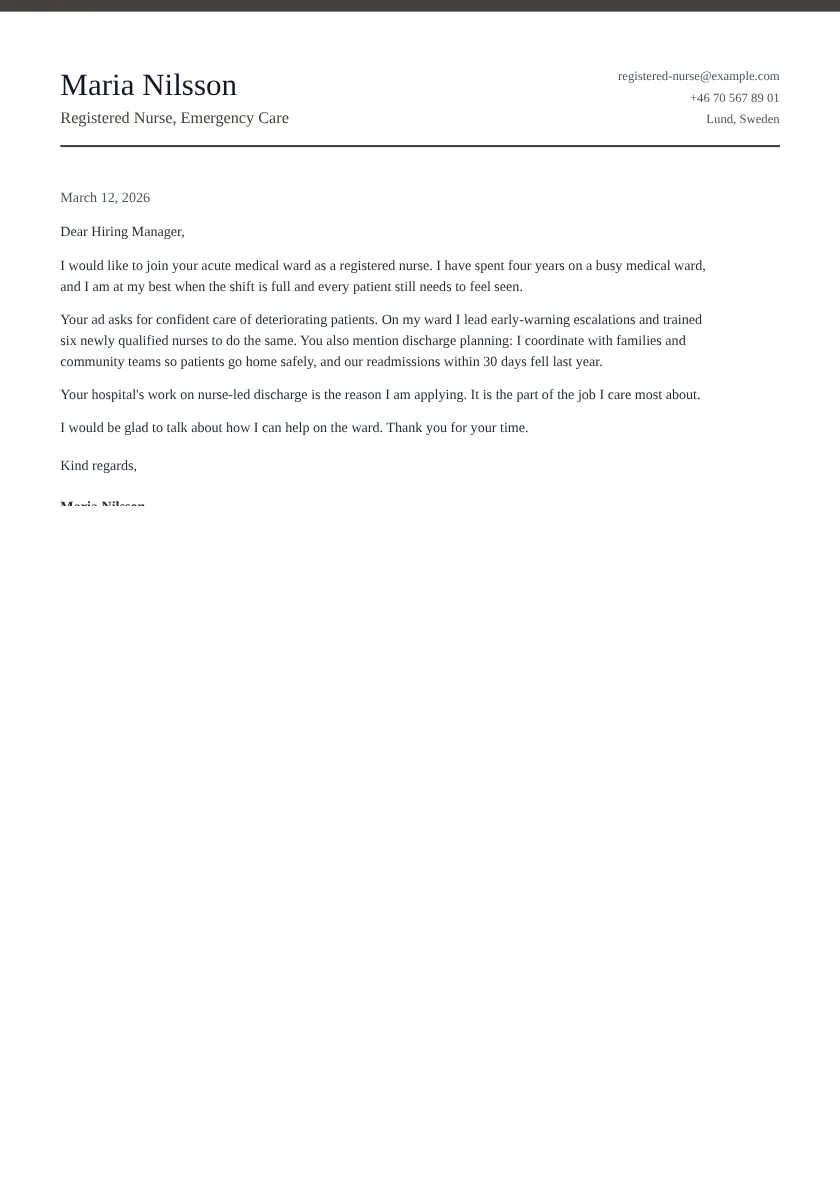
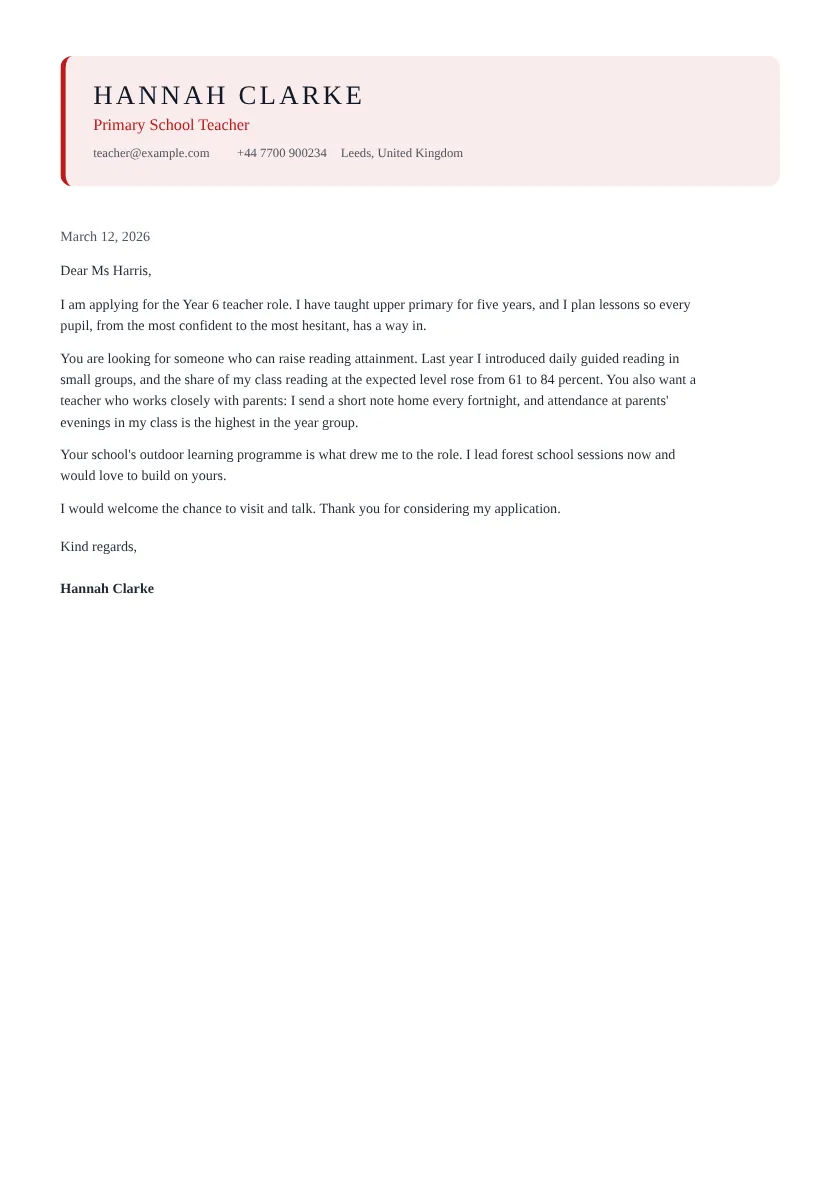
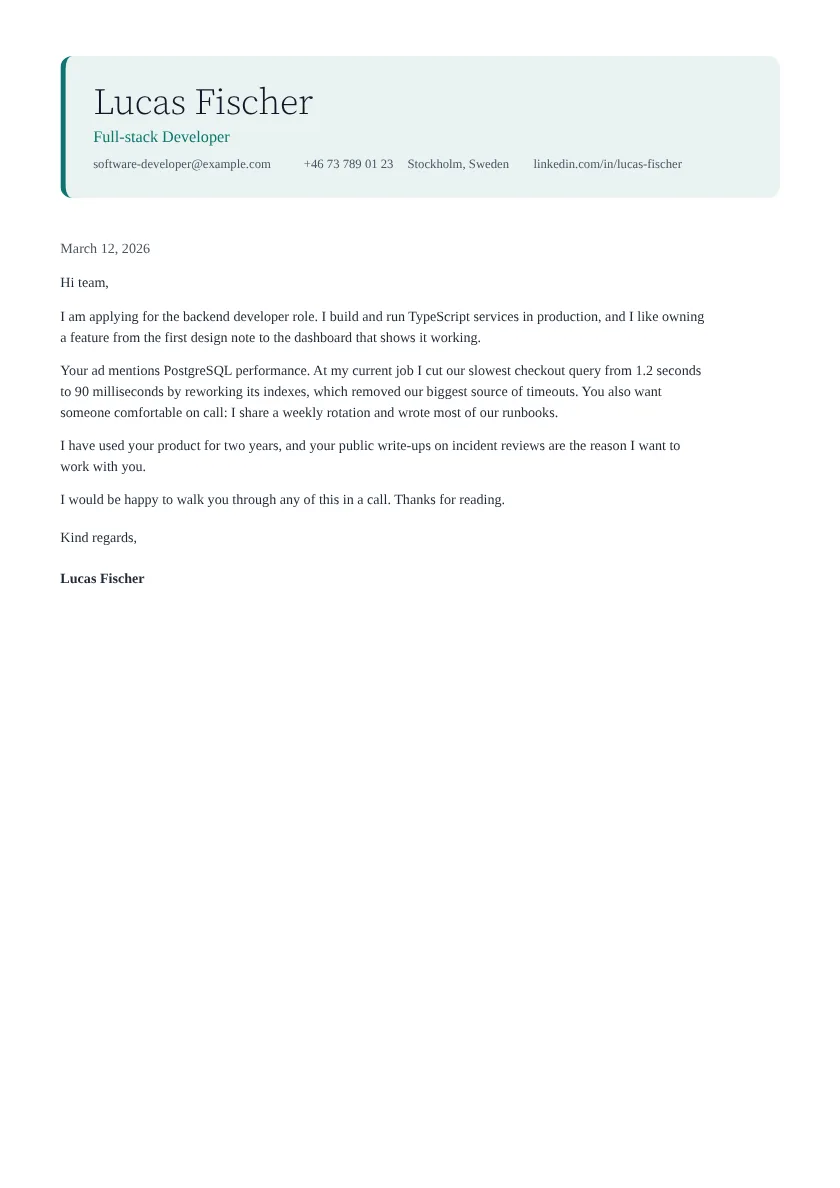
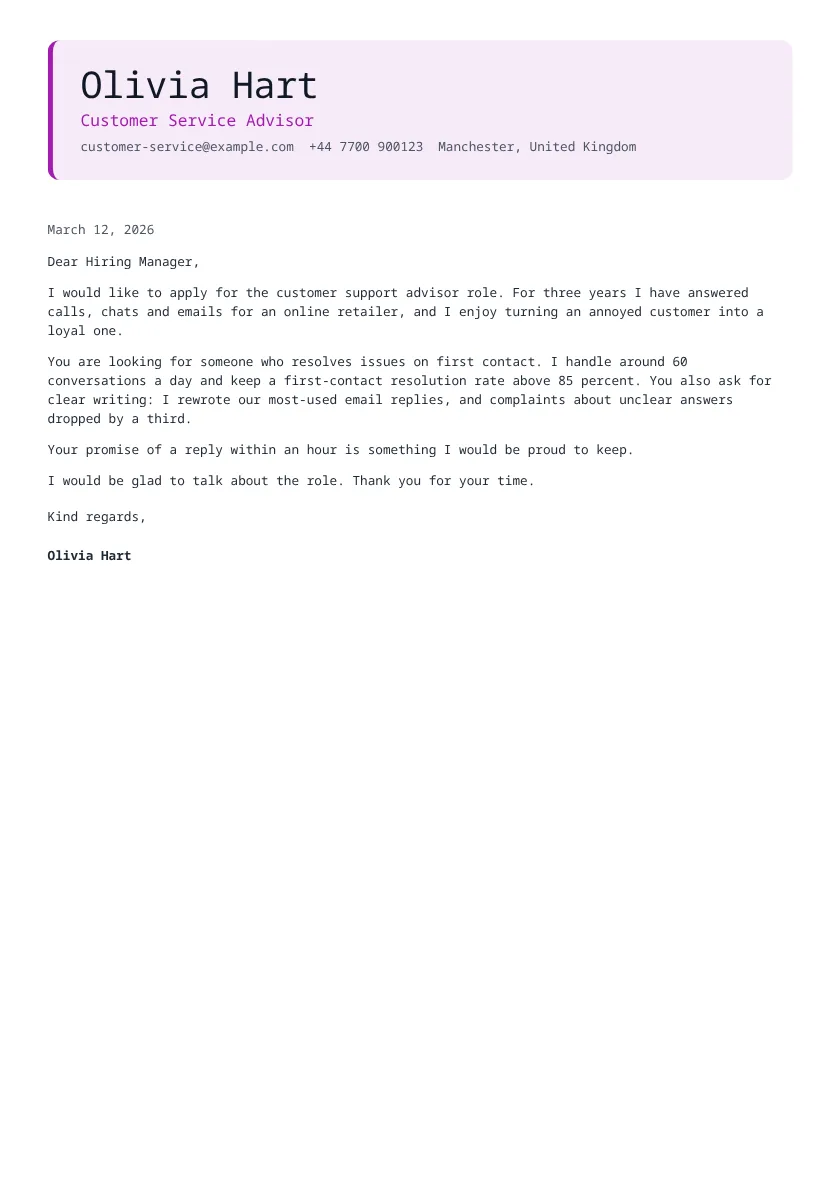
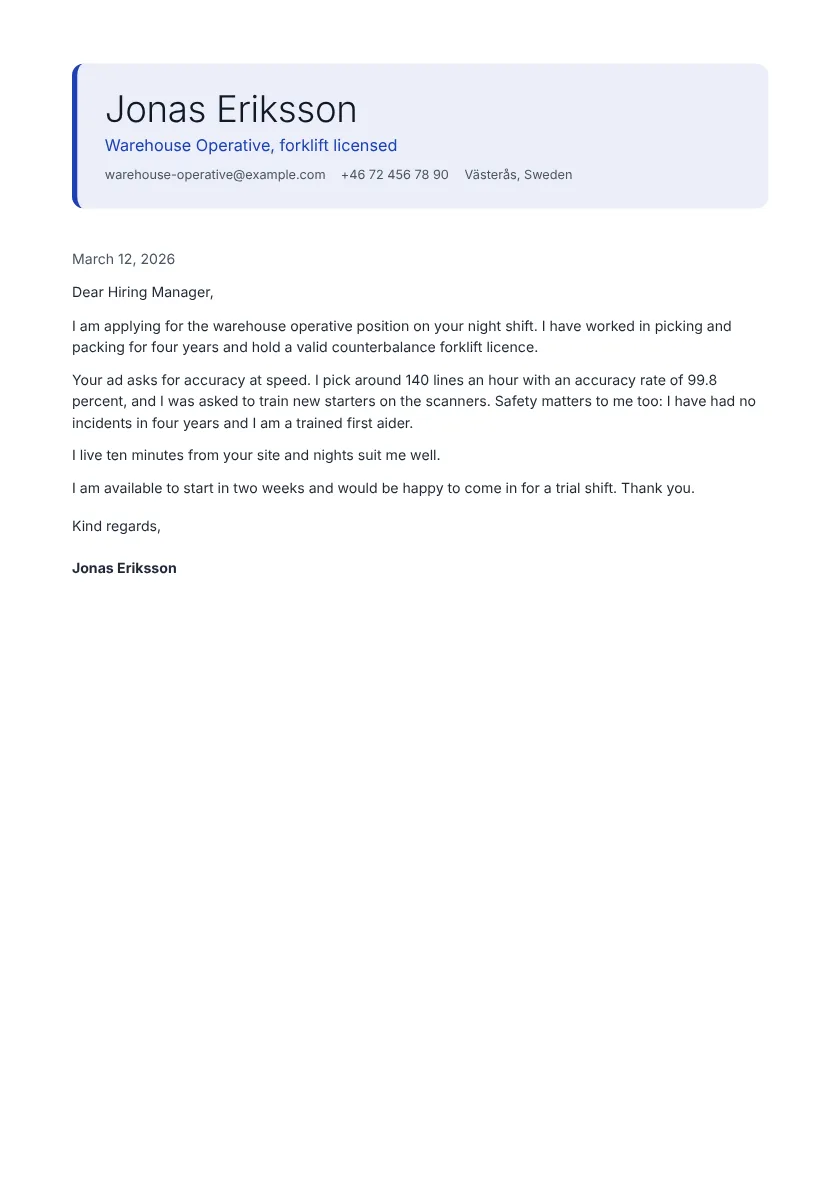
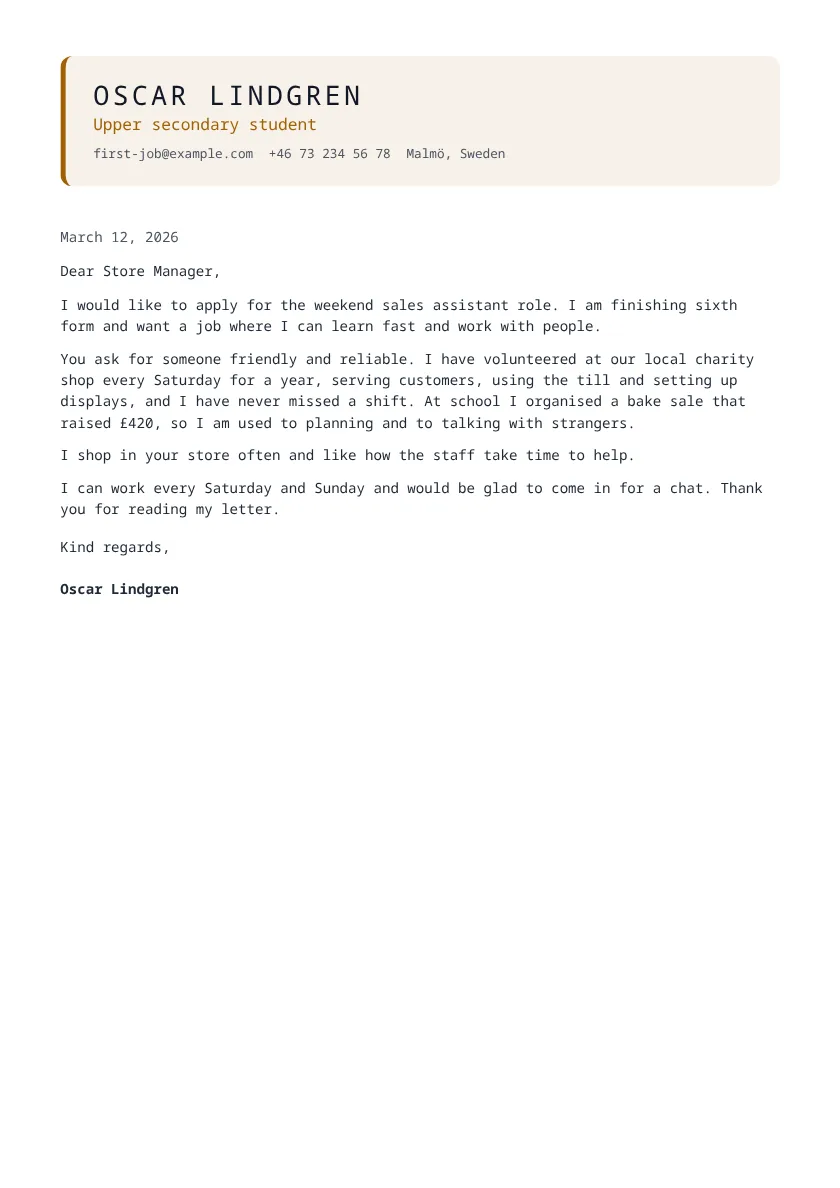
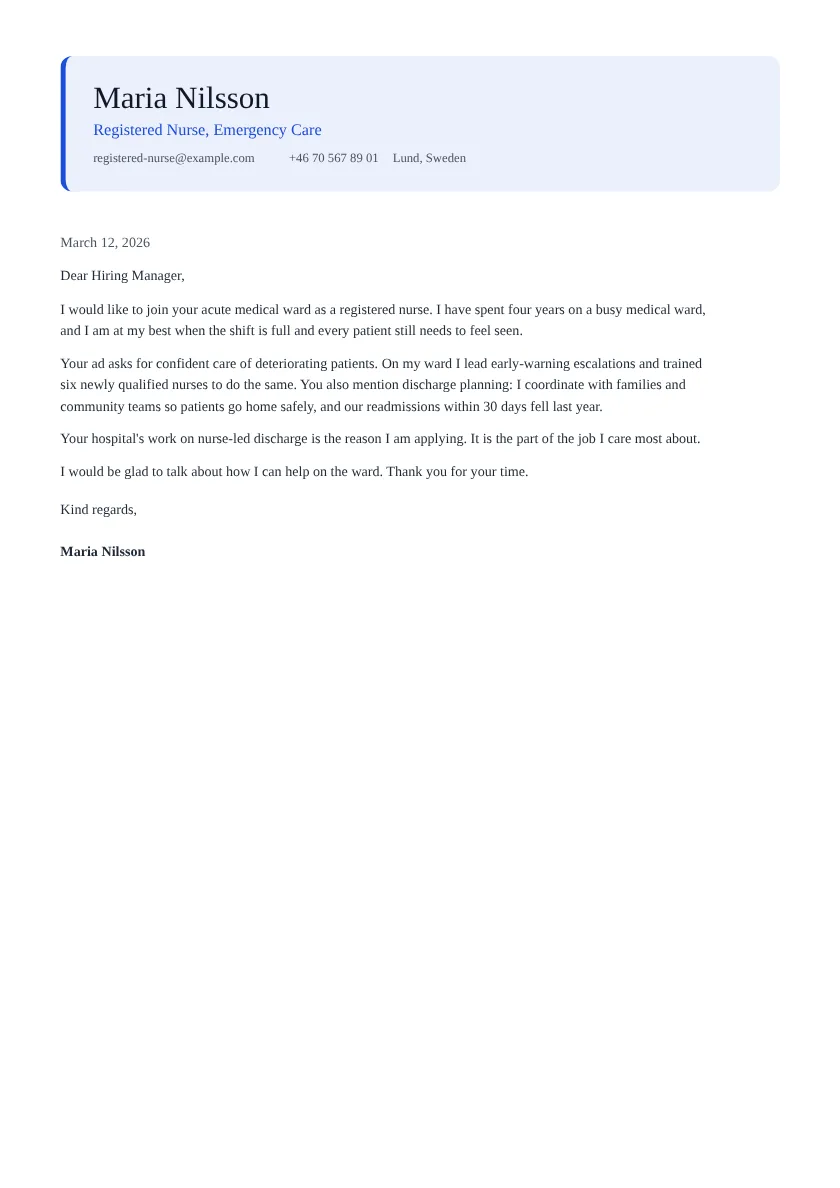
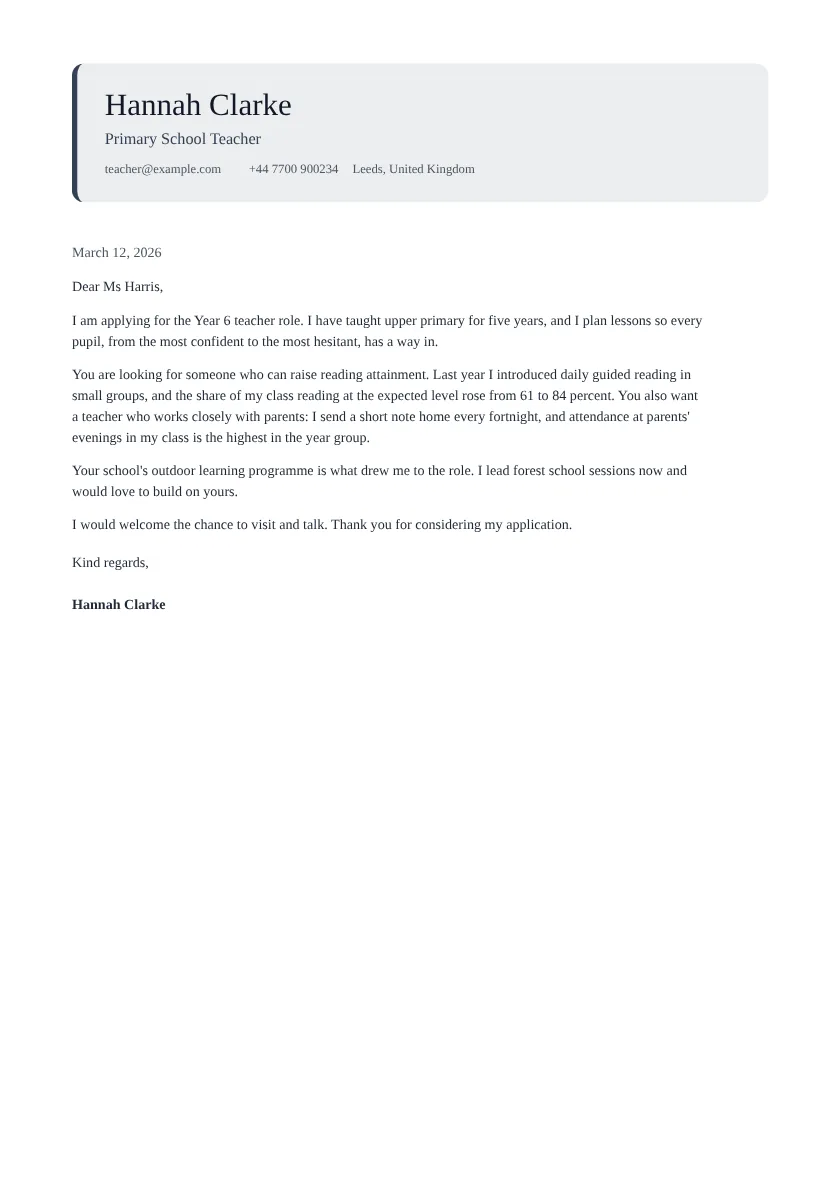
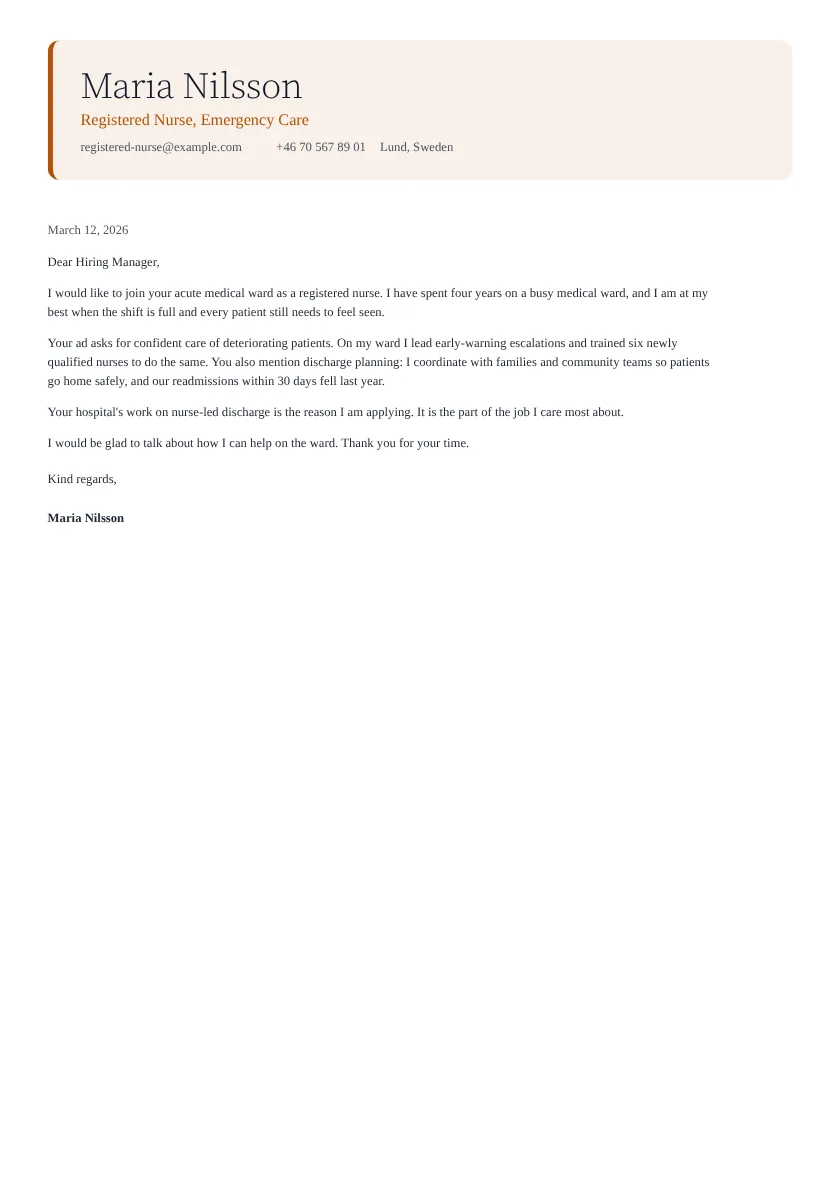
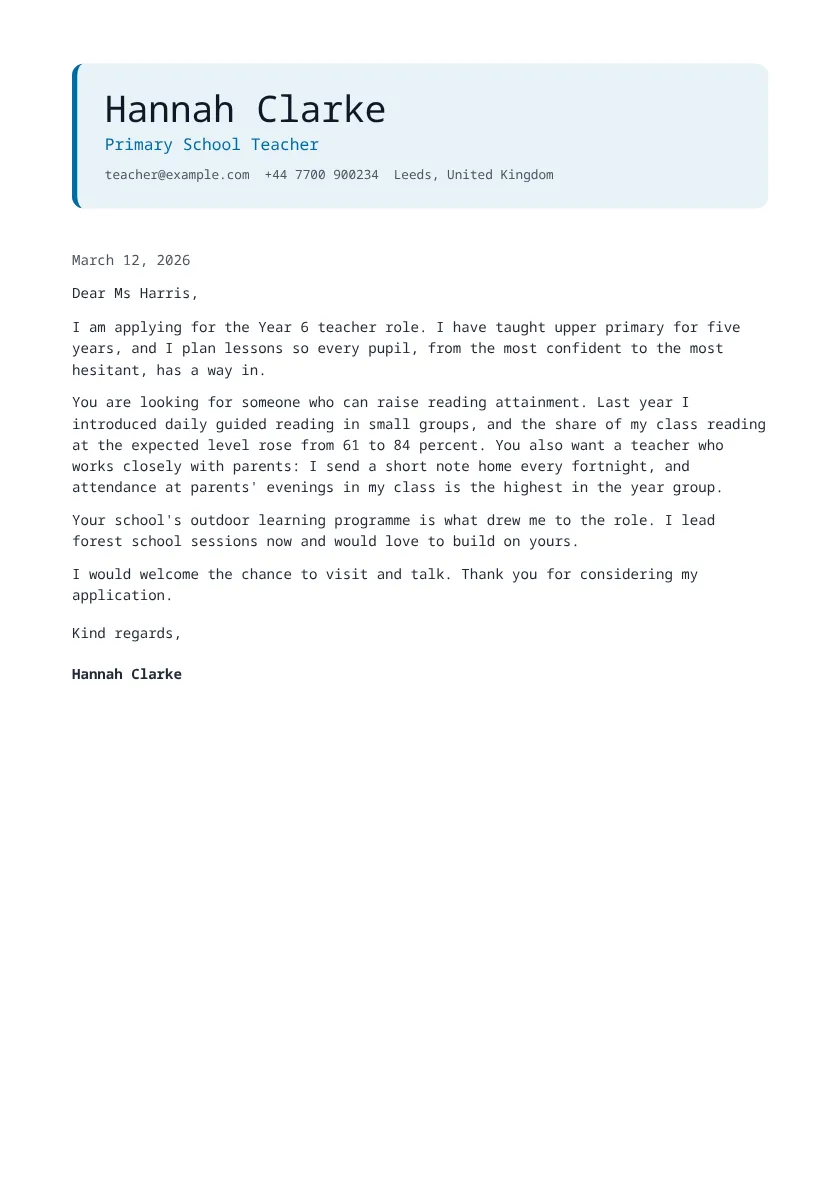
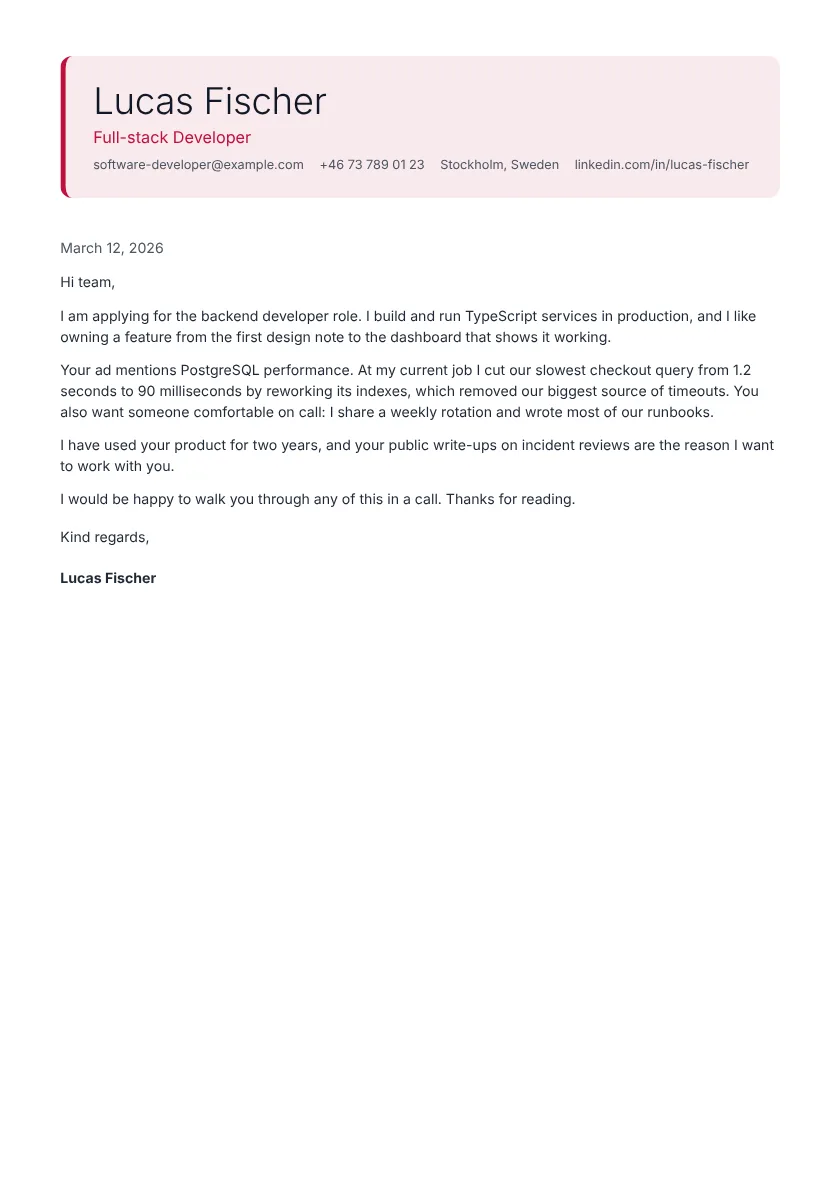
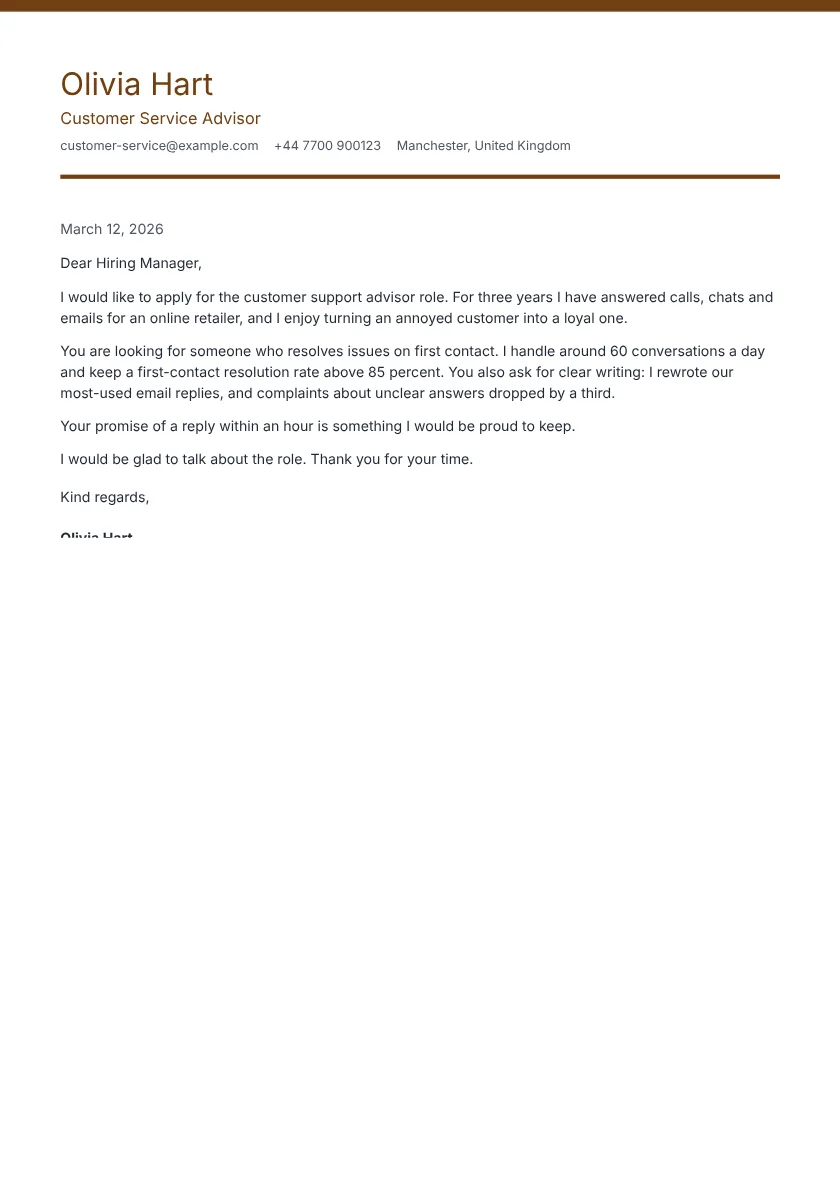
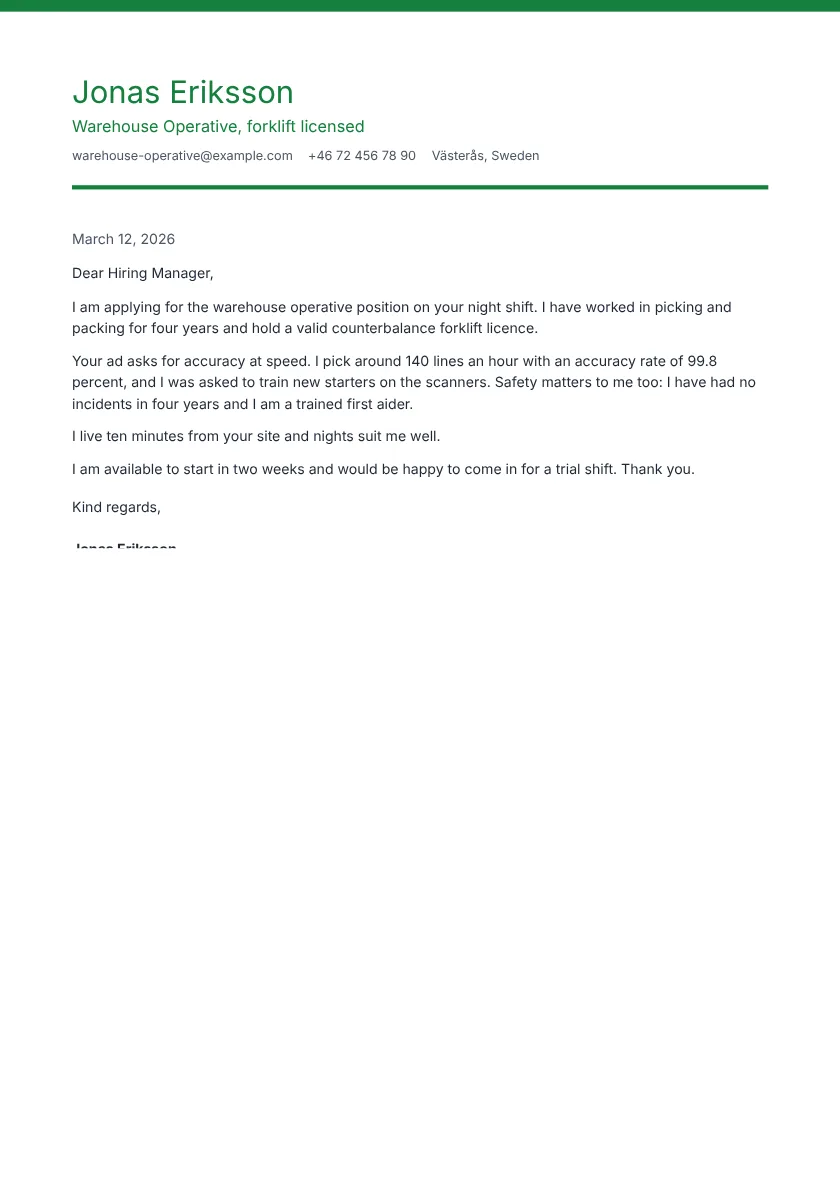
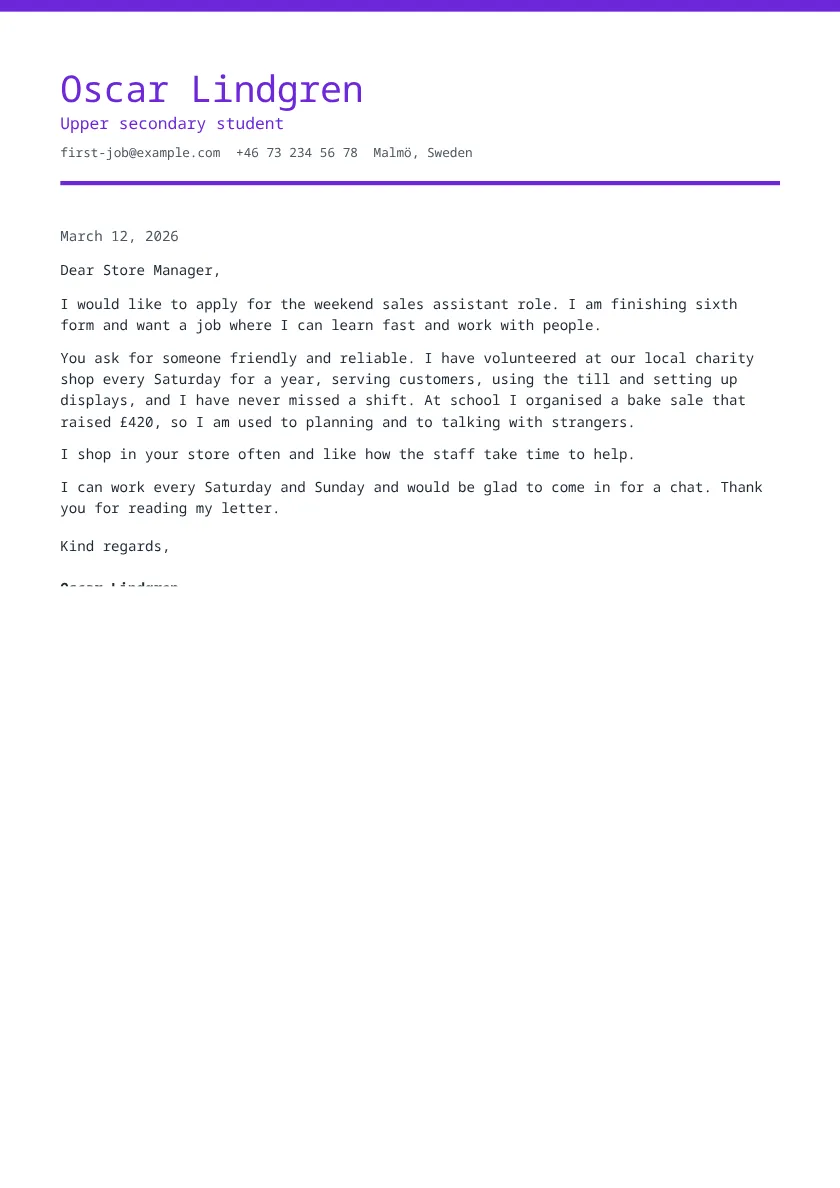
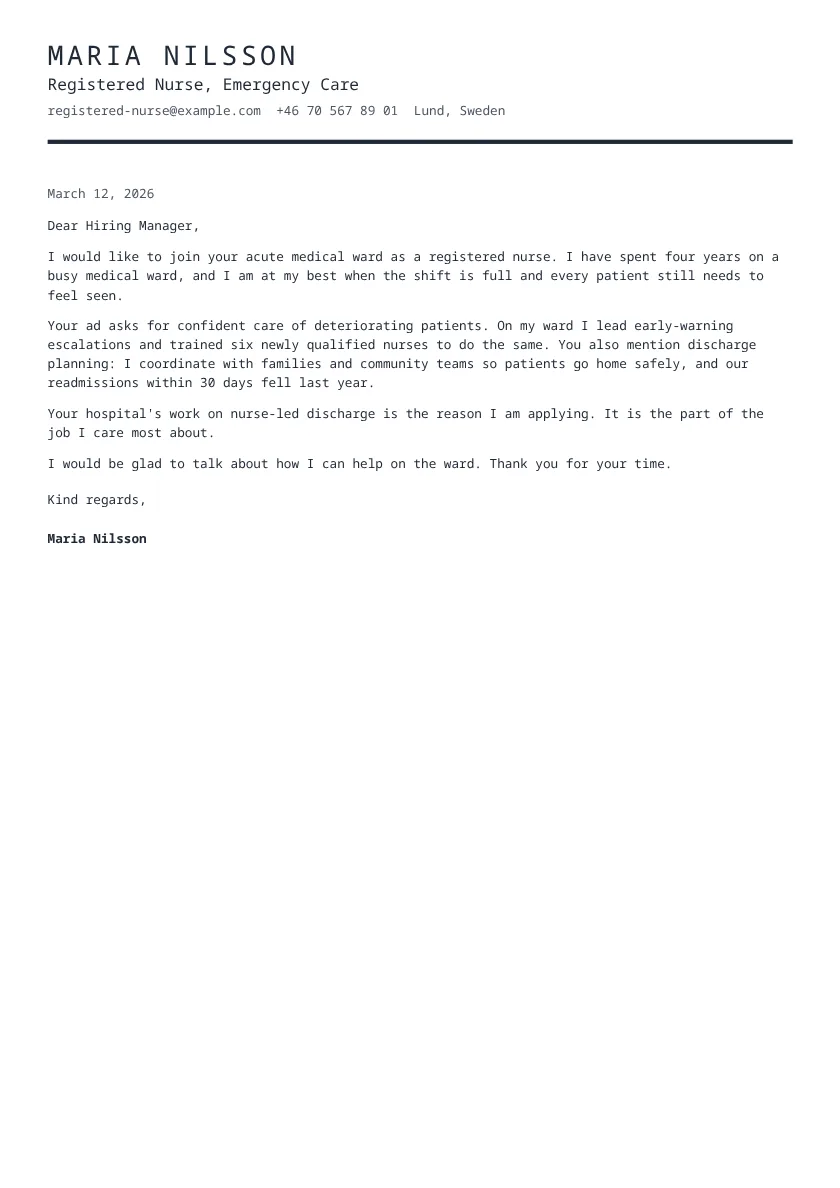
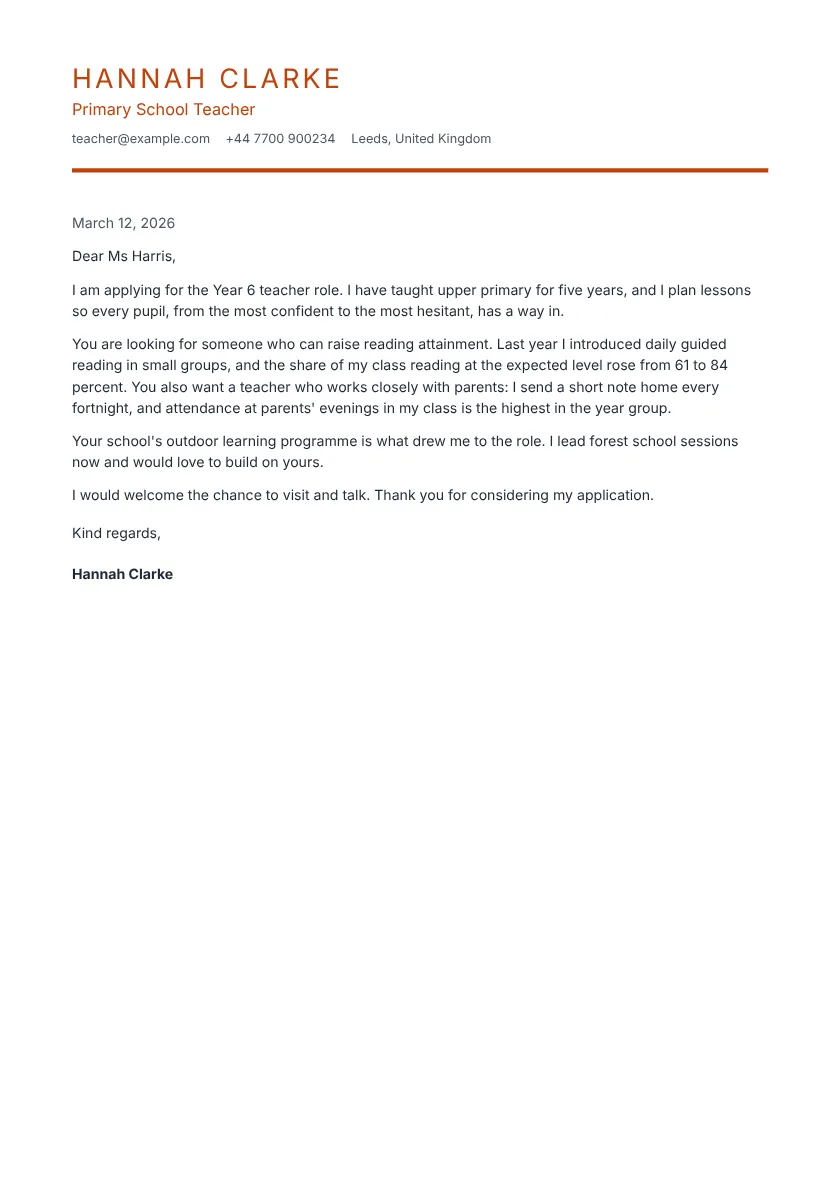
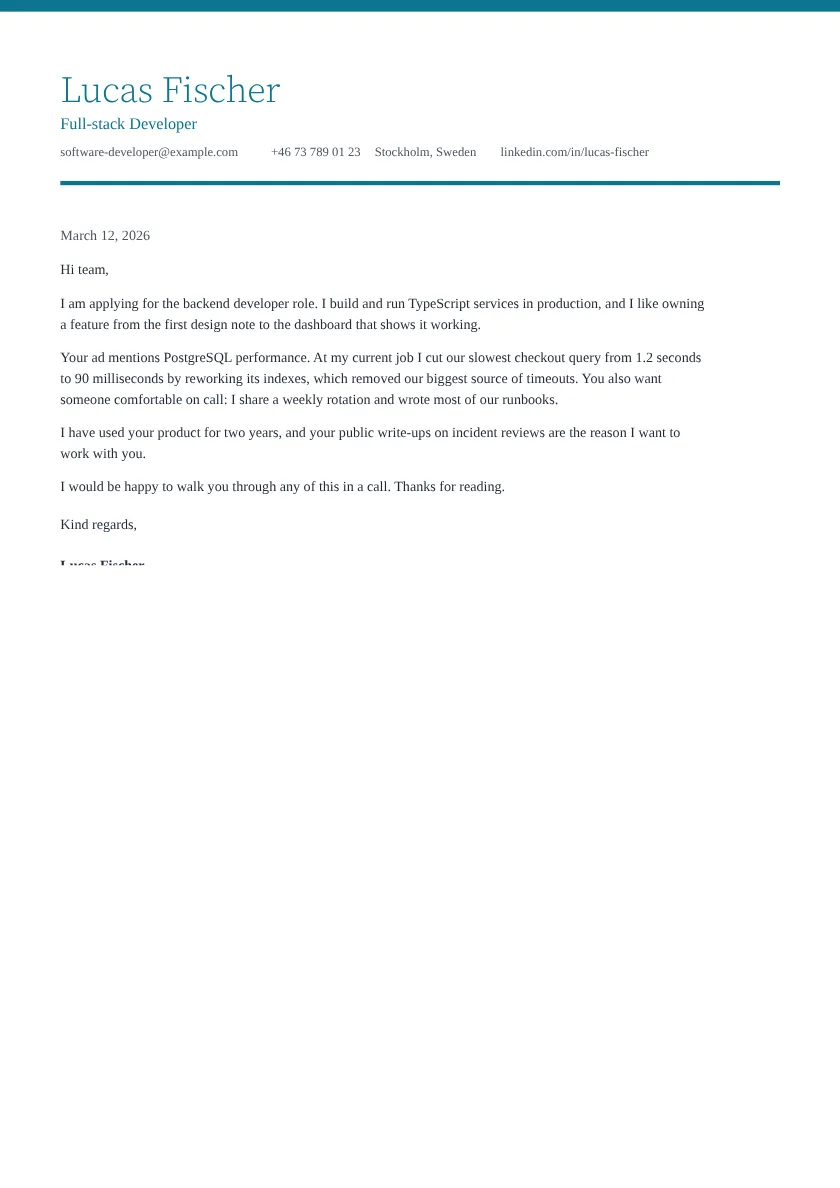
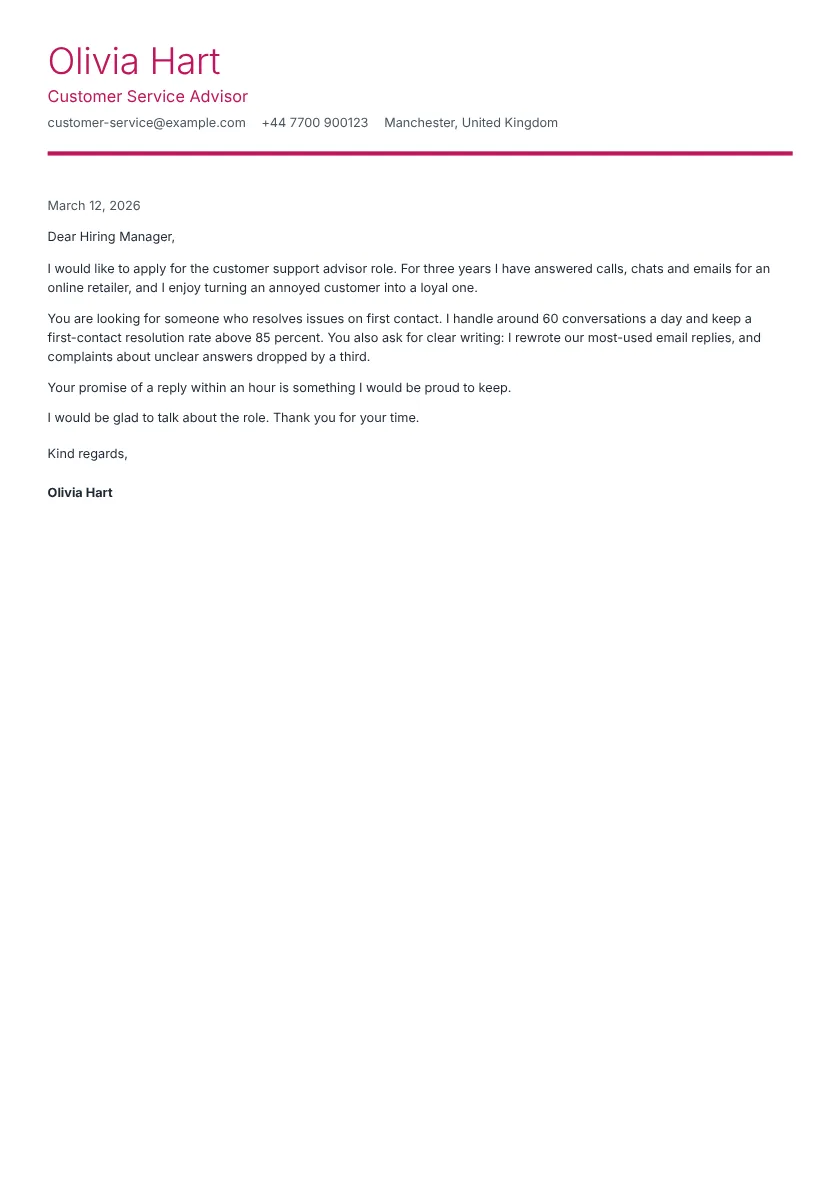
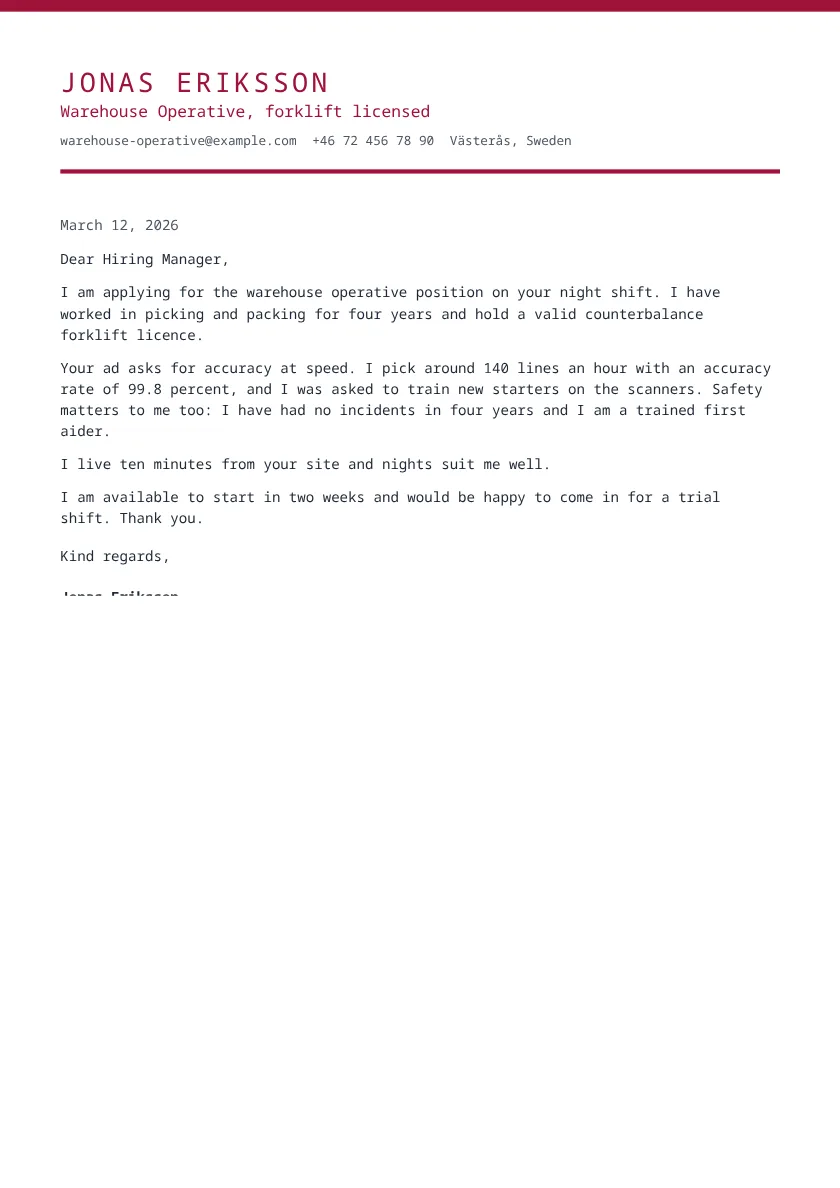
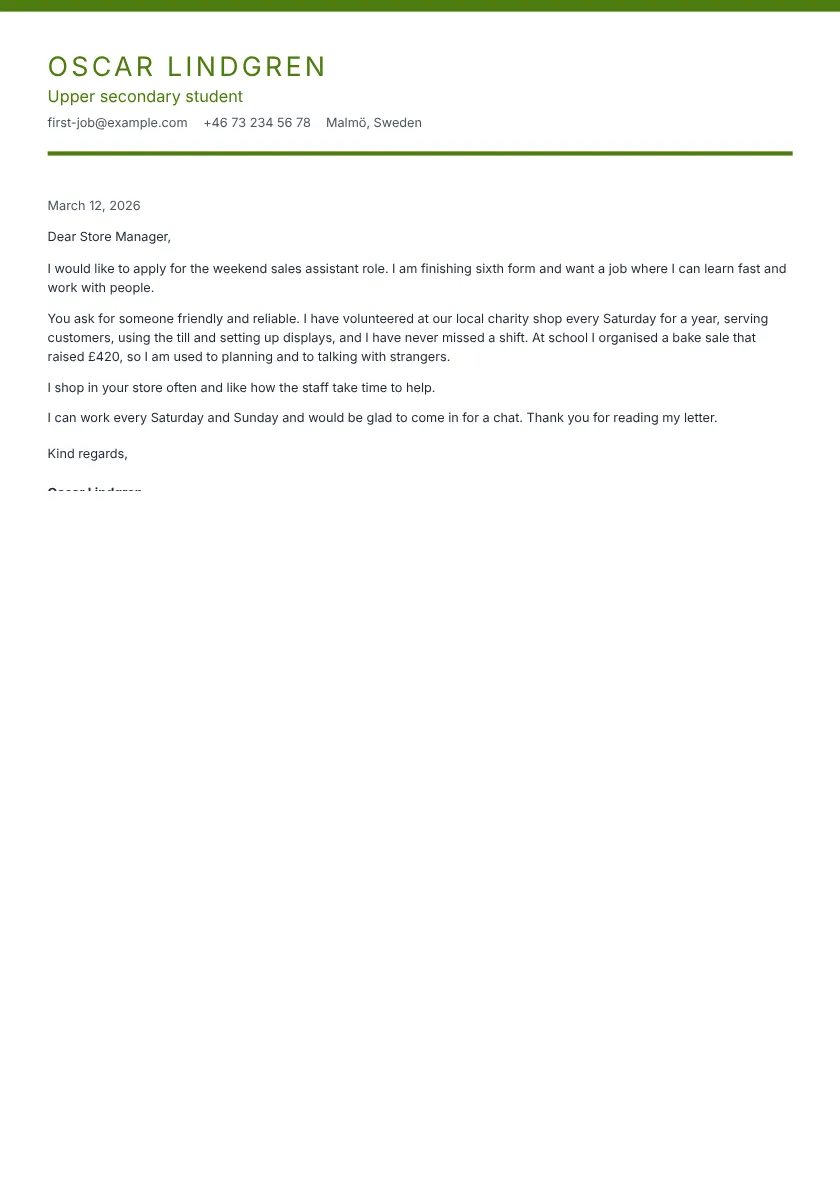
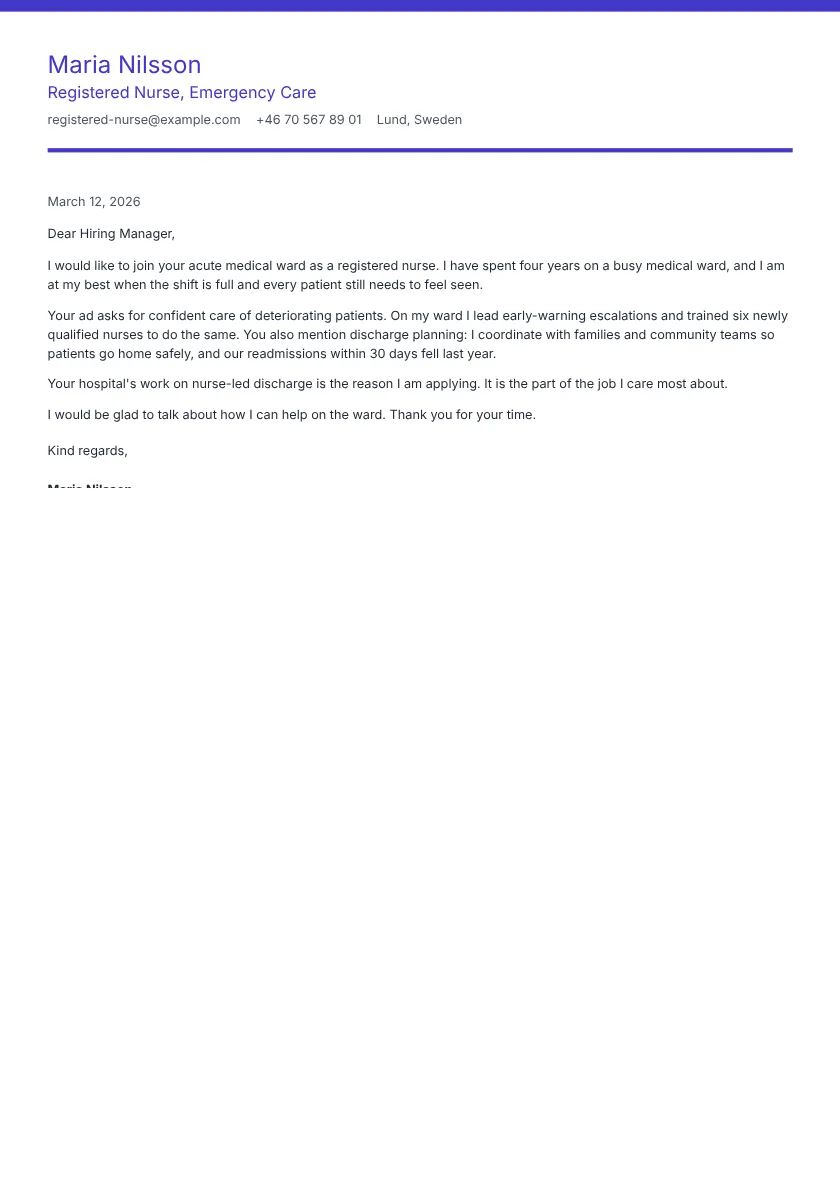
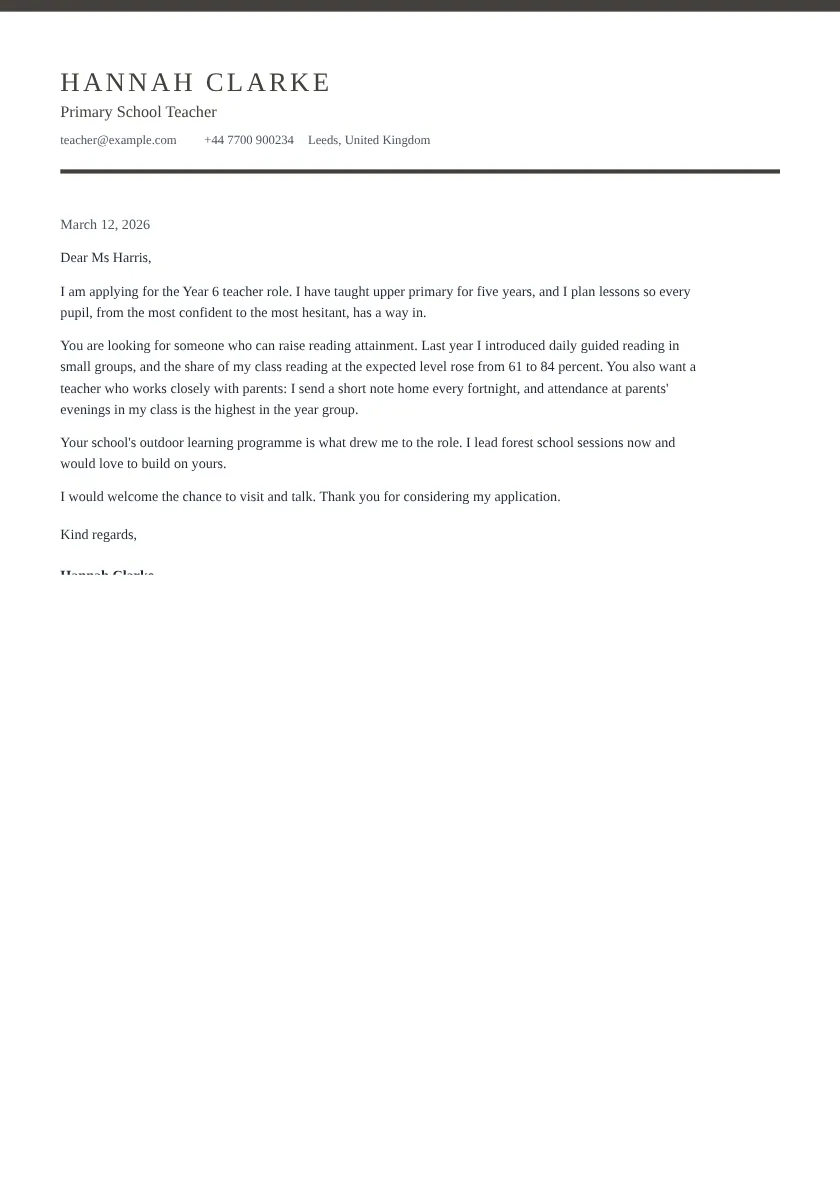
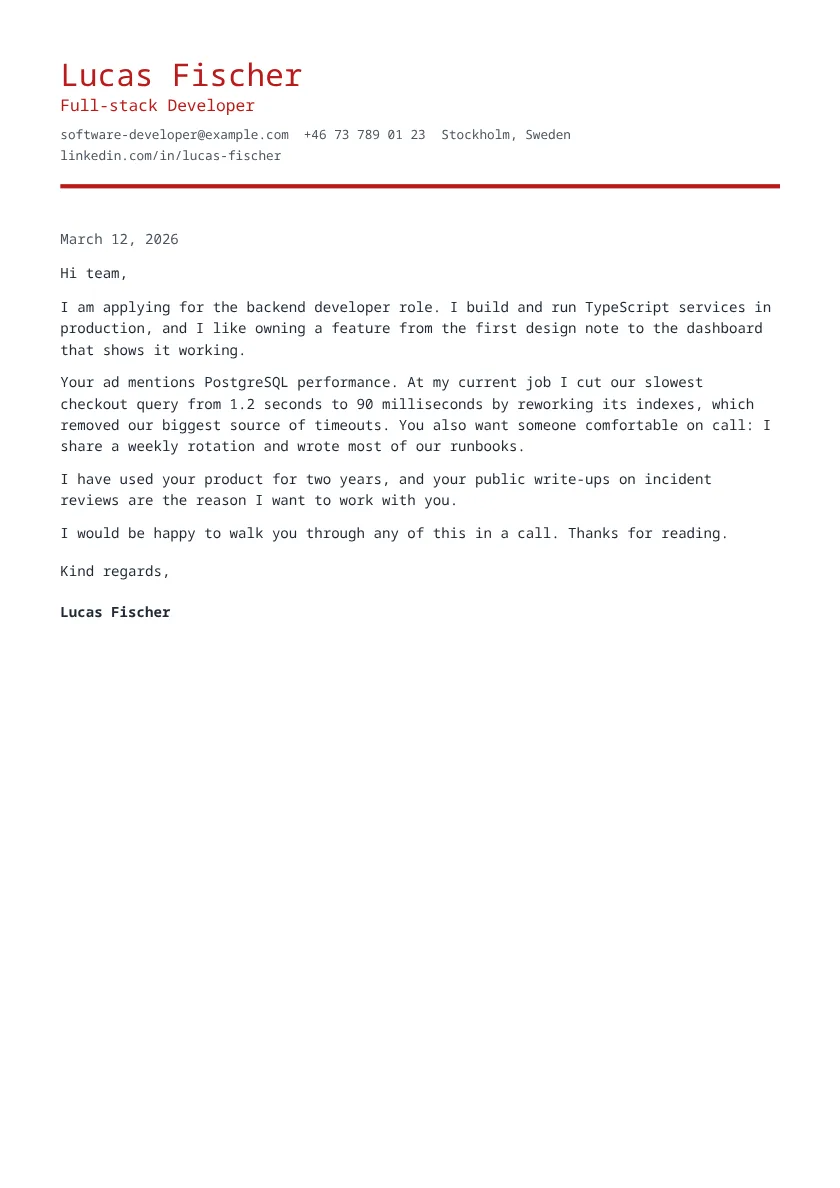
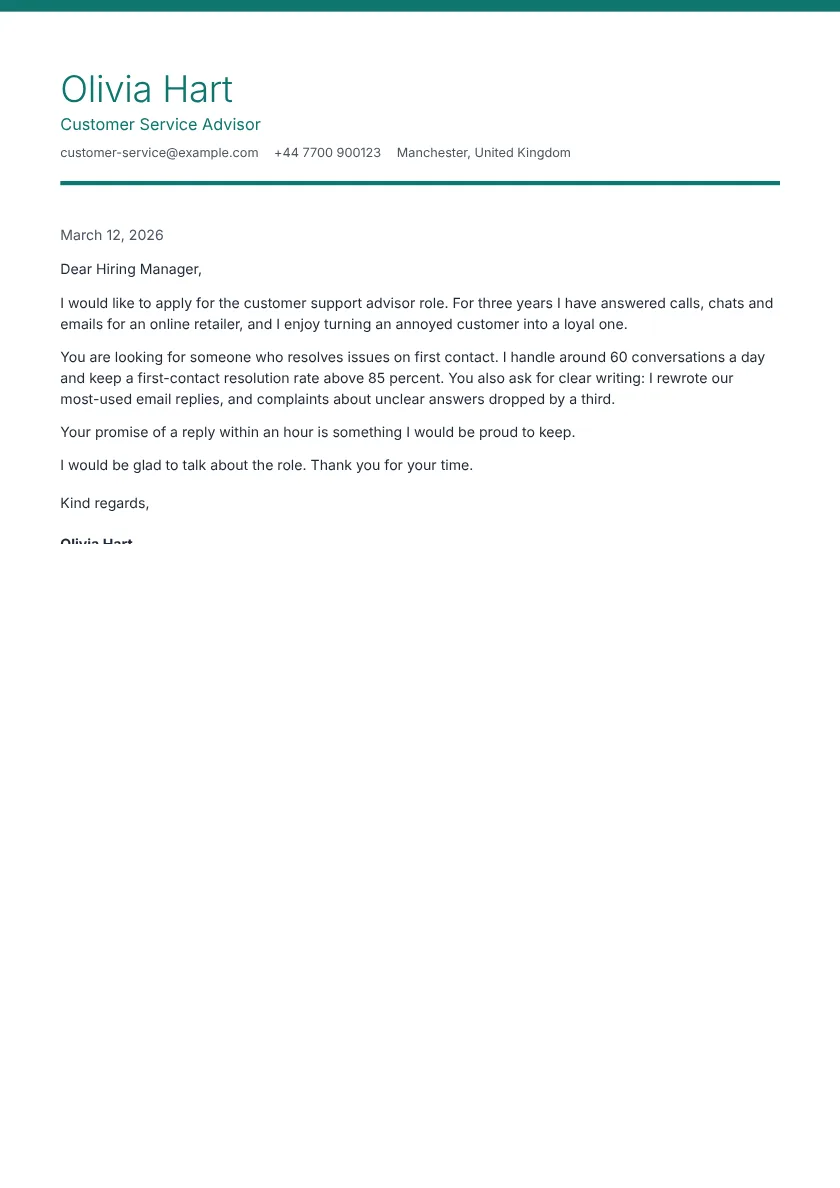
Your resume and letter are often read side by side, so use the same design for both. Matching fonts and colours look deliberate, and your contact details sit in the same place on each page.
Match the design to the employer too. Serif type suits law, finance, teaching and the public sector; clean sans type suits almost any job.
What goes on the page
A cover letter has the same parts whatever the design:
- Your name and contact details, the same as on your resume.
- The date, and the employer's name and address if you have them.
- A greeting, by name if the ad gives one, or "Dear Hiring Manager".
- Three or four short paragraphs: the fit, two proofs, why them, the close.
- A sign-off such as "Kind regards," and your name.
A template is a start, not the letter
A template decides how the letter looks. The words still have to be yours and written for this job. Recruiters read many letters, and a generic one reads as one sent to everybody.
Name the role in the first line, give one example from your work for each of the ad's two main requirements, and say one specific thing about the employer. Keep it to one page.