

"CV" and "resume" mean different things depending on where you apply. Get it wrong and you might send ten pages where two were expected, or two where an academic panel wanted everything.
What each word means by country
In the United States and Canada, a resume is the one or two page summary you send for most jobs. A CV is a long, complete record, used for academic, research and medical posts.
In the UK, Ireland, Sweden and most of Europe, "CV" is just the normal word for what Americans call a resume, and it's one or two pages. Australia, New Zealand and India use both words, usually for the same short document.
So if a Swedish or British employer asks for your CV, they want a resume. If an American university asks for one, they want the long version.
Resume or academic CV
A resume is a selection. You pick the experience, skills and results that fit the job and leave the rest out. Students and people early in their career usually keep it to one page, most experienced people to two, and you tailor it to each job with the most relevant work first. Its purpose is to get you an interview, so everything on it should help the reader decide you fit. Our guide to resume length covers how much to include.
An academic CV is a full record, and it grows with your career. Expect education with thesis titles and supervisors, research positions and grants, publications and conference talks, teaching, and awards, memberships and service to your field. A new PhD's might be two pages long; a senior professor's can run to twenty or more. You'd use one for university posts, research jobs, fellowships, and some medical and scientific roles.
Which one to send
Start with the job ad.
- If it says resume, send a resume.
- If it says CV and the job is in academia or research, send an academic CV.
- If it says CV and the job is anywhere else, send a resume. In Europe that's almost always what they mean.
- If you're not sure, send a resume of one or two pages. Few employers turn one down for being too short, and many stop reading a long one.
Local habits matter more than the name
Photos catch a lot of people out. They're common in Sweden, Germany and much of Europe, and usually left off in the US, UK and Canada. Date of birth and marital status were once standard in parts of Europe, but most employers don't expect them now, and in the US and UK you should leave them off. Spelling splits the same way: "CV" and British spelling in the UK, "resume" and US spelling in the US. Match the employer.
The content itself barely changes. In a builder you write your resume once, then adjust it for each job: reorder sections, cut older roles, and use the local word in your file name. Anna-Berg-CV.pdf reads right in Stockholm, and Anna-Berg-Resume.pdf reads right in Chicago.
Whichever word you use, applicant tracking systems read the same things. Our guide to what an ATS reads explains how to make sure yours parses cleanly, and the ATS-friendly resume page lists the layouts that work best.
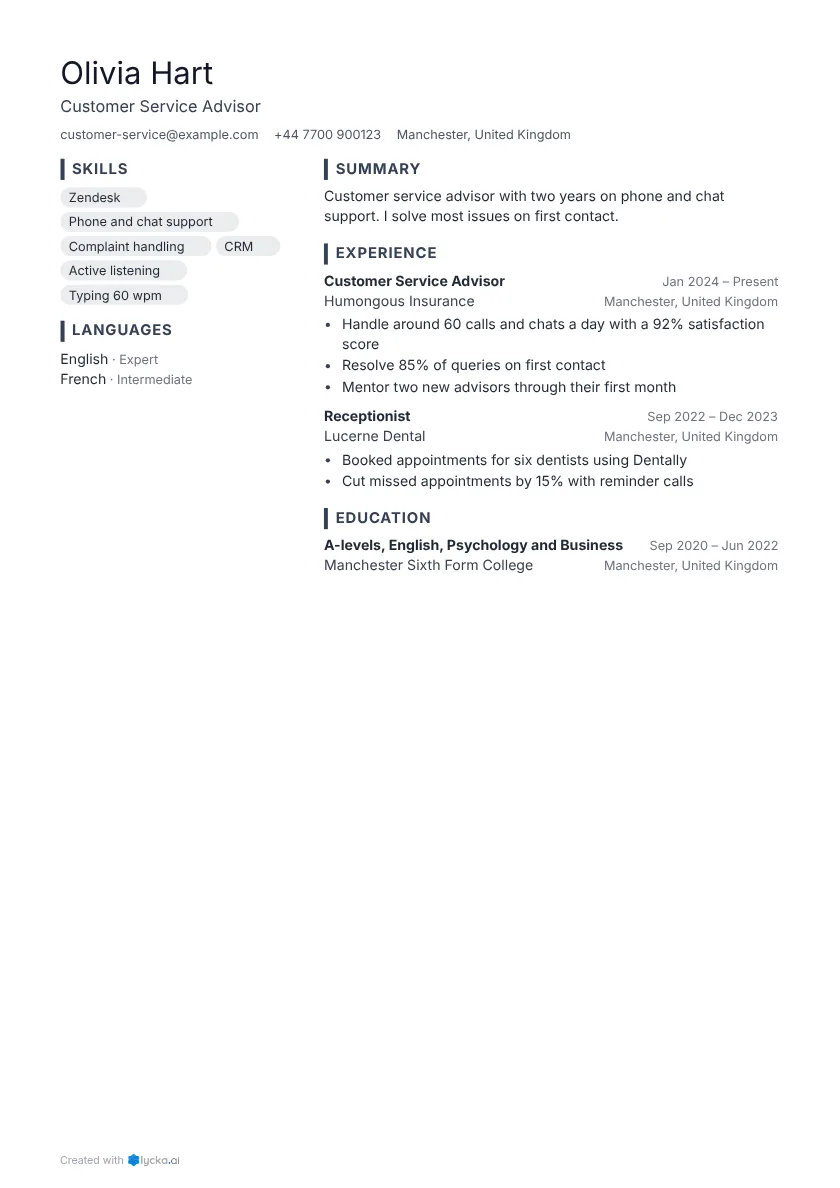
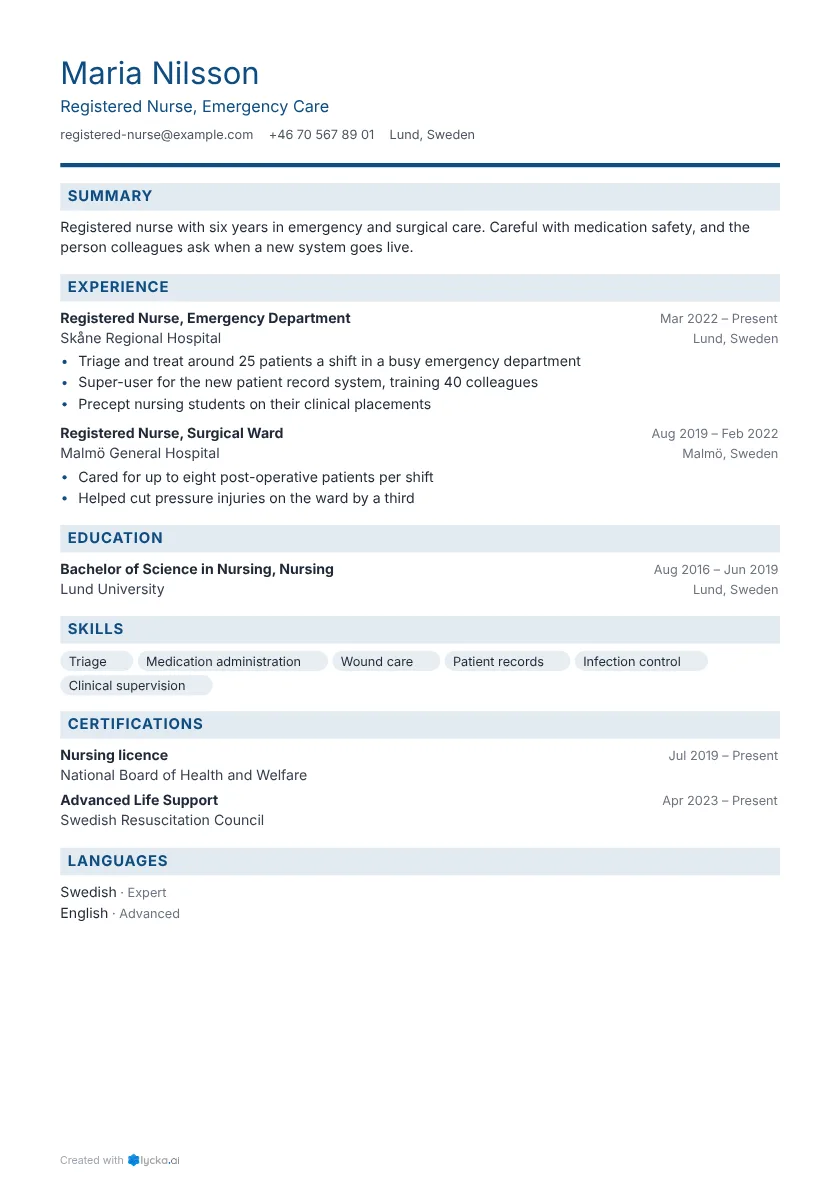
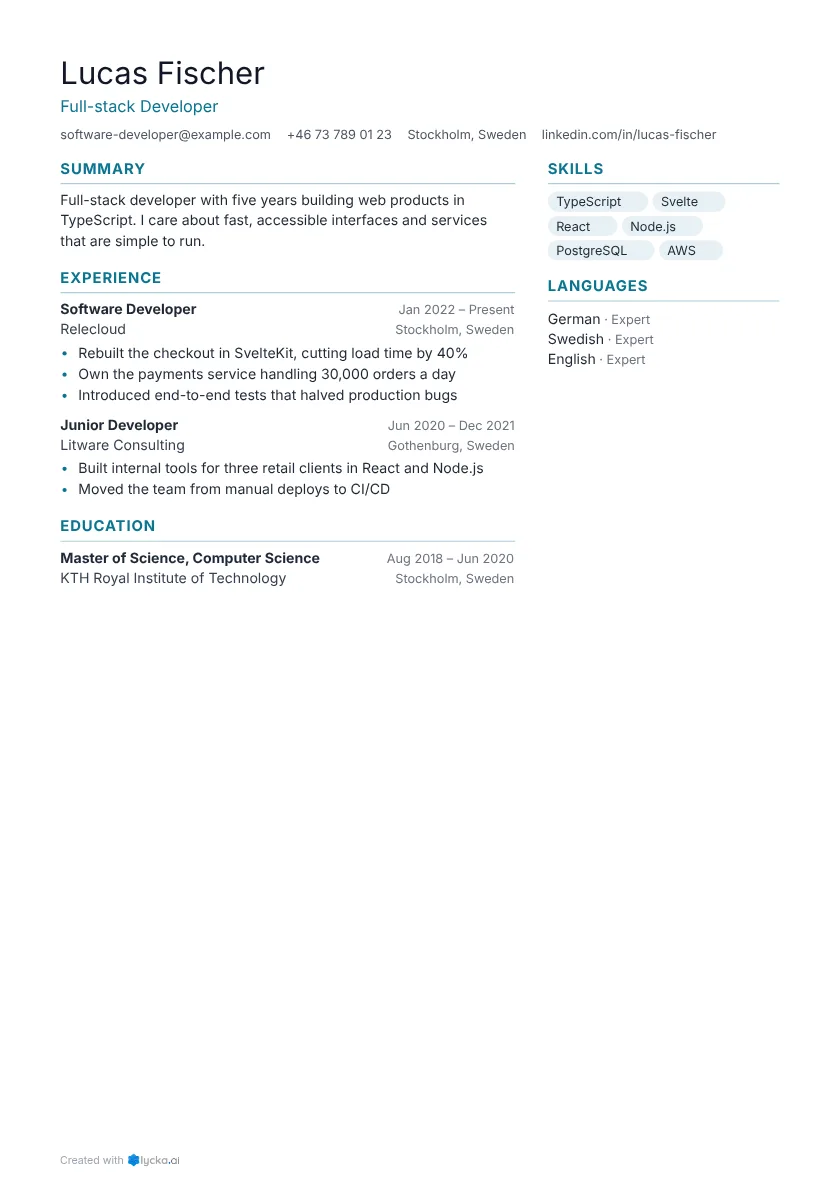
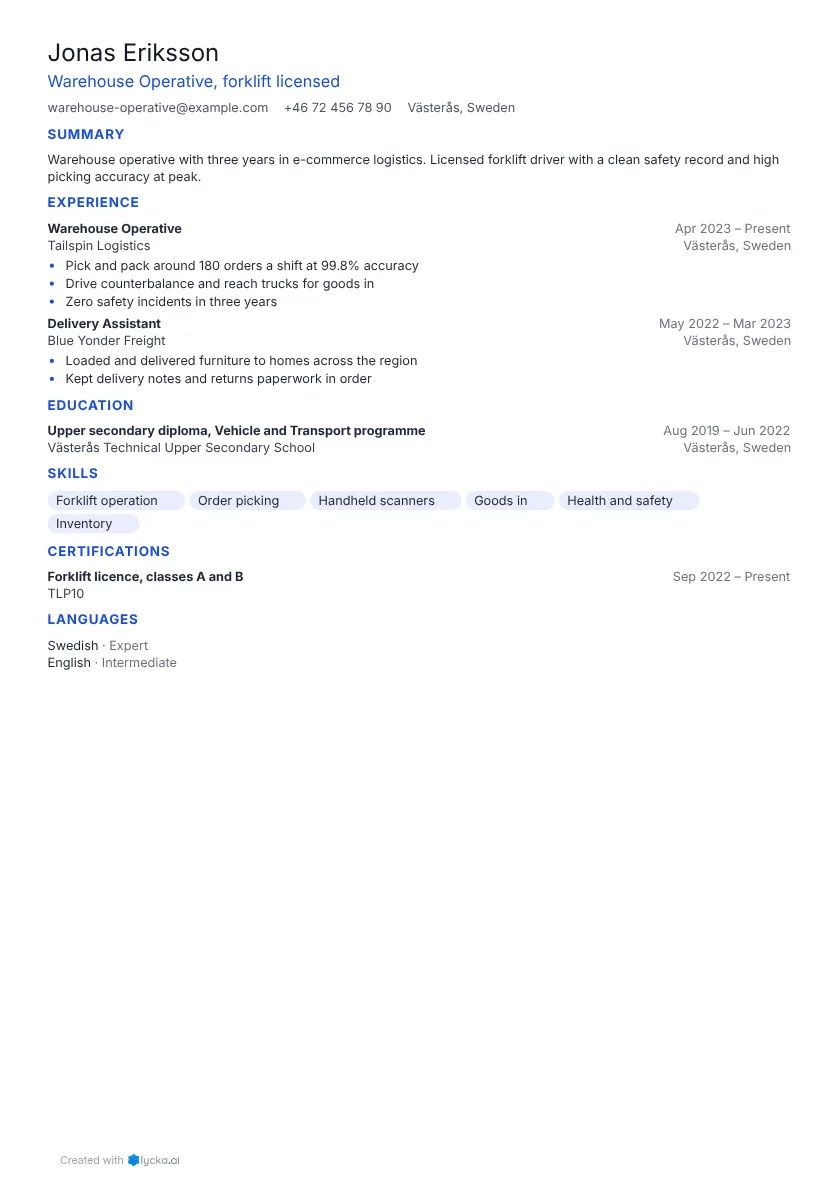
Our resume examples are one or two pages, so they suit a US resume and a European CV alike. Pick one in your field and make it yours.