

Your resume should be as long as your relevant experience, and no longer. For most people that means one page early on and one or two later, though where you apply can change the answer.
A rule of thumb
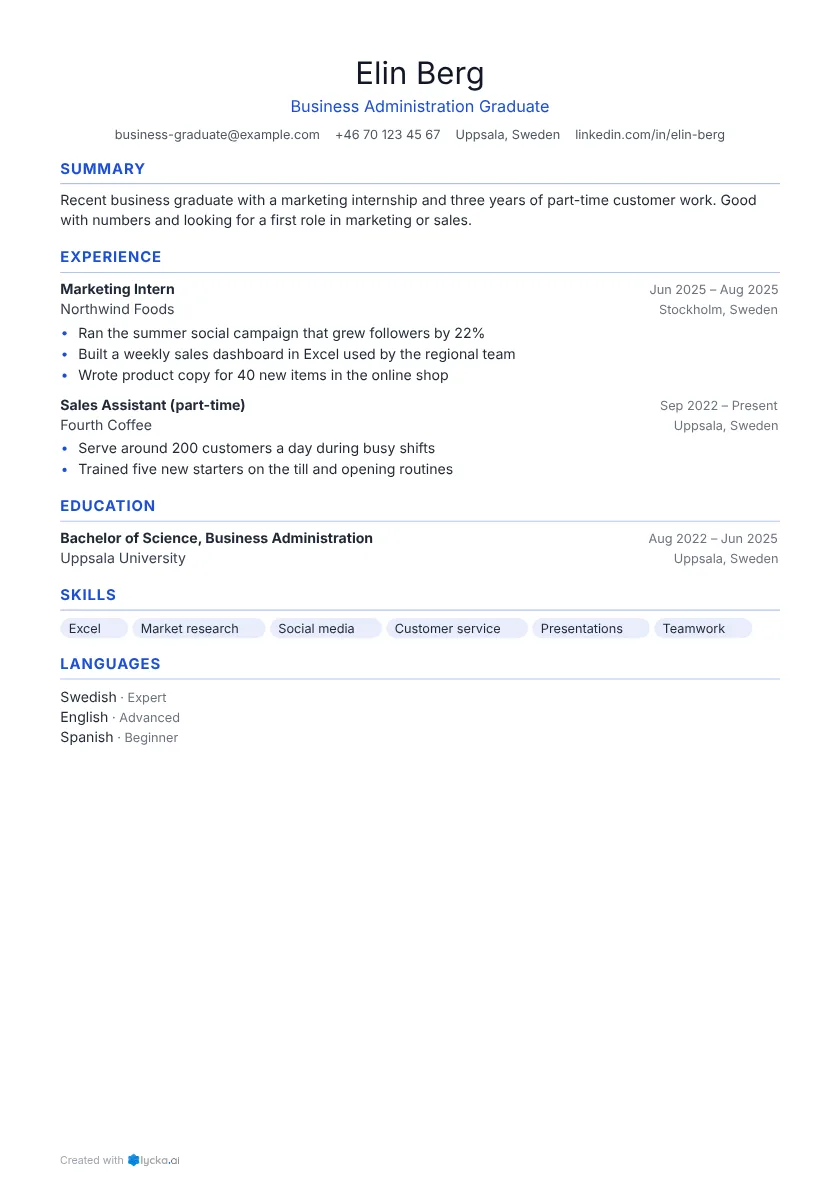
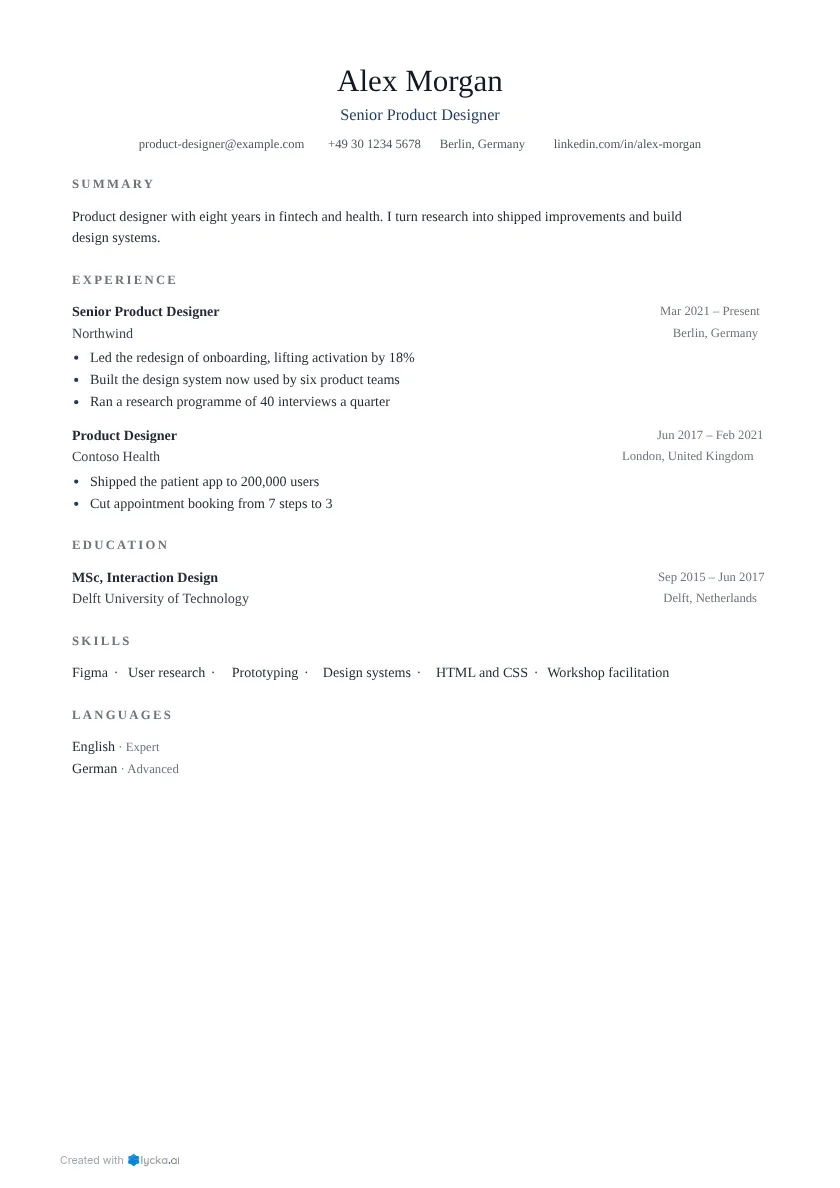
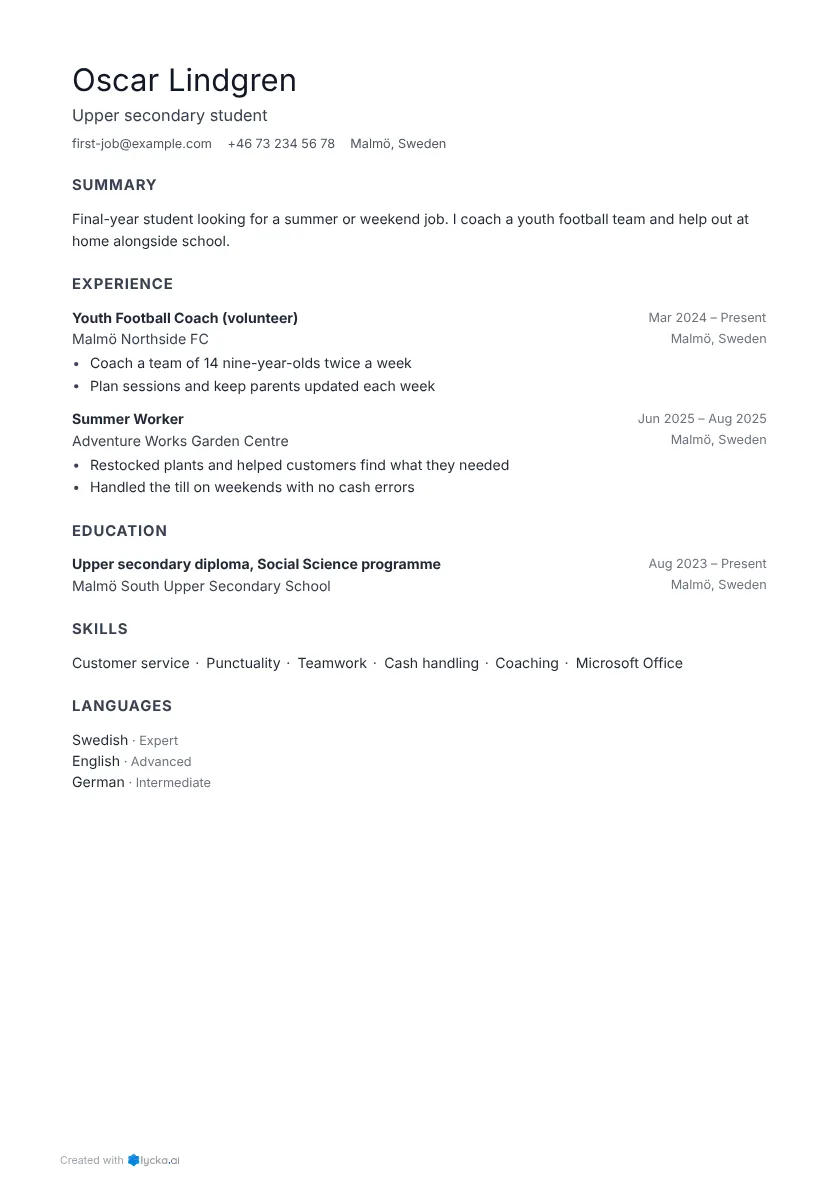
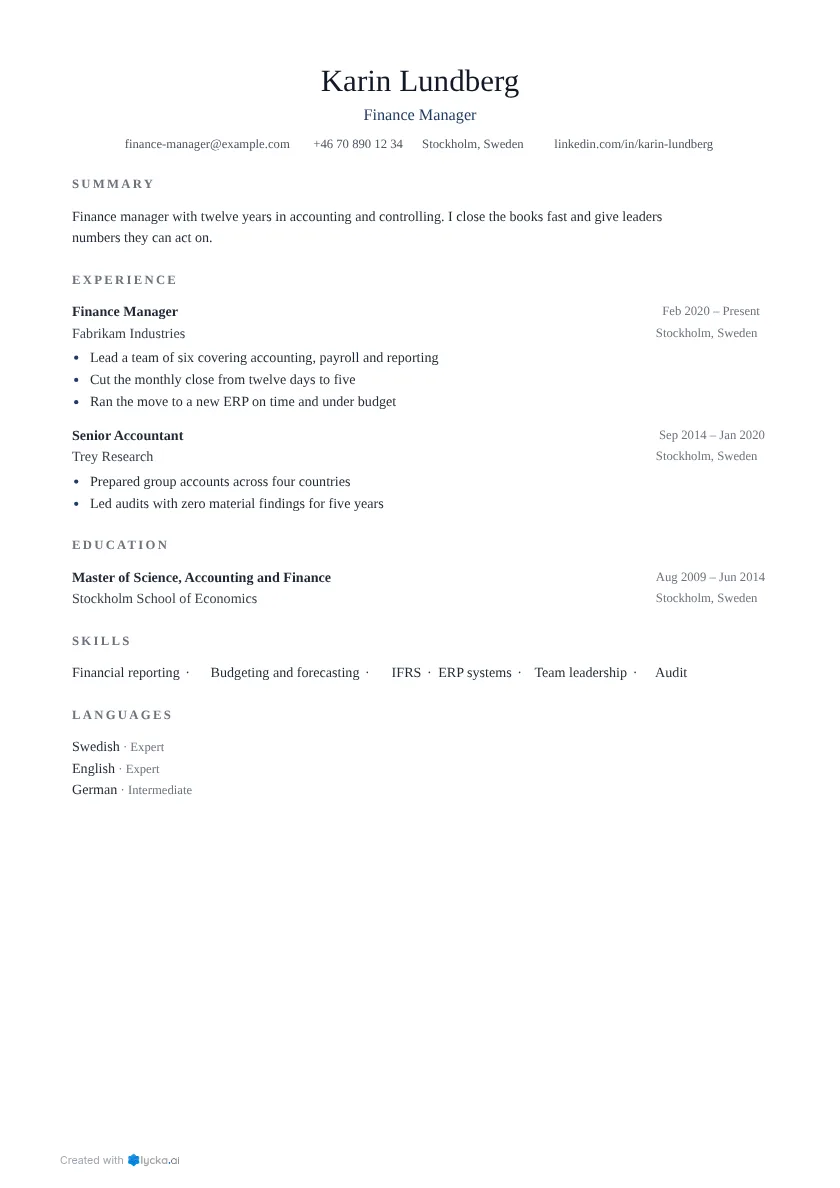
If you're a student, a graduate or have under 5 years of experience, aim for one page. Most experienced professionals land on one to two. Senior leaders, academics and some technical or medical roles often run to two pages or more, and that's normal where publications, certifications or project lists are expected.
A recruiter will read a second page if it's full of relevant, recent achievements. They won't read one taken up by a job you had twelve years ago in a different field.
What fills the page shifts as your career moves on. Students and first-time applicants put education near the top, with projects, part-time work and volunteering; the college student and first job examples show how. In skilled and mid-career roles, experience leads, with three to five results per recent job and your licences or certificates listed, as in the electrician and registered nurse examples. Managers and senior leaders cover the last 10 to 15 years in detail and give the scope of every role (budgets, team size, sites). Have a look at the operations director and school principal examples.
It depends on where you apply
Conventions differ between countries and sectors. In the United States, one page is common early in a career and two for experienced candidates. In the UK and much of Europe, a two-page CV is standard for most people with work experience. Academic CVs list publications, grants and teaching, so they're often much longer, and public sector applications sometimes ask for more detail than a private employer would. If the job advert or the employer's careers page states a length, follow it.
The word itself causes some confusion. In the US and Canada, a CV usually means an academic document that lists every publication, grant and course taught, and it can run to many pages. A resume is the short version used for most jobs. In the UK, Ireland, Sweden and most of Europe, "CV" simply means a resume, and the two-page guidance applies. If you're applying abroad, use the word the posting uses. Our CV maker and resume builder produce the same document either way.
How to make it shorter
If your resume runs long, cut in this order:
- Old roles. Jobs from more than 10 to 15 years ago can shrink to one line each, or move to a short "Earlier experience" list.
- Duties. Keep the bullets that show results and delete the ones that only describe the job. There's more on this in turn duties into results.
- Generic skills. "Microsoft Word" and "teamwork" rarely earn their space.
- References. "References available on request" is assumed, so remove it.
- Repetition. If two jobs had similar bullets, keep the stronger one.
Don't shrink the font or the margins to squeeze onto one page. A cramped page is harder to read than a clean second page. If you're aiming for one page, a one-page template keeps the layout tight at a readable size.
Too thin, or onto a second page
If your resume feels thin, add content rather than padding: projects from work or study, certificates and courses relevant to the job, or volunteering that shows responsibility or skills. Putting results into your existing bullets helps as well, since each line then says more.
A second page won't count against you if it earns its place. Recruiters often skim the first page and only turn over if it holds their interest, so put your strongest, most recent work on page one. Add your name and the page number to page two in case it gets separated. What does hurt is a second page with three lines on it. Either cut back to one page or fill the second with something useful, like certificates, projects or languages.
When you're unsure about a line, ask yourself whether it would help the employer decide to interview you for this job. If it wouldn't, cut it.