

Most weak resume lines start the same way: "Responsible for", "Helped with", "Worked on". They tell the reader you were there. A precise verb tells them what you did.
Responsible for training new staff.
Trained 12 new starters in their first month.
The second line is barely longer and says far more.
The best verb is simply the most accurate one. "Led" and "supported" describe different jobs, and a reader who later finds out you supported a project you said you led will start doubting the rest of the page. Pick a verb you could explain in an interview.
Verbs by what you did
You led people or work: Led, managed, supervised, coordinated, directed, ran, trained, mentored, scheduled, delegated
Supervised a team of eight on the evening shift.
You made or built something: Built, created, designed, developed, installed, assembled, set up, launched, produced, fitted
Installed heat pumps in 40 homes a year as lead fitter.
You improved something: Improved, reduced, cut, increased, raised, simplified, fixed, streamlined, sped up, upgraded
Cut waiting times at reception from 15 minutes to 5.
You looked after people: Cared for, supported, comforted, advised, guided, assessed, treated, taught, welcomed, resolved
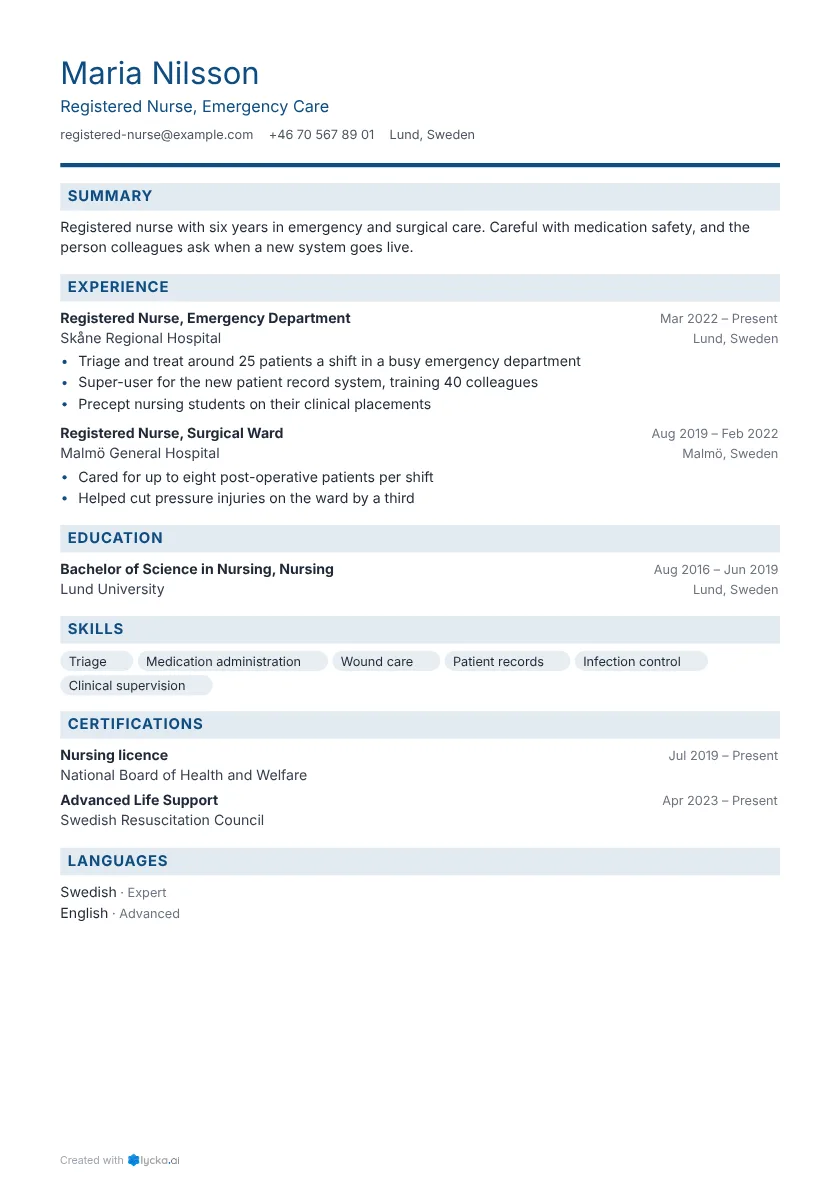
Cared for up to six patients a shift on a busy surgical ward.
You handled money or numbers: Budgeted, forecast, reconciled, priced, audited, tracked, saved, sold, negotiated, invoiced
Reconciled 300 supplier accounts a month with no missed deadlines.
You organised things: Organised, planned, prepared, arranged, sorted, stocked, maintained, recorded, processed, delivered
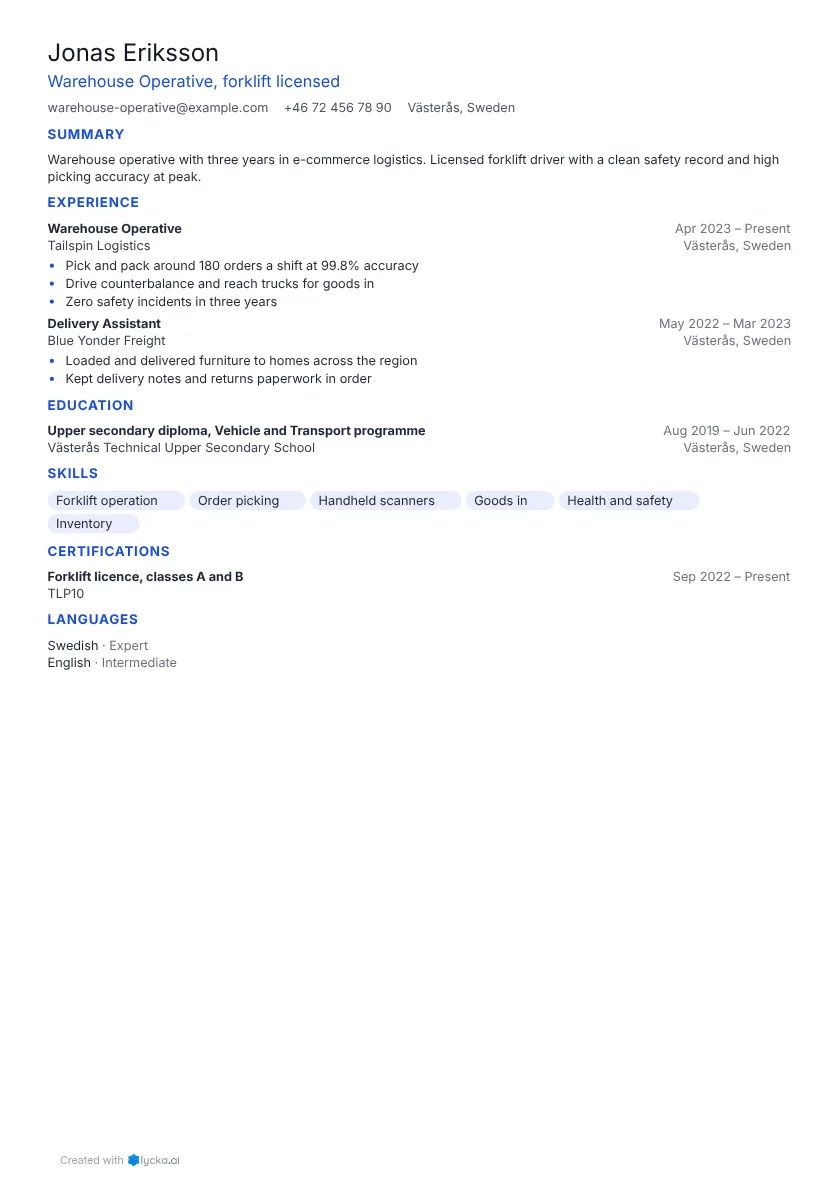
Processed 80 customer orders a day across three channels.
You found or analysed something: Analysed, researched, identified, tested, measured, reviewed, compared, inspected, diagnosed, evaluated
Diagnosed engine and electrical faults on 15 vehicles a week.
You communicated: Presented, wrote, explained, reported, persuaded, briefed, interviewed, answered, translated, edited
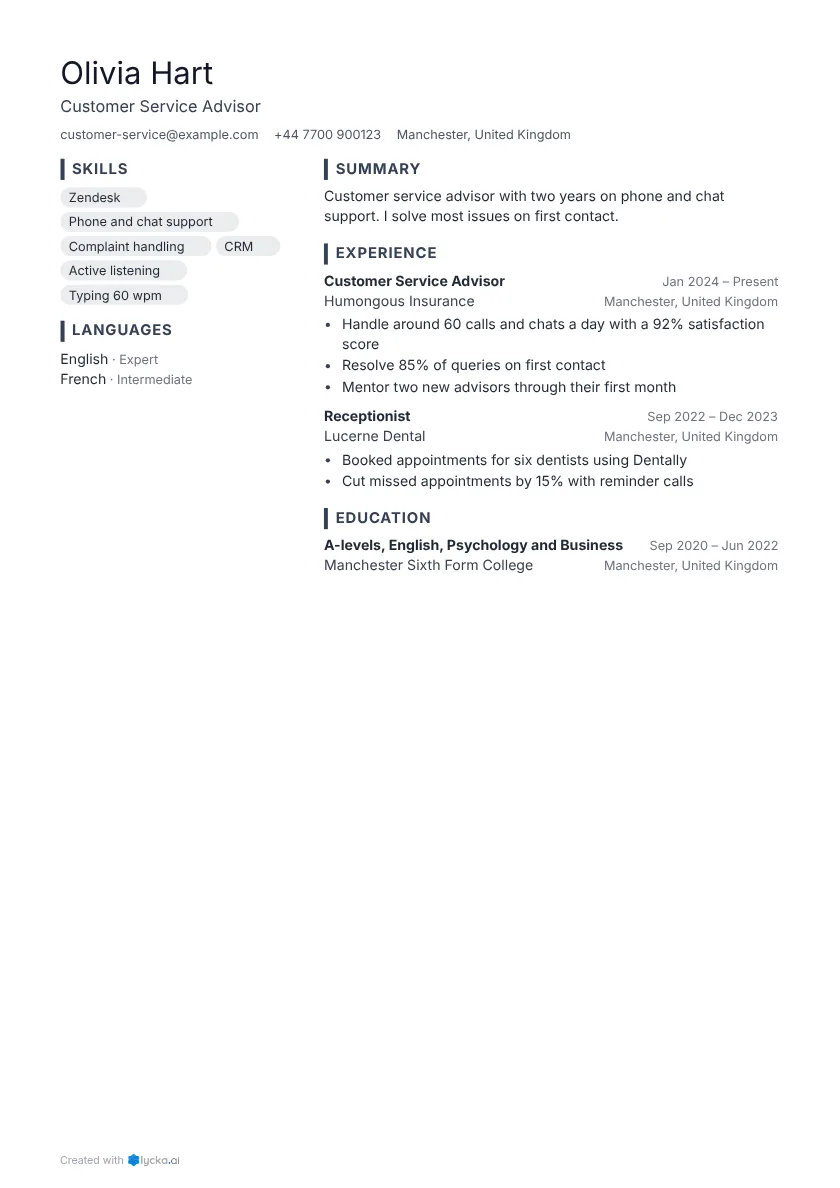
Answered 60 customer calls a day with a 92% satisfaction score.
Using them well
Start each line with one verb. "Planned and organised and coordinated" weakens all three. Use past tense for past jobs and present tense for your current one, and leave out "I": "Trained staff" reads better than "I trained staff".
Watch for the same verb running down a list. If every bullet starts with "Managed", look at what each one actually involved and use that. Then follow the verb with a result, since a number or outcome says how well you did it. Our guide to results, not duties shows how.
Words to drop
- Responsible for: copies the job description
- Helped, assisted: fine when true, but say what you did to help
- Worked on, involved in, participated in: vague
- Utilised, leveraged, spearheaded: long words for "used" and "led"
- Passionate, dynamic, synergised: buzzwords that fill space
Matching the job ad
Recruiters search applicant tracking systems for the words in the job ad, and a lot of those are verbs and skills. If the ad says "schedule appointments" and you wrote "booked", it's worth switching to the employer's word. Our guide to tailoring your resume covers this step by step.
Every resume example uses these verbs in context, from line cook to finance manager. Open one in your field and compare its lines with yours.