

A nurse manager reading resumes has a short list of questions. Are you registered? What kind of patients have you cared for? Can you work on their ward from the first week? Your resume should answer all three before the end of the first page.
Registration and summary first
Put your registration where nobody can miss it: in the headline, the summary or at the top of your certifications. Name the body that issued it and the year.
Registered Nurse (Adult), NMC registered 2021
If you're waiting for registration, give the date you expect it. A manager filling a post for spring can plan around that, but leave it out and most will assume you can't start.
The summary comes next. Skip the lines about being caring and hard-working, which any nurse could write. Say what setting you work in, for how long, and what you're confident doing. Three lines is enough:
Registered nurse with six years on a busy medical ward. Confident with deteriorating patients, discharge planning and supporting students on placement.
Our guide to the resume summary has more examples across fields.
Experience: the patients you cared for
Every nurse gives medication and does observations, so writing that down tells the reader nothing new. Write what was specific to your work: the type of ward or unit and how many beds, how many patients you look after on a shift, and what you do without being asked, like taking charge, mentoring or rapid response. If you changed something, such as an audit, a new chart or a training session, put that in too.
Took charge of a 28-bed medical ward on night shifts, three nights a month.
Led a falls audit and the changes that followed, cutting falls on the ward by a quarter in six months.
The numbers don't have to be dramatic. A patient ratio or a bed count tells the reader what kind of pressure you work under. See results, not duties for how to turn tasks into lines like these.
Clinical skills, by name
Nurse managers and applicant tracking systems both look for specific skills. List the ones the posting names, worded the way it words them, and add the others you use:
- IV therapy and cannulation
- wound care and tissue viability
- catheterisation
- NEWS2 or other early warning scores
- the patient record system you use, such as Cerner, Epic or Cosmic
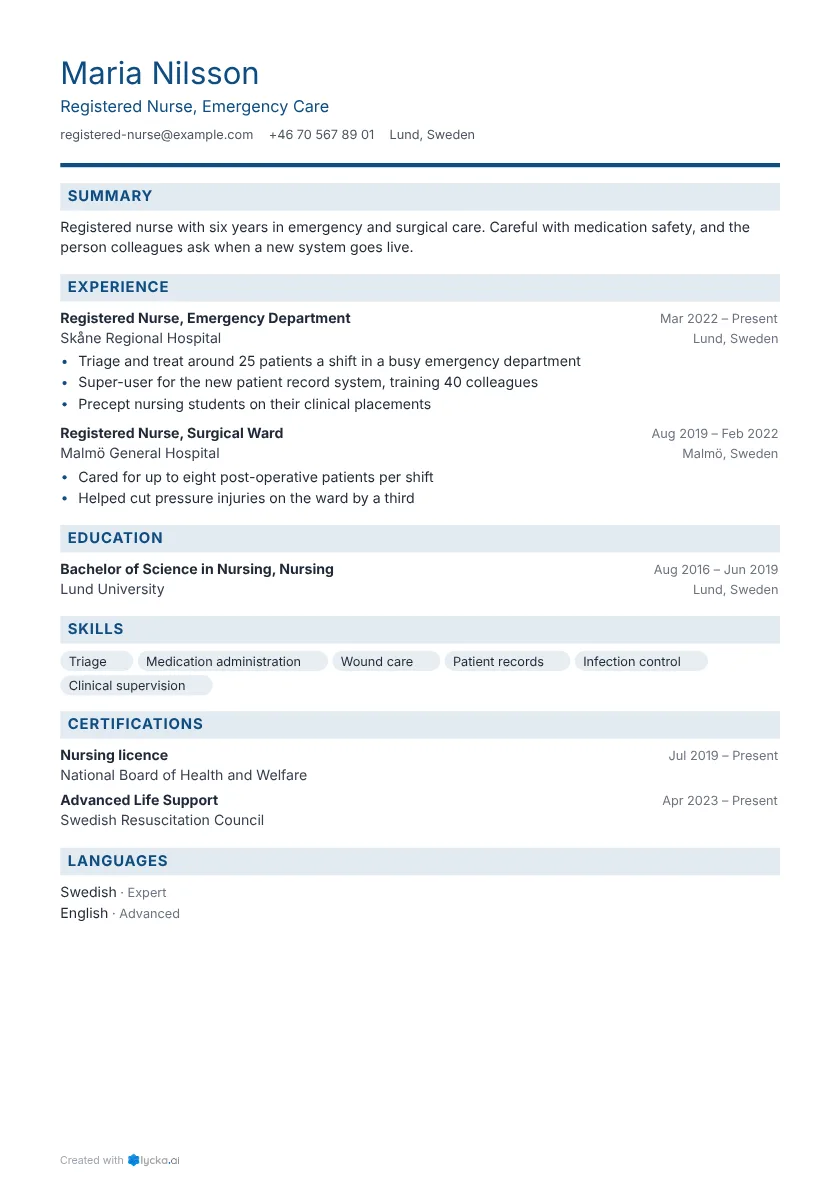
Only list skills you'd be happy to be asked about in an interview. The registered nurse example shows how a skills list and the experience above it back each other up.
Students and new graduates
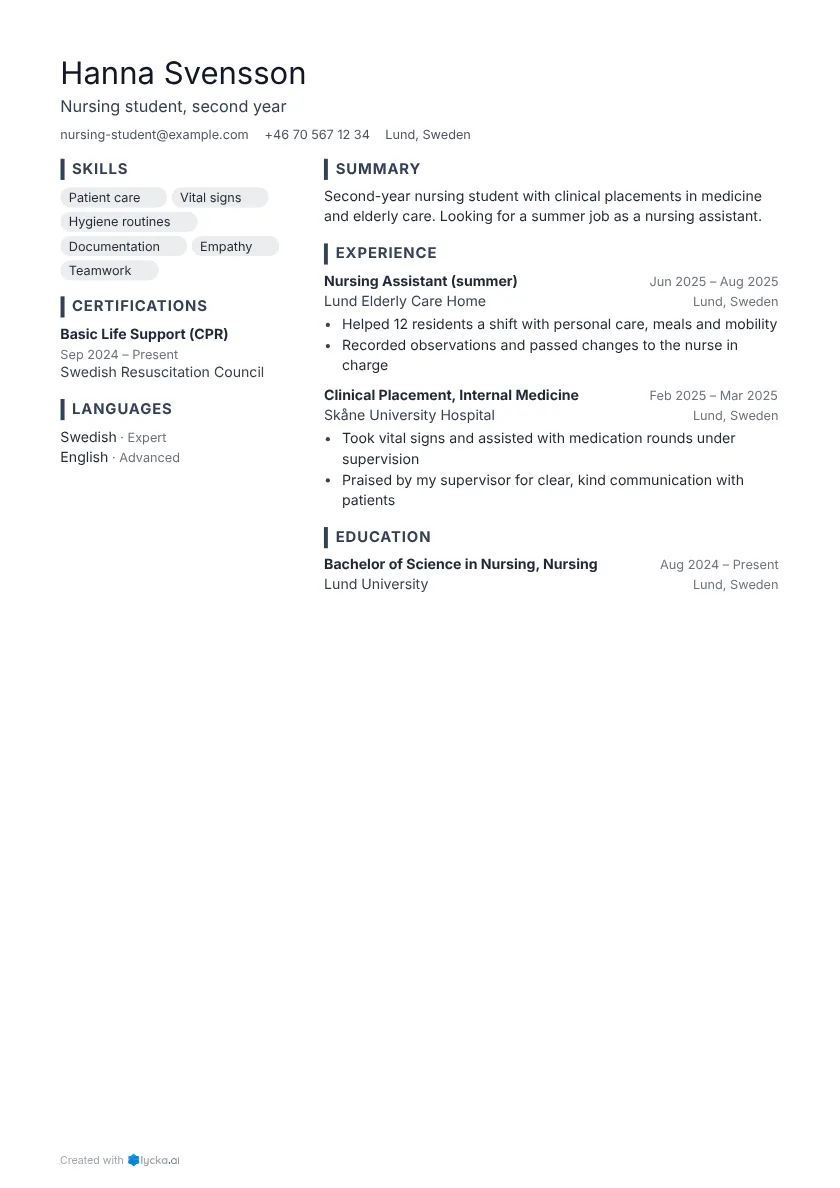
If you're still studying or newly qualified, your placements are your experience. List each one like a job, with the ward, the hospital, the dates and what you did.
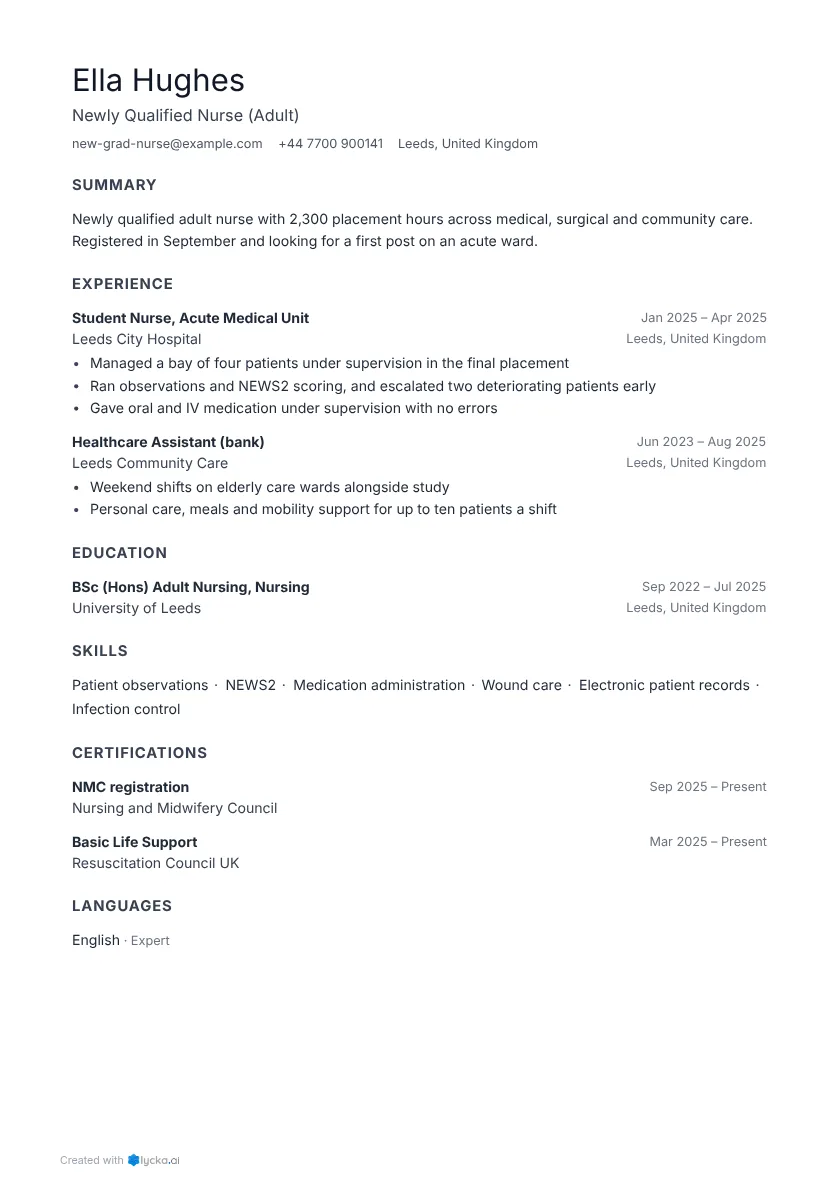
Your final placement carries the most weight, because it shows how close you are to working independently. Say how many patients you managed and what you did with minimal supervision. Add your total placement hours and any paid care work, such as healthcare assistant or bank shifts. Paid care before registration counts for a lot, so don't squeeze it into a single line.
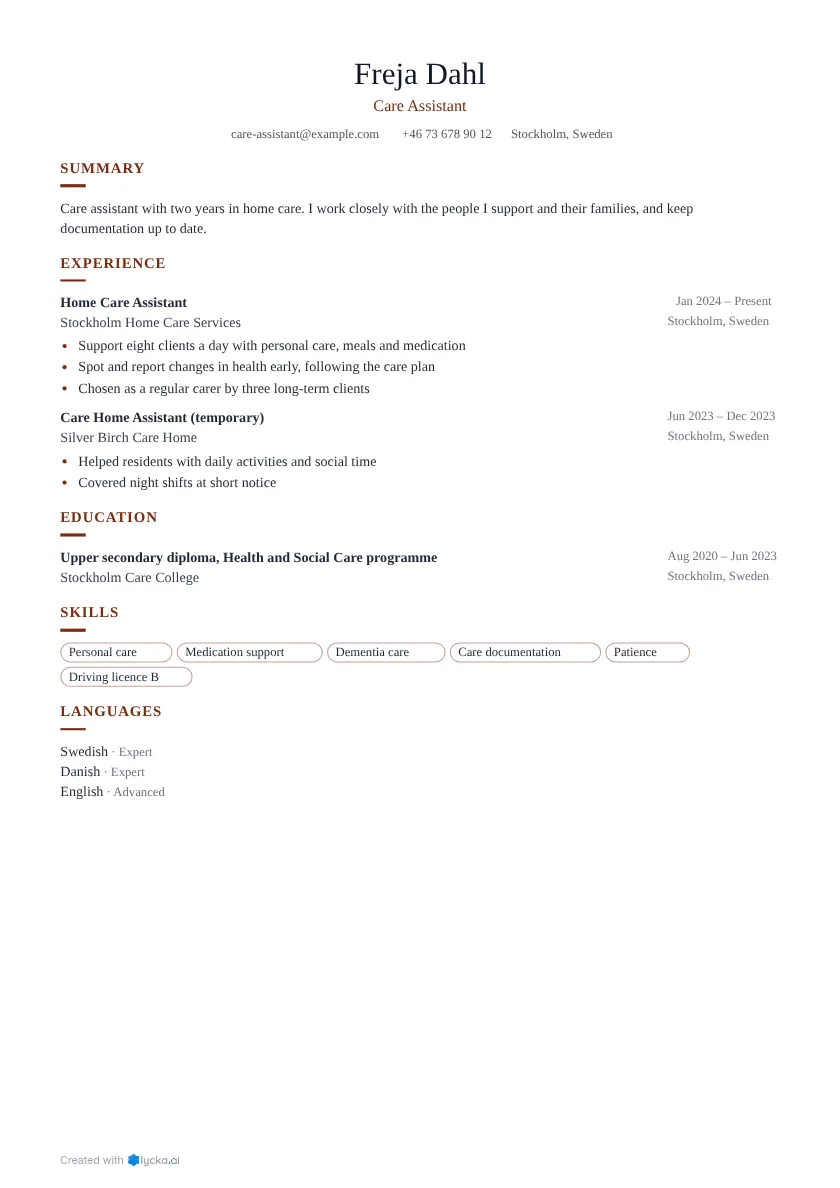
The nursing student and new grad nurse examples show this layout. Coming from care work? The care assistant example is a good place to start.
Education, certificates and layout
Give your nursing degree with the university and year, along with any postgraduate courses and specialist training. Certificates get their own section, each with the year: life support, manual handling, phlebotomy, mentor or practice assessor training. Life support certificates expire, so check the dates are current.
One page works for students and new graduates, and two is fine once you've held several posts or done specialist training. Use a plain layout with standard headings. Nursing applications often go through an online system first, and plain layouts read cleanly in most of them.
Before you send it, read the job description again. Does your summary name the setting they're hiring for? Do the skills in the posting appear on your resume, in the same words? And is your registration easy to find?