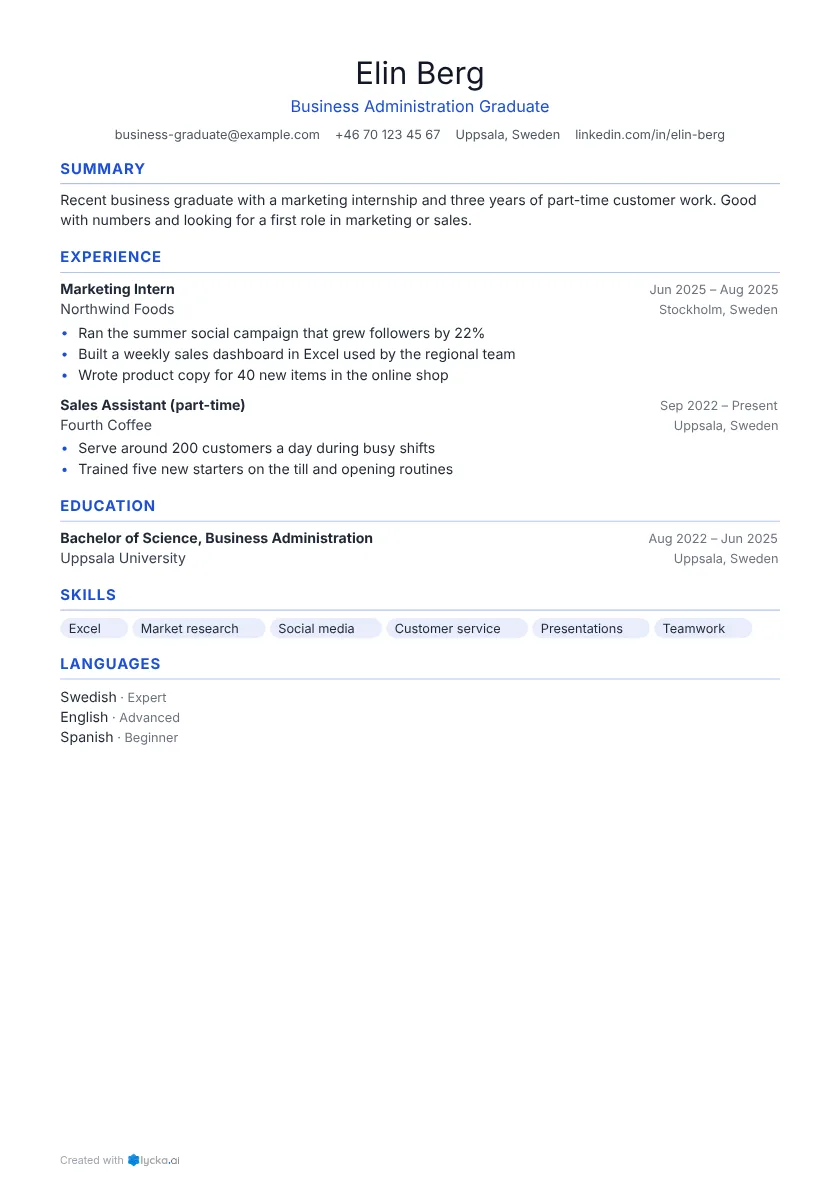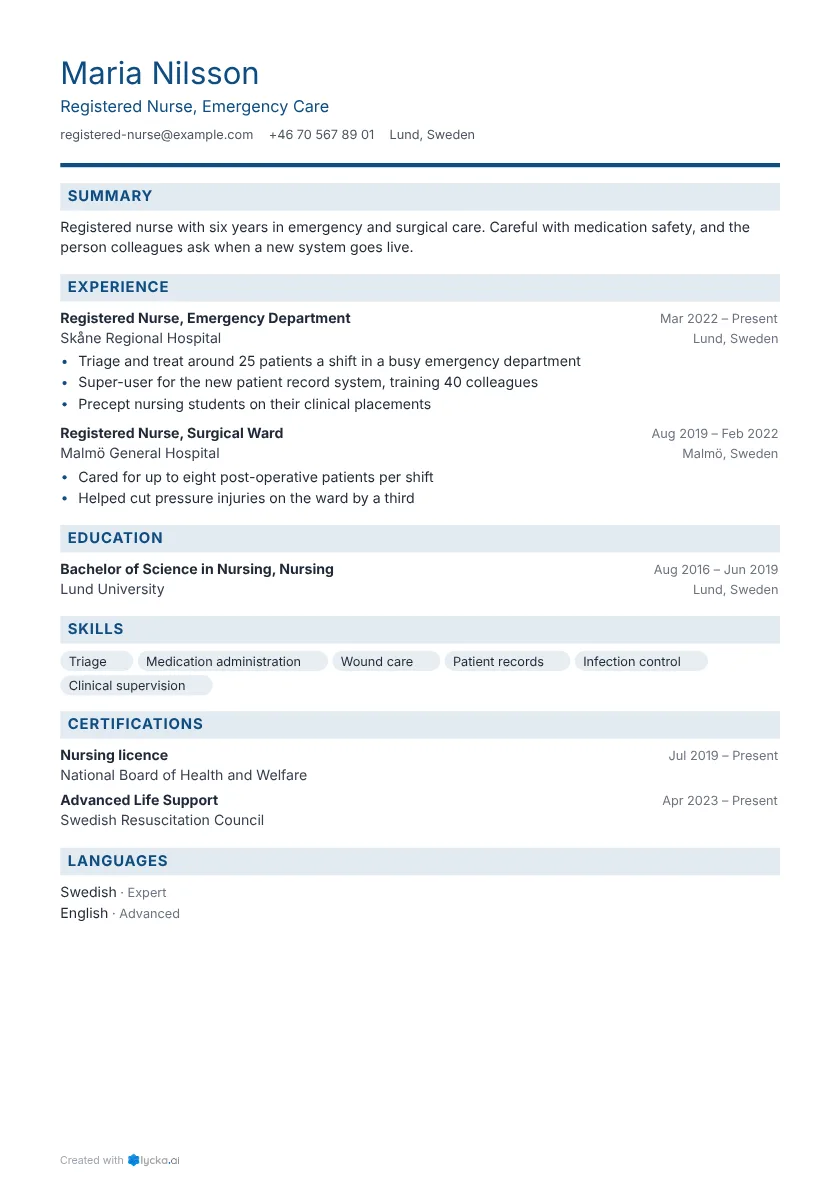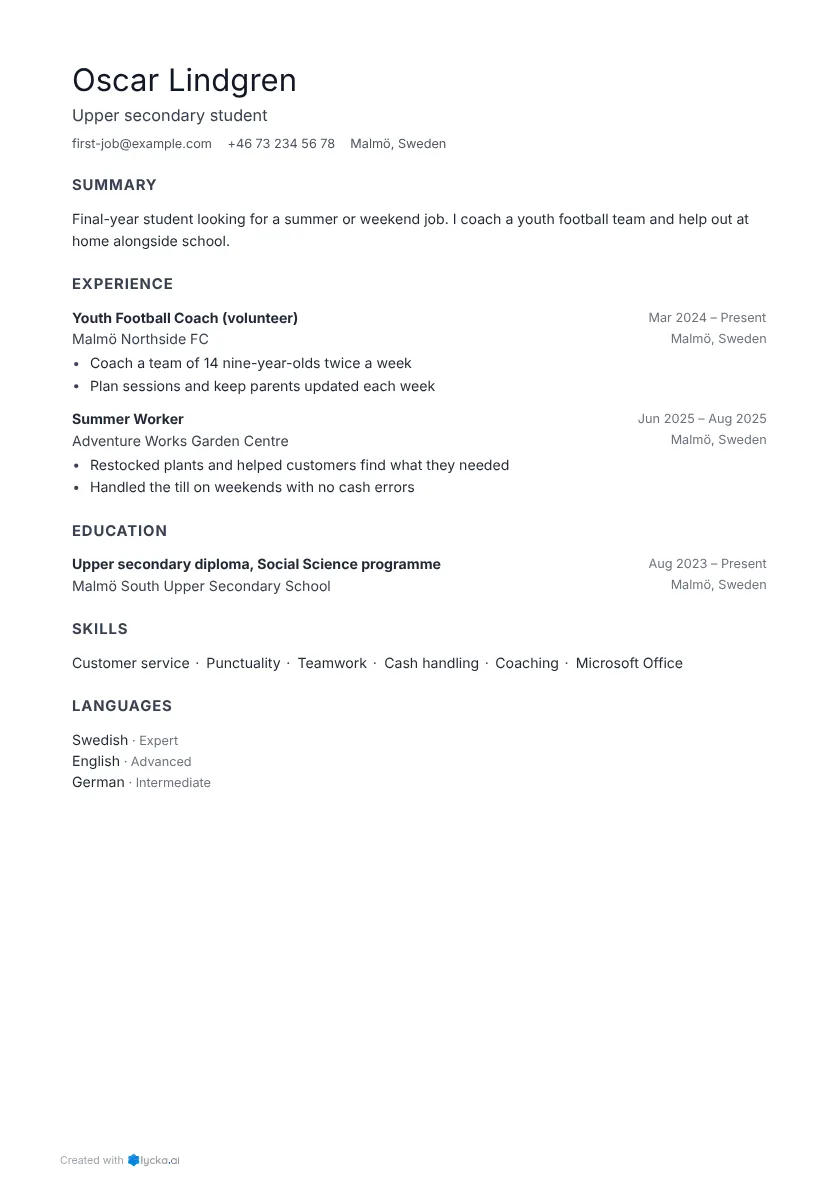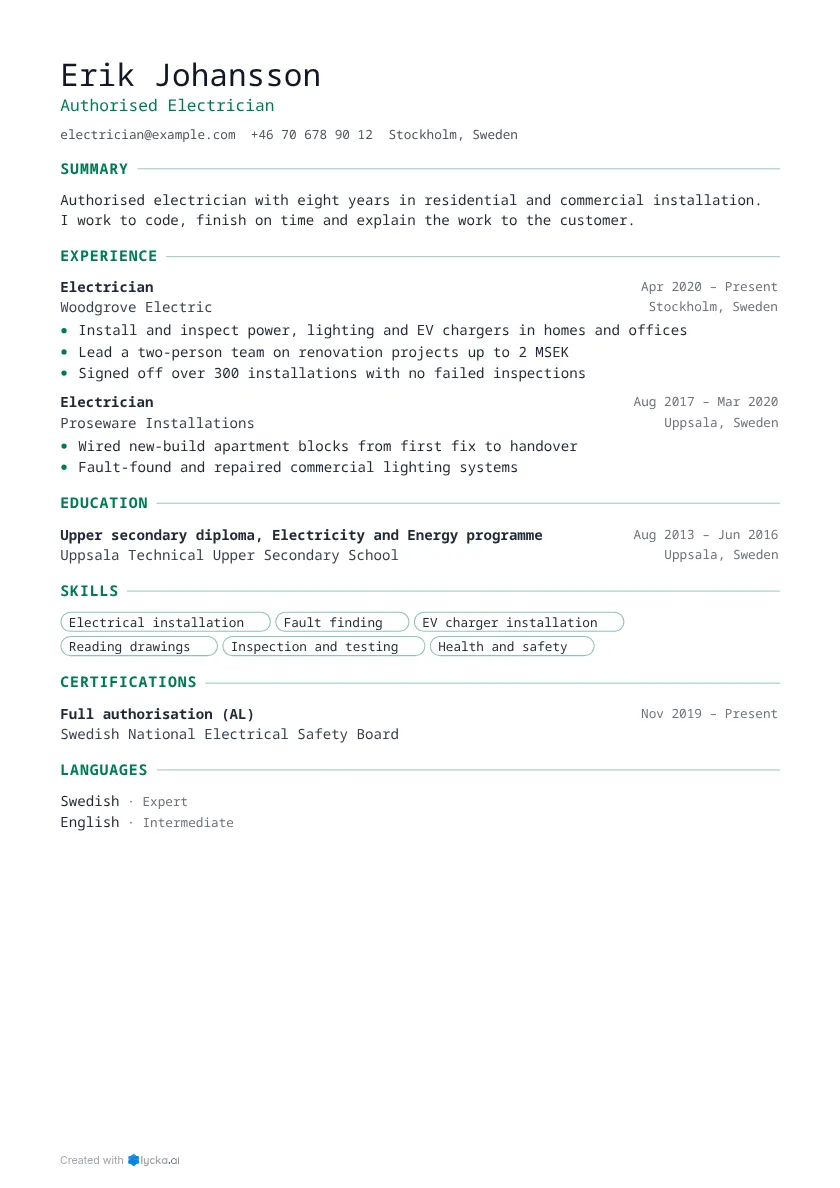


Recruiters often look at the skills section first, to check you have the basics for the job. An applicant tracking system may use it too, when a recruiter searches the candidate pool for a skill. It's a short section, so every line has to earn its place.
Hard skills and soft skills
Hard skills are things you can learn and demonstrate: welding, bookkeeping, Excel, phlebotomy, Python, forklift driving, Swedish. Soft skills describe how you work, such as communication, leadership or patience.
Put hard skills in the skills section. Soft skills are easy to claim and hard to believe in a list, so show them in your experience bullets instead. "Calmed upset customers and turned complaints into repeat visits" says more than "communication skills".
Pick them from the posting
Read the job ad and note every skill it names. The ones you have go in your skills section, worded the way the employer wrote them. If the ad says "Microsoft Excel" and your resume says "spreadsheets", a search for Excel may miss you. Then add any other skills you have that the job would use, even if the ad doesn't mention them.
Six to twelve suits most jobs. Fewer looks thin, and many more turns into a block of words people skip. If you have a lot, group them by type:
- Clinical: wound care, IV therapy, phlebotomy, patient assessment
- Systems: Cosmic, TakeCare
- Languages: Swedish (native), English (fluent), Arabic (conversational)
For languages and software, a level tells the reader more than the name alone: "Excel (pivot tables, lookups)" or "German (B2)". I'd leave out star ratings and progress bars. Nobody can tell what four stars out of five means, and an ATS can't read a graphic.
Back each skill up
Think of the skills section as an index to your experience. For every skill listed there, the reader should be able to find where you used it:
Reconciled monthly accounts for 40 small business clients in Fortnox.
That one bullet supports both bookkeeping and Fortnox. If a skill shows up only in the list and nowhere else, it's worth asking whether it belongs there at all.
Skills by type of job
Here are common hard skills by sector. Keep only the ones you have, and add whatever the posting names.
- Healthcare: patient assessment, medication administration, wound care, infection control, care planning, electronic health records. See the registered nurse and care assistant examples.
- Trades and maintenance: installation, fault finding, testing and inspection, reading drawings, specific certifications. See the electrician and mechanic examples.
- Warehouse and transport: forklift or reach truck licence, warehouse management systems, picking and packing, route planning, driving licence categories. See the warehouse operative and truck driver examples.
- Hospitality: food hygiene, specific stations or cuisines, cash handling, booking systems, allergen knowledge. See the line cook and server examples.
- Office and finance: Excel, accounting software, payroll, invoicing, scheduling, minute taking. See the admin assistant and accountant examples.
- Sales and customer service: CRM software, pipeline management, negotiation, complaint handling, product knowledge. See the sales representative and customer service examples.
- Tech and data: programming languages, frameworks, cloud platforms, SQL, BI tools. See the software developer and data analyst examples.
- Design: Figma, user research, prototyping, design systems. See the product designer example.
- Projects and operations: project planning, budgeting, risk management, stakeholder management, MS Project, Lean. See the project manager, construction project manager and operations director examples.
Where to put it
Near the top for jobs where specific skills decide who gets an interview, such as trades, nursing or IT. After your experience when the work itself makes the case, as in management or sales. Two-column templates often put skills in the side column, where they're easy to scan.
Before you send it, check the list against the job ad, the way you would when you tailor your resume.