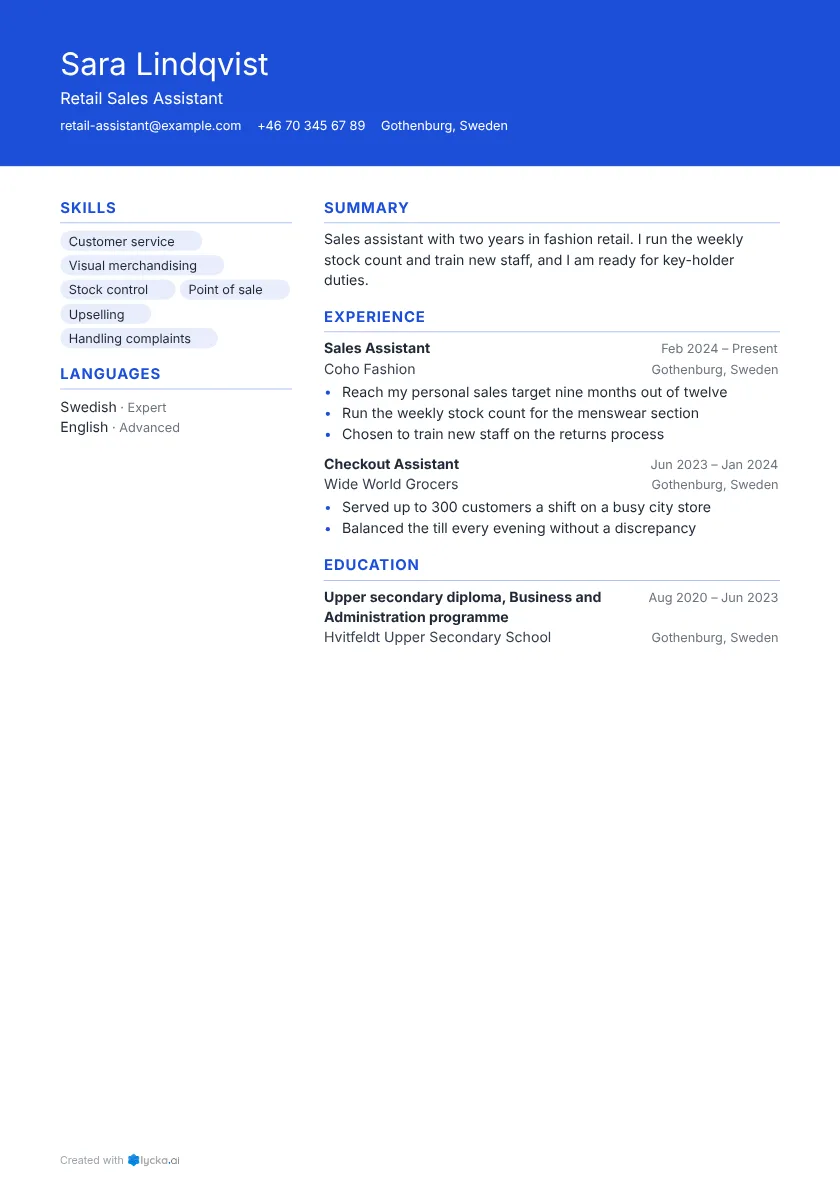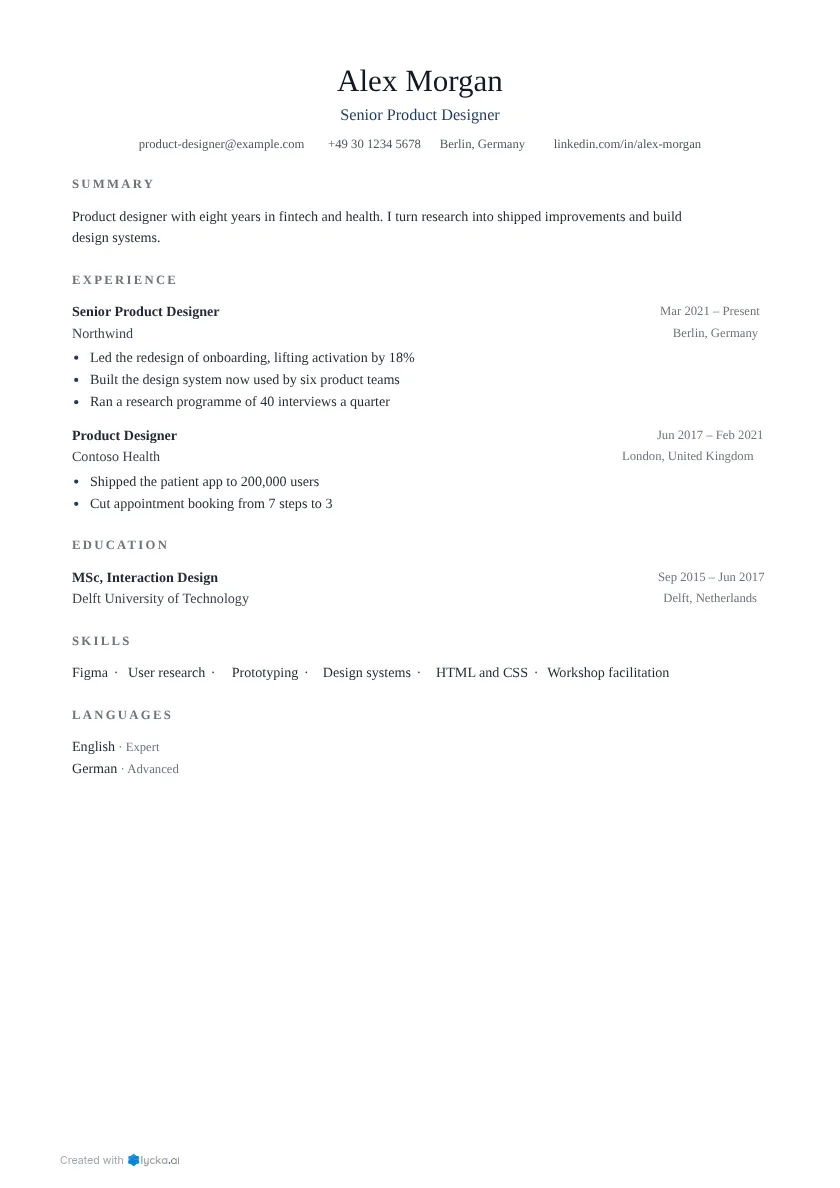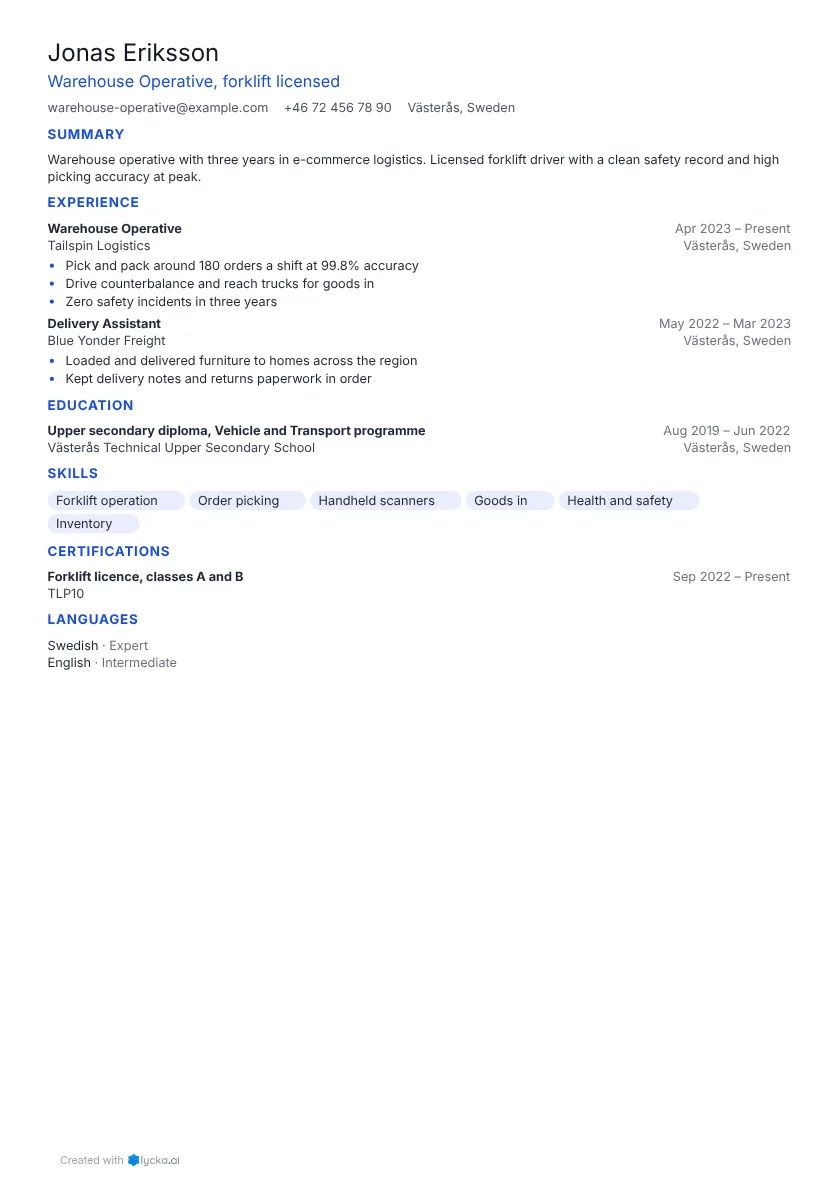


The summary is the first thing a recruiter reads, and often the only thing they read before deciding whether to keep going. A weak one is a string of adjectives anyone could claim: hard-working, detail-oriented team player with excellent communication skills. There's nothing in that a reader can check, so they skip it. A good one says quickly what you do and how well you do it.
How to write one
Most good summaries have the same shape. Start with who you are, in the employer's words: your role and experience, using the job title from the posting where it honestly fits. Then give two or three strengths that match what this employer needs, and finish with proof, one concrete result with a number if you have one. Put together, it reads like this:
Registered nurse with 6 years in emergency and acute care. Calm under pressure, fast at triage and trusted to train new staff. Cut handover time on a 30-bed ward by introducing a shared checklist.
Write it last. Once your experience section is done, the strongest result in it is usually the right proof for your summary.
Examples across different jobs
Warehouse team lead:
Warehouse team lead with 8 years in high-volume distribution. Runs shifts of up to 25 people, keeps pick accuracy high and onboards new starters quickly. Introduced a zone-picking layout that shortened order times during peak season.
Primary school teacher:
Primary school teacher with 5 years in Years 3 to 6. Plans lessons that work for mixed abilities and builds strong relationships with parents. Led the school's reading programme, raising the share of pupils reading at their age level.
Software developer:
Backend developer with 4 years building APIs in Python and Go. Comfortable owning a service from design to production support. Reduced the cost of a core service by moving it to a queue-based design.
Career changer:
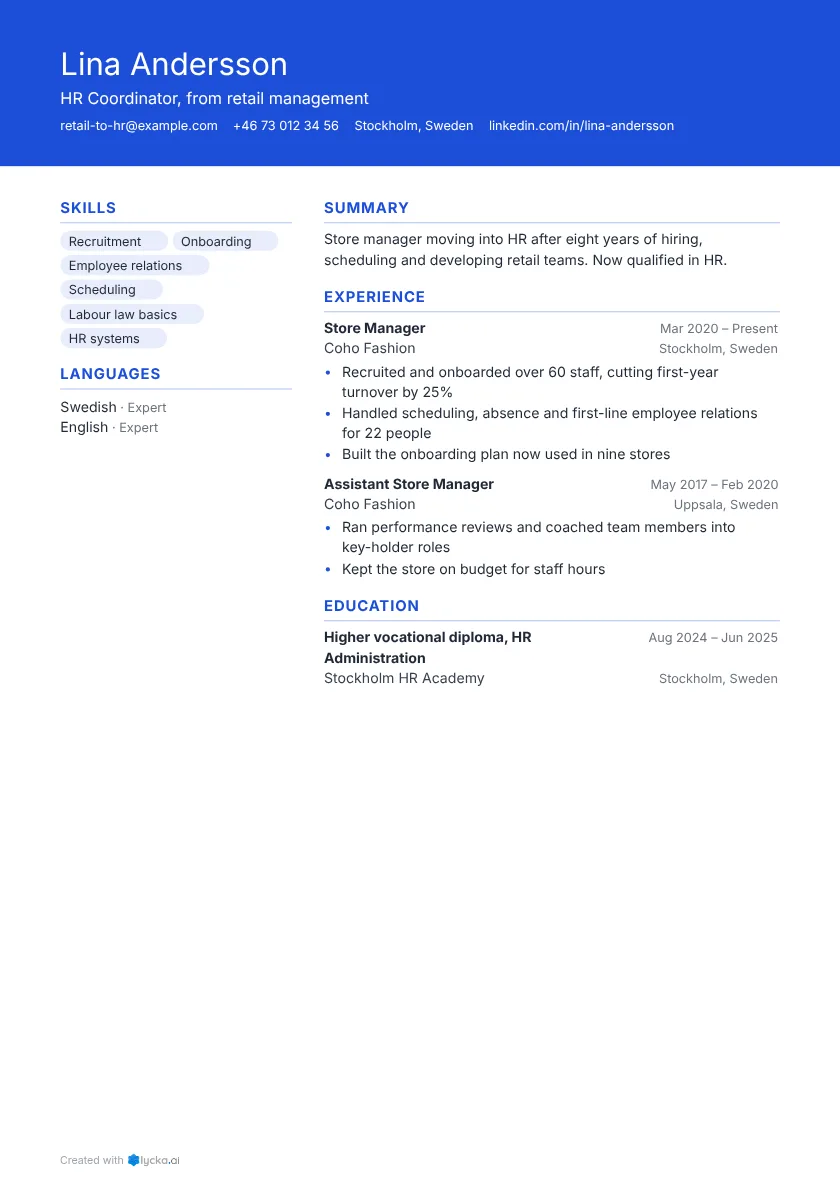
Former retail store manager moving into HR, with 7 years of hiring, scheduling and coaching teams of 15. Recently completed a CIPD Level 3 certificate. Brings hands-on experience of what makes people stay in a job.
Truck driver:
HGV driver (C+E) with 9 years of regional and multi-drop routes. Clean licence, ADR certified and used to tight delivery windows. Over 400,000 km without a reportable incident.
Accountant:
Accountant with 5 years in small business and group reporting. Owns month-end close, VAT returns and year-end files for clients in retail and construction. Moved 30 clients to digital bookkeeping, which cut year-end queries by half.
Line cook:
Line cook with 4 years in kitchens of 80 to 150 covers. Fast and clean on grill and sauté, and trusted to run a section on a Saturday night. Cut grill ticket times by a third after reorganising the station.
Receptionist:
Receptionist with 3 years at a busy medical practice. Handles 100+ calls a day, books appointments across 6 clinicians and keeps the waiting room calm. Set up a reminder routine that reduced missed appointments.
With no experience yet
Students and first-time job seekers can write one too, as long as it names something concrete: placement hours, a project, a licence, a part-time job.
Second-year nursing student with 400 hours of clinical placement on medical and surgical wards. Confident with observations, personal care and handover notes. Available for part-time shifts alongside studies.
The nursing student resume example shows it on a full page, and how to write a resume with no experience covers the rest of the resume.
If you're early in your career and have nothing concrete to point to yet, a summary can feel like padding. Lead with education or a strong project instead, and add a summary once you have results.
Mistakes to avoid
The first is writing an objective. "Seeking a challenging role where I can grow" tells them what you want, and the summary should say what they get. Don't list every past job title either: the experience section already does that, so use the summary for the pattern across them. Keep it to four lines, because anything that reads like a paragraph gets skimmed like one. And drop the "I". Most resumes leave the pronoun out: "Led a team of 12", not "I led a team of 12".
Unless you're in that early group, it's worth the ten minutes. Rewrite it for each application so the first lines a recruiter reads are about the job they're hiring for. It should point to the same strengths as your bullets, so it helps to write those as results first.
To see a summary at the top of a full resume, open the registered nurse, truck driver, accountant or line cook example, or browse all resume examples.