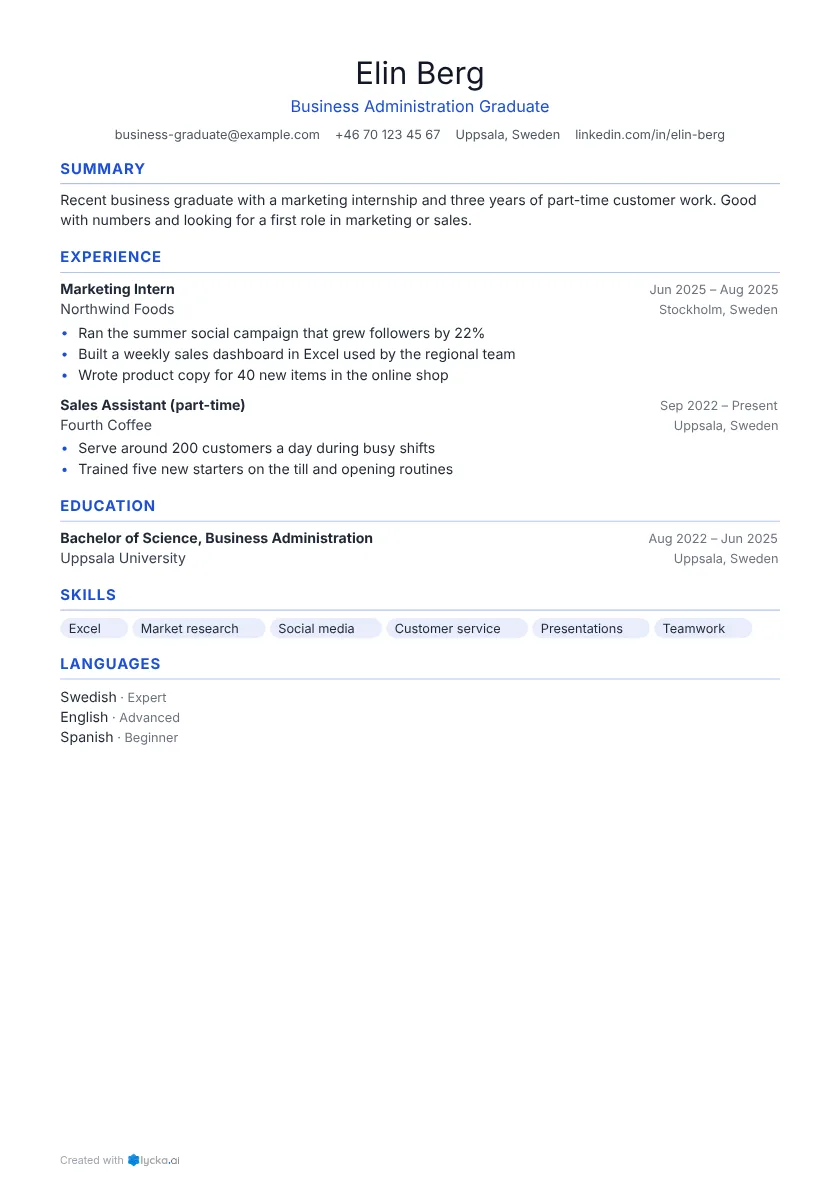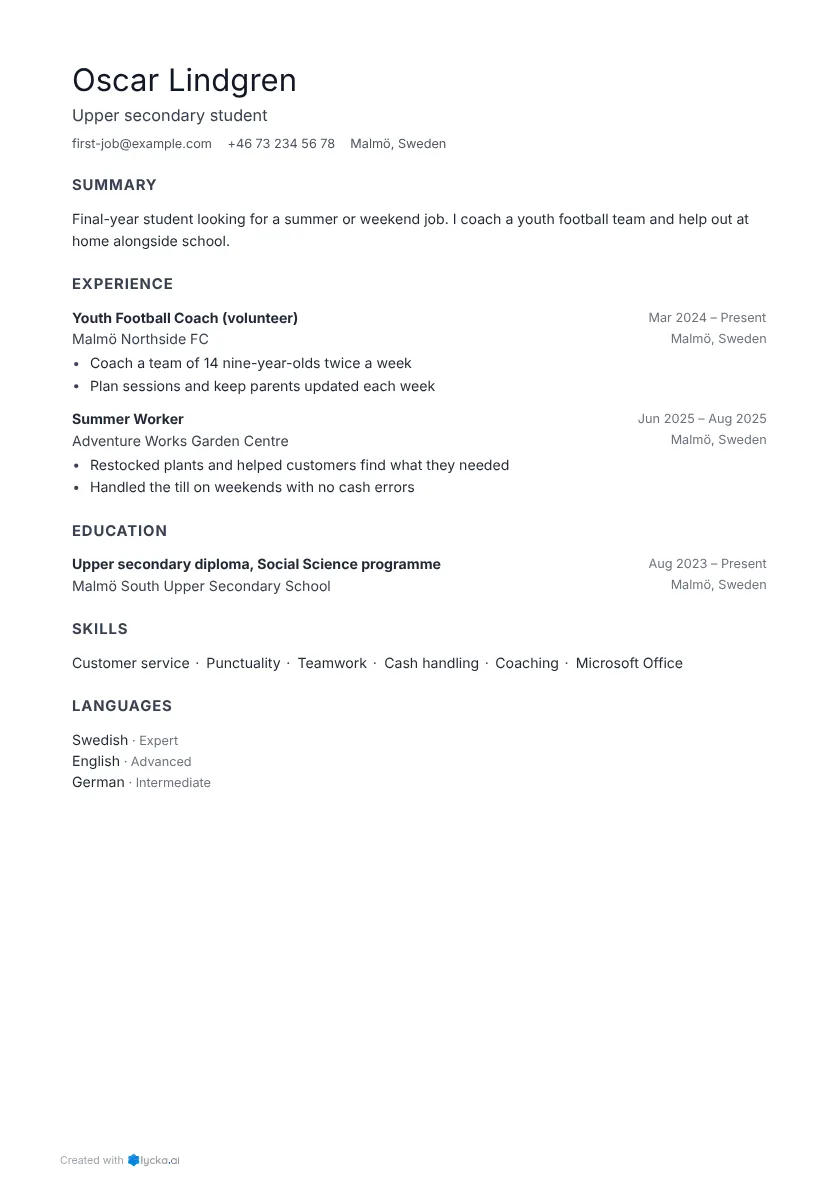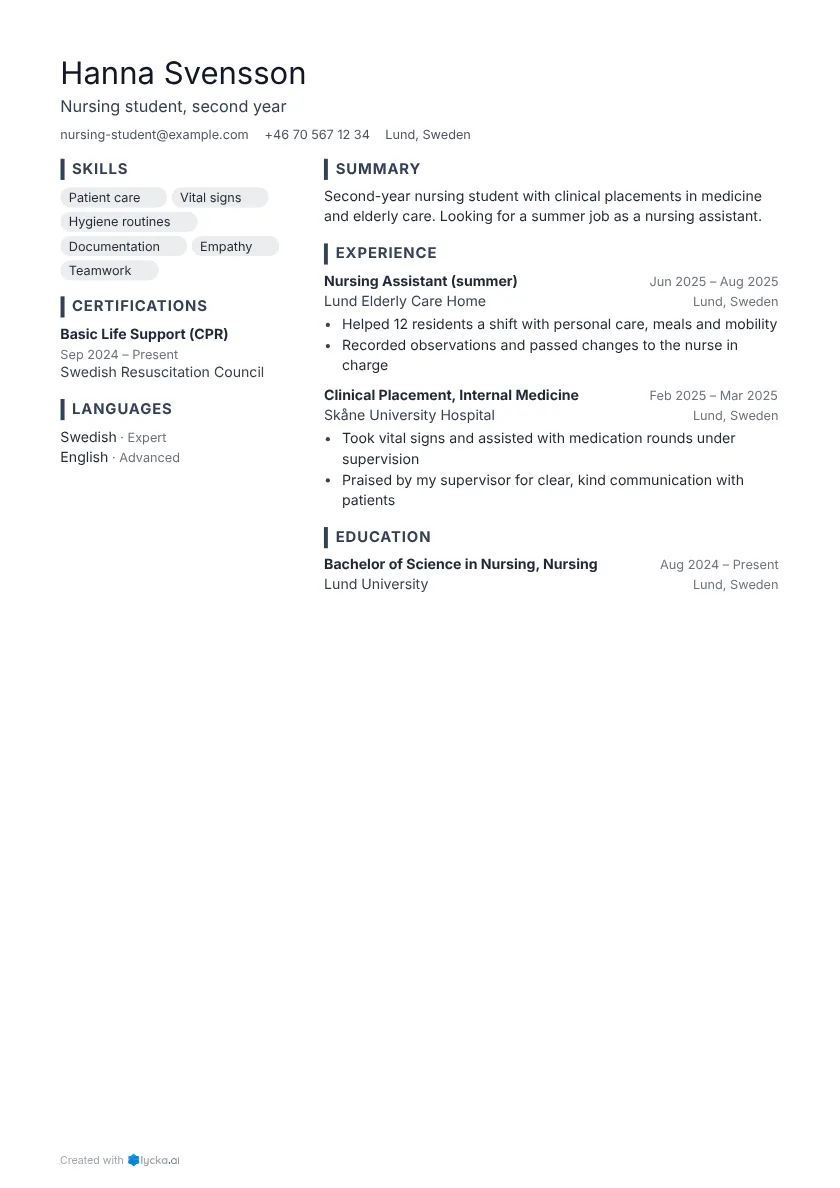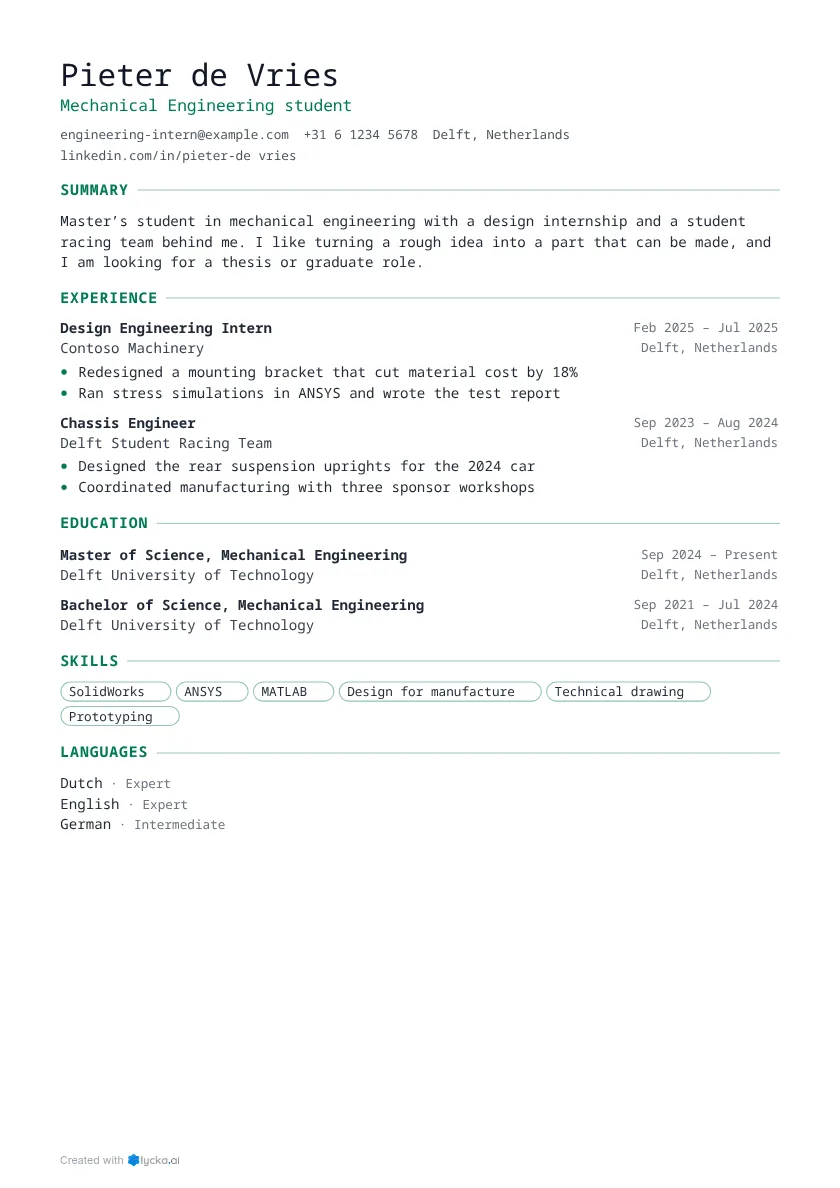


Everyone starts out with no jobs to list. Employers hiring for entry-level roles know that, so they read a first resume for signs that you're reliable and quick to learn. You probably have more to show than you think, from school, hobbies and helping out.
What to include
A first resume usually has these sections, in this order:
- Contact details
- A short summary
- Education
- Experience of any kind: volunteering, projects, clubs, informal work
- Skills
- Languages, certificates or a driving licence, if relevant
One page is plenty. Resume length grows with experience, and for now a full single page beats a thin second one. With so little to fit, a clean single-column design works best: a one-page template or a simple template keeps the focus on what you have, and both read cleanly in applicant tracking systems.
Education, and experience that wasn't a job
With no jobs to list, education is your strongest section, so put it near the top. Include the school or college, what you studied and your dates, plus anything that shows effort or interest: a final project, a subject you did well in, a prize, or a role like class representative.
After that, count anything where someone relied on you. Babysitting, dog walking and helping in a family business all qualify. So does volunteering at a sports club, a charity shop or a local event, a school project you led or a team you organised, and a work placement from school, even one that lasted two weeks. Something you built or made counts too, like a website, a video channel or a bike you rebuilt.
Write each one the way you'd write a job, with what you did and what came of it:
Volunteer coach, Hallands Football Club · 2024 to 2025
- Coached a team of 12 under-10 players every Saturday morning
- Organised the end-of-season tournament for 6 teams and their families
Skills and a short opening
Traits like "hard-working" or "team player" don't convince anyone in a list, so show them in your experience instead. The skills section is for concrete things: software you can use, languages, first aid, cash handling, a forklift licence, social media tools.
At the top, two lines on who you are and the kind of work you want is enough:
Recent upper secondary graduate in business studies, looking for a first role in retail or customer service. Used to handling cash and helping customers from weekend work at a family café.
Two more, for different kinds of work:
School leaver with a forklift licence, looking for warehouse or delivery work. Used to early starts and physical work from two summers on a farm.
Hospitality student with a food hygiene certificate and evening work as a kitchen porter. Looking for a commis chef role in a busy kitchen.
There's more on this in how to write a resume summary.
Before you send it
- Use a plain, professional email address.
- Ask a teacher, a coach or a relative to read it for mistakes.
- Save it as a PDF so it looks the same on every screen.
- Change the summary for each job you apply for.
To see one finished, read the first job, retail assistant, college student, nursing student or engineering intern resume example.