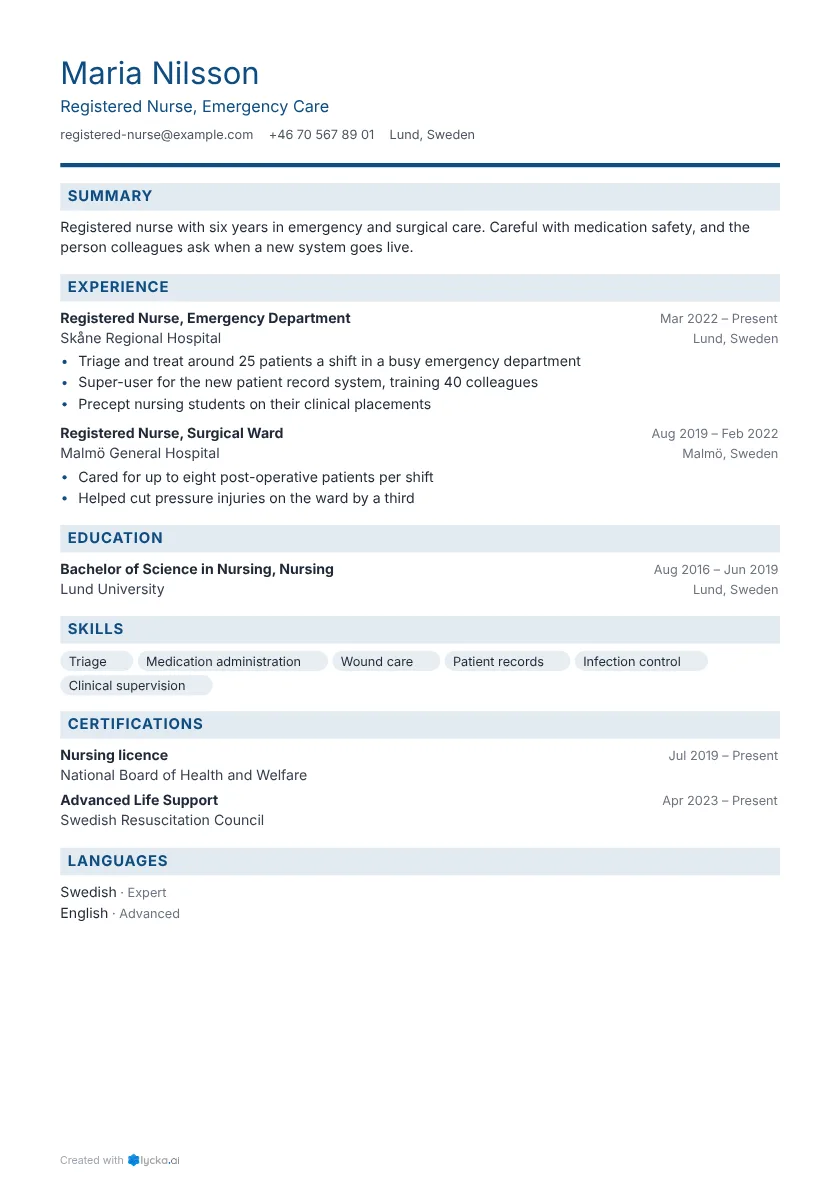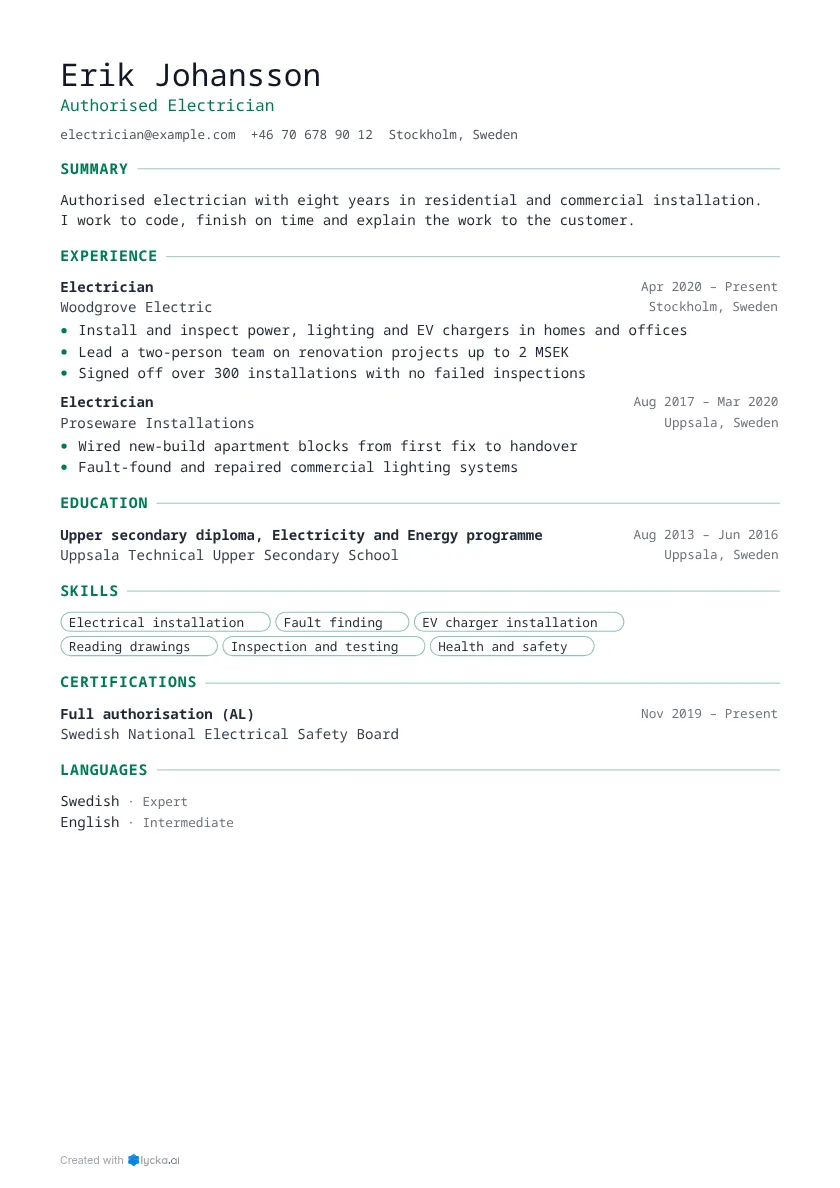


In many jobs a certificate or licence is the first thing a recruiter checks. Nurses need their registration, electricians their qualification, drivers their licence class and IT staff their vendor certifications, so make yours easy to find.
Where to put them
If the job requires them, give them their own "Certifications" or "Licences and certifications" section near the top, right after the summary or experience. If they're useful but not required, list them after education. And if you hold one main licence, mention it in your headline as well, for example Electrician, 18th Edition Qualified or Forklift Driver, Counterbalance and Reach. There's more on that in resume headlines.
Use a standard heading and the official name, because applicant tracking systems often filter on certificate names. See what tracking systems actually read.
A degree or diploma goes under education. A professional licence, vendor certificate or short accredited course goes under certifications. If you only have one or two of each, one combined section titled "Education and certifications" is fine.
What to include for each one
- The official name, spelled as the issuer spells it
- The issuing body
- The date you earned it, and the expiry date if it has one
- A licence or registration number, only if the employer needs to verify it
For example:
Certified Information Systems Security Professional (CISSP), ISC2, 2023
Registered Nurse, Nursing and Midwifery Council, PIN on request, valid to 2027
Heavy Goods Vehicle Licence, Category C+E, 2021
In progress or expired
A certification you're still working on can go in if you'll finish soon. Give the expected date:
AWS Certified Solutions Architect, Associate, expected March 2027
Only list what you're actually enrolled in. "Planning to take" doesn't count.
Expired ones are best left off, unless the job asks for previous experience with them or you're renewing. If you do list one, be honest about where it stands: First Aid at Work, renewal booked for May 2027.
How many, and which ones
List the ones that matter for this job. Five relevant certificates beat fifteen where most are short online courses, and minor training can share a line:
Further training: food hygiene level 2, manual handling, fire marshal
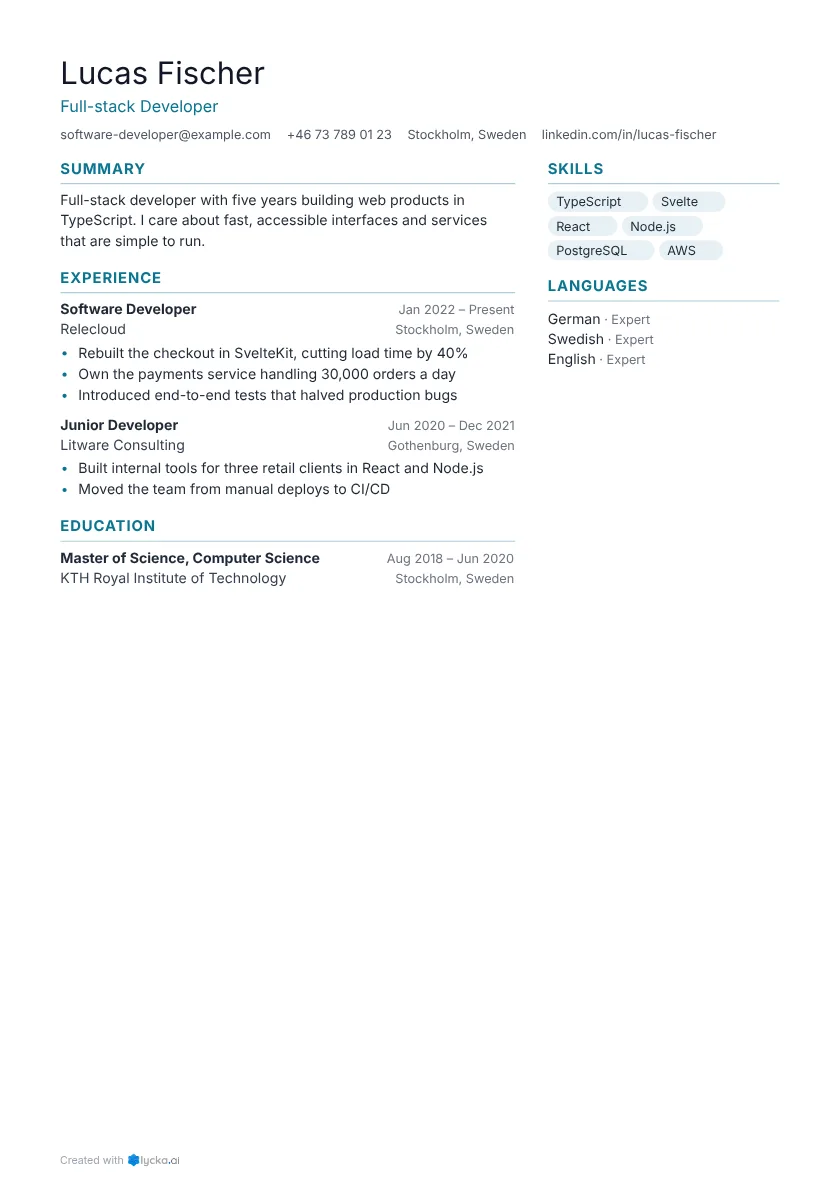
What counts as relevant depends on the sector. In healthcare it's your registration, life support (BLS, ALS) and specialist courses, as in the registered nurse example. Trades list qualifications, card schemes and gas or electrical registrations, like the electrician example does. Transport and warehouse jobs want your licence class, equipment certificates and hazardous goods (see the truck driver example). In IT and data, give vendor certifications with their level, as in the software developer example. Finance resumes show professional qualifications and the stage you've reached; the accountant example has one. Project managers name their method and level, like PRINCE2 Practitioner in the project manager example.
For the full order of sections, see how to write a resume, step by step.