

A gap in your work history usually feels bigger to you than it looks to a recruiter. People take time out to raise children, care for a parent, recover from an illness, study, travel or find work after a layoff, and recruiters see these gaps all the time. What they want to know is whether you're ready to do this job now, and your resume can answer that without hiding anything.
Dates, and a line for the gap
If a gap falls inside a calendar year, listing only years for every job makes it less visible: 2019 to 2022, then 2022 to present. That's a standard format and it's honest, as long as you use it for every role and the years themselves are correct. A gap longer than a year will still show, and there's no point trying to disguise it.
For a longer gap, add an entry to your experience section where a job would sit:
Career break, family care · 2021 to 2023
Full-time care for a family member. Kept nursing knowledge up to date through online courses.
A line for the reason and one for anything you kept up is plenty. You don't owe anyone medical details or a personal story. "Health leave, now fully recovered" or "Career break for family" says all that's needed.
Show what you did during the time
Anything from the gap that's relevant to the job belongs here. That might be courses, certificates or a degree you finished during the break, or volunteering, such as coaching a team, helping at a food bank or sitting on a school committee. Freelance or part-time work counts, even short contracts. So does caring for someone, if the job involves care or organising other people's time.
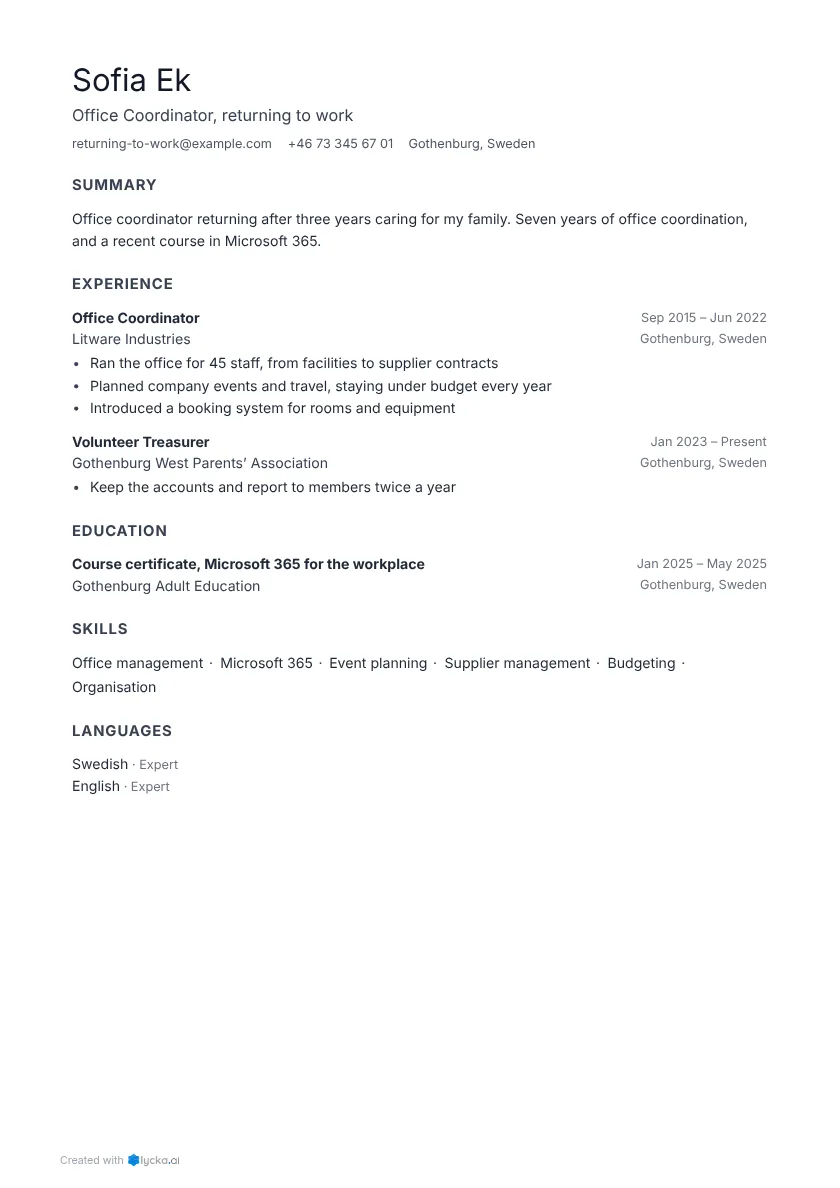
A parent returning to office work after three years who chaired the school parents' association, for instance, can list running meetings, managing a budget and organising volunteers.
What to write for common reasons
Layoffs happen in good companies to good employees. On the resume the job simply ends, and if it comes up in an interview, say the role was cut and move on.
Illness or injury can be mentioned as briefly as you like ("Health leave, 2022"), or you can call it a career break. In many countries employers are limited in what they may ask about your health, and you don't have to raise it.
Study is the easy one: list it under education with dates, and the gap is accounted for. A long trip is worth a line if it gave you something the job can use, such as a language or work abroad; otherwise "Travel, 2019" is enough. If you're still looking for work, add nothing. A current job search needs no explanation.
The cover letter and the interview
If the gap is long or recent, one sentence in your cover letter can answer the question before anyone asks it: "After two years caring for my father, I am ready to return to full-time work in logistics." Then get on to why you fit the role.
For the interview, have a short answer ready, two or three sentences on what you did, anything you kept up, and the fact that you're ready now. Say it out loud a few times so it comes easily, then steer the conversation back to the job. Something like:
"I took two years out to care for my father. During that time I kept my forklift licence current and did a short course in warehouse management systems. He now has full-time support, and I am ready to get back to work."
On the resume itself, a strong summary and a clear skills section at the top keep the focus on what you can do now, so the reader has seen that before they get to the dates. To see a gap handled on the page, read the returning to work resume example.