

A career change makes your resume work harder. The person reading it is hiring for a role you've never held, and the job titles on your page belong to another field. If they can't see the connection quickly, they'll move on to the next application.
The connection is usually there, because most of what you did in your old work carries over. Your resume just has to make it easy to spot.
Start from the new job
Collect three to five postings for the role you want and mark the skills and duties that come up in most of them. That's your target list. Then go through your own history and mark everything that matches, even where you called it something else at the time.
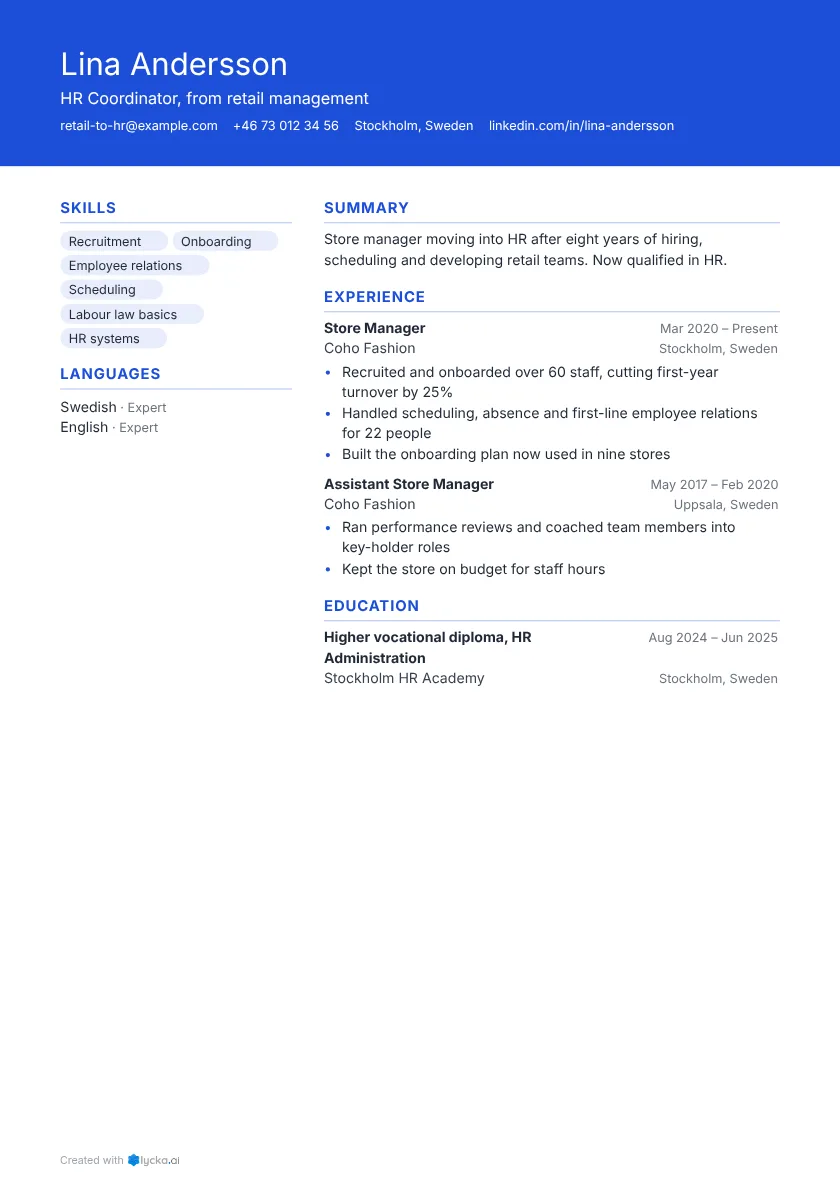
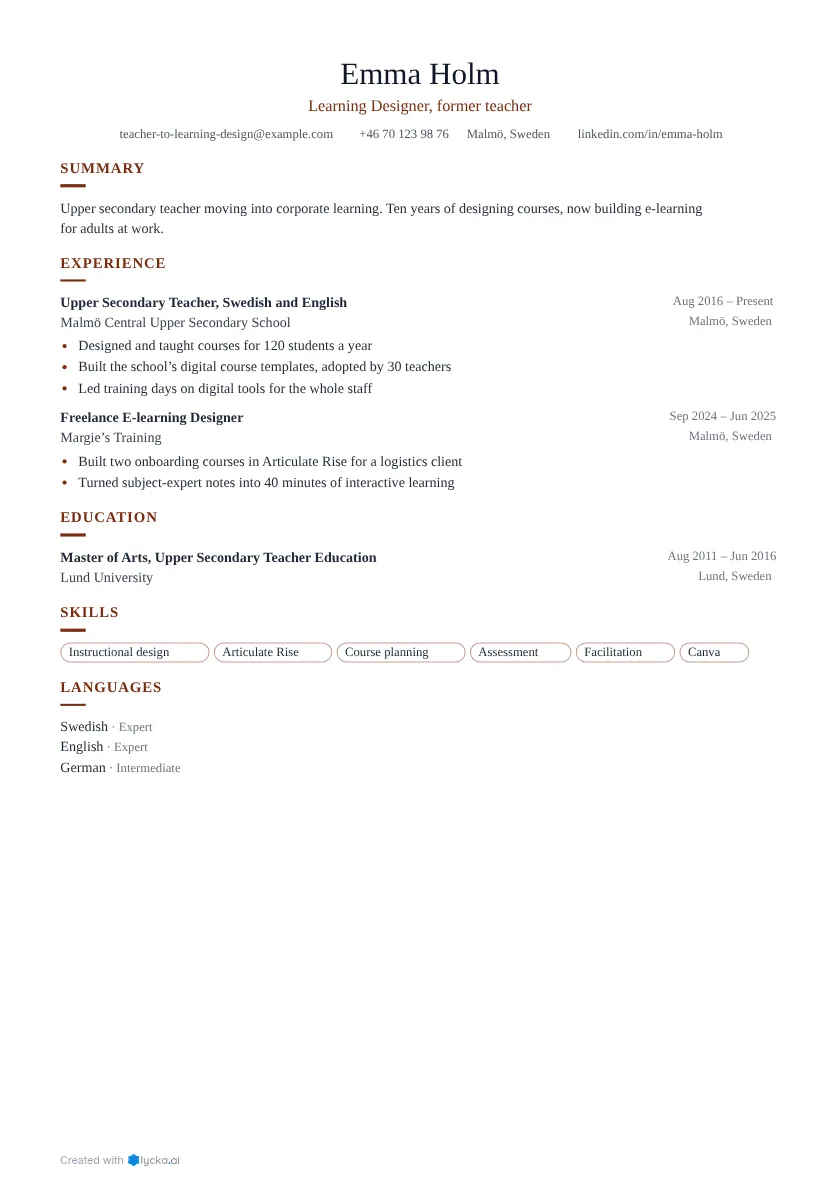
A retail manager moving into HR has hired staff, planned rotas, handled complaints and coached people. A teacher moving into corporate training has designed courses, assessed progress and spoken to groups every day.
Name the move, then use the new field's words
A resume summary does more for a career changer than for anyone else. Say where you're heading and what you bring:
Hospitality supervisor moving into customer success, with 6 years of resolving guest issues, training staff and building a base of regular customers. Completed a course in CRM software in 2026.
In your experience, keep the facts and describe them in the terms the new employer uses:
| Old wording (hospitality) | New wording (customer success) |
|---|---|
| Dealt with guest complaints | Resolved customer issues and kept repeat customers coming back |
| Trained new waiting staff | Onboarded and trained new team members |
| Suggested wine pairings | Recommended add-ons that raised average spend |
Your job titles stay as they were. Only the descriptions change, and every claim should still be something you could talk about in an interview. The same approach works for any move, like a teacher heading into learning design:
| Old wording (teaching) | New wording (learning design) |
|---|---|
| Planned lessons for Year 9 | Designed 40+ hours of course material for 13 to 14 year olds |
| Marked tests and gave feedback | Built assessments and used results to improve the course |
| Ran parents' evenings | Presented progress to stakeholders |
Pick a format that keeps your history visible
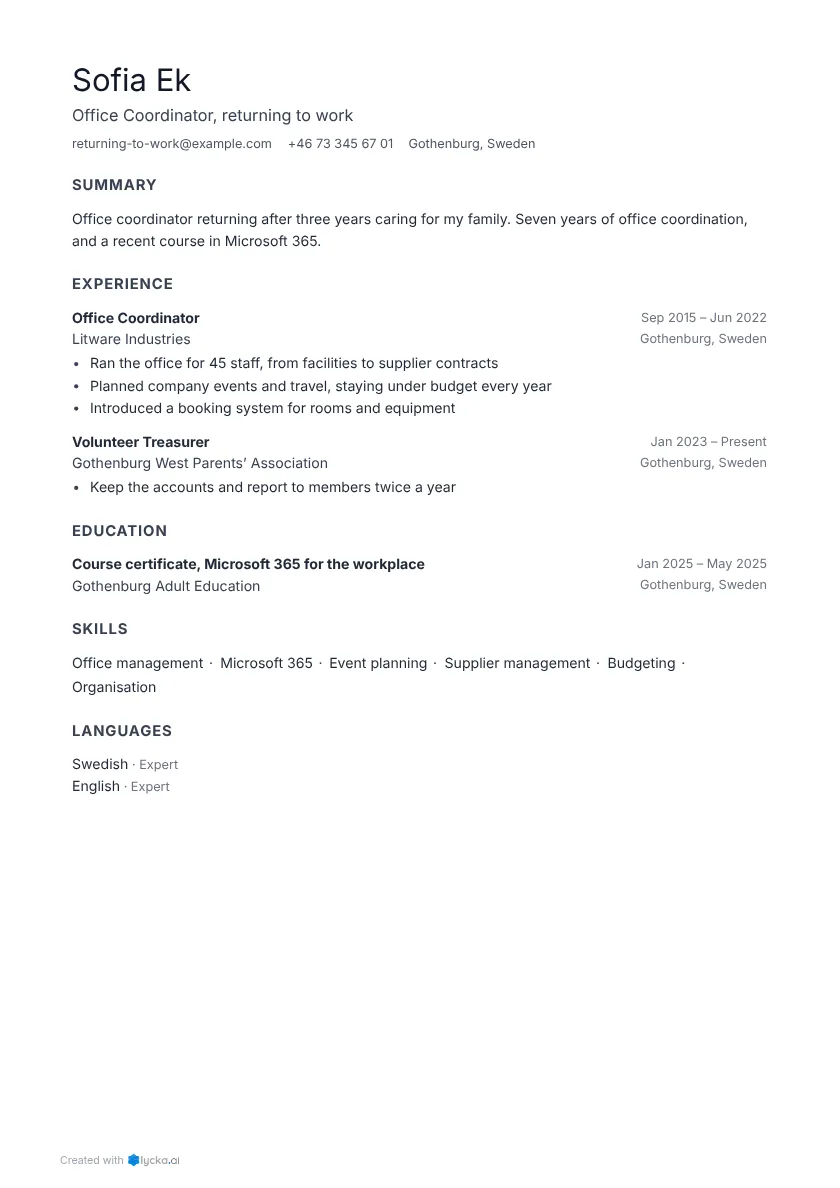
Some guides suggest a "functional" resume, which lists skills and leaves out the timeline. Recruiters tend to distrust it because it looks like you're covering something up. If there's a break in your timeline, explain the gap instead.
Most career changers do better with a combined layout: a summary and skills section at the top that name the new field, then your experience in the usual order, newest first. A two-column template suits this, with skills and certificates in the side column.
Within that layout, put whatever's most relevant first. If you retrained, education or a certificate can sit above your experience. If you've already done something in the new field, such as a portfolio, a side project or volunteer work, give it its own section near the top called "Relevant experience" or "Projects". Older roles with nothing to carry over can shrink to a line each, or be grouped as "Earlier roles in hospitality, 2012 to 2016".
Back up your skills, and explain the move
A skills section helps recruiters scan your resume and helps applicant tracking systems match it to the role. Every skill you list there should also show up in your experience with an example, since a skill with nothing behind it is easy to doubt.
The resume shows you can do the work. Your cover letter is where you say why you're changing, in a sentence or two. Give a reason that looks forward, such as what draws you to the new field and what you've done to prepare.
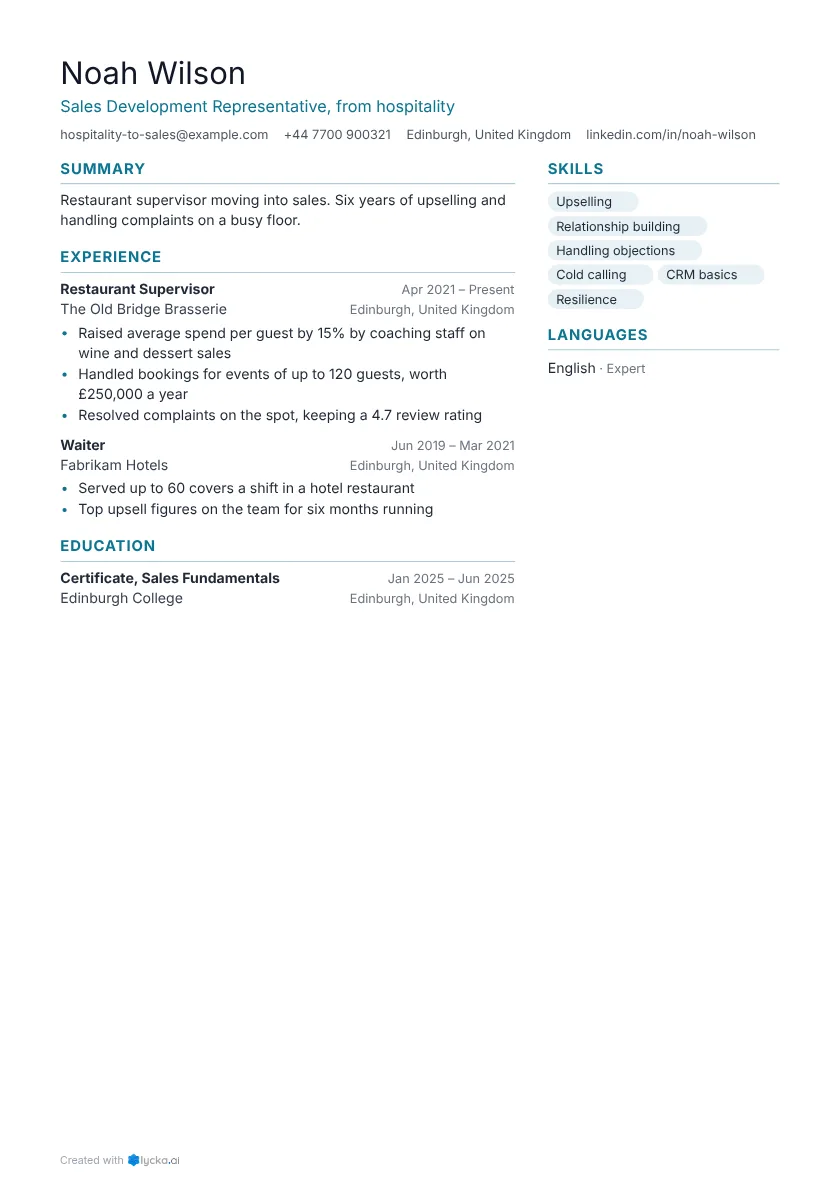
For finished career change resumes, see retail manager to HR, teacher to learning designer and hospitality to sales.