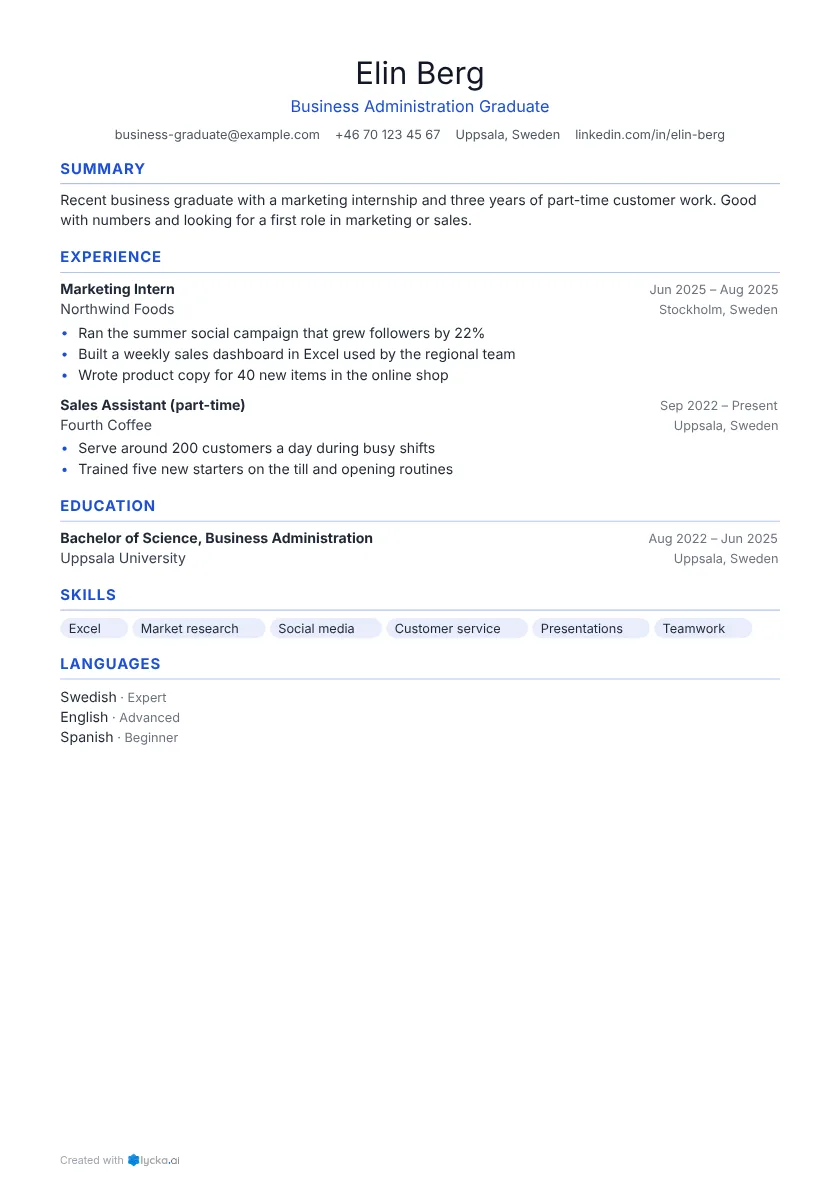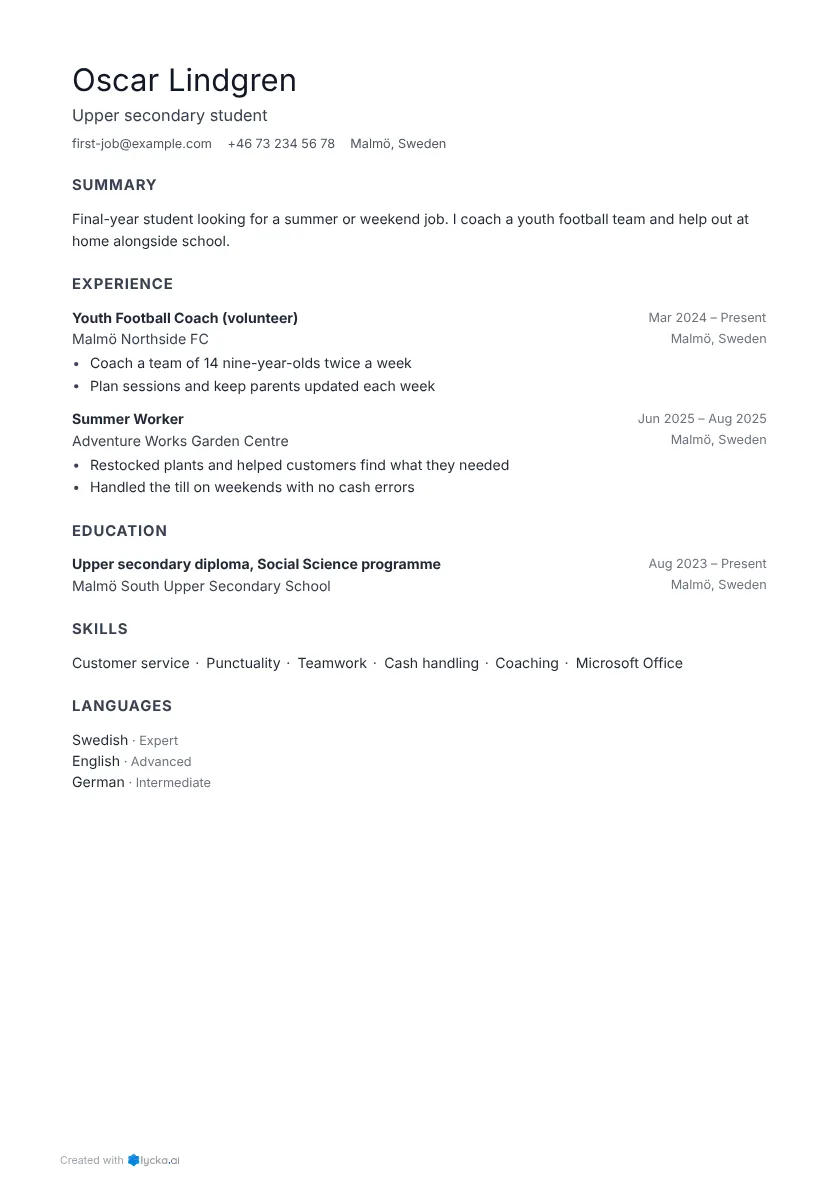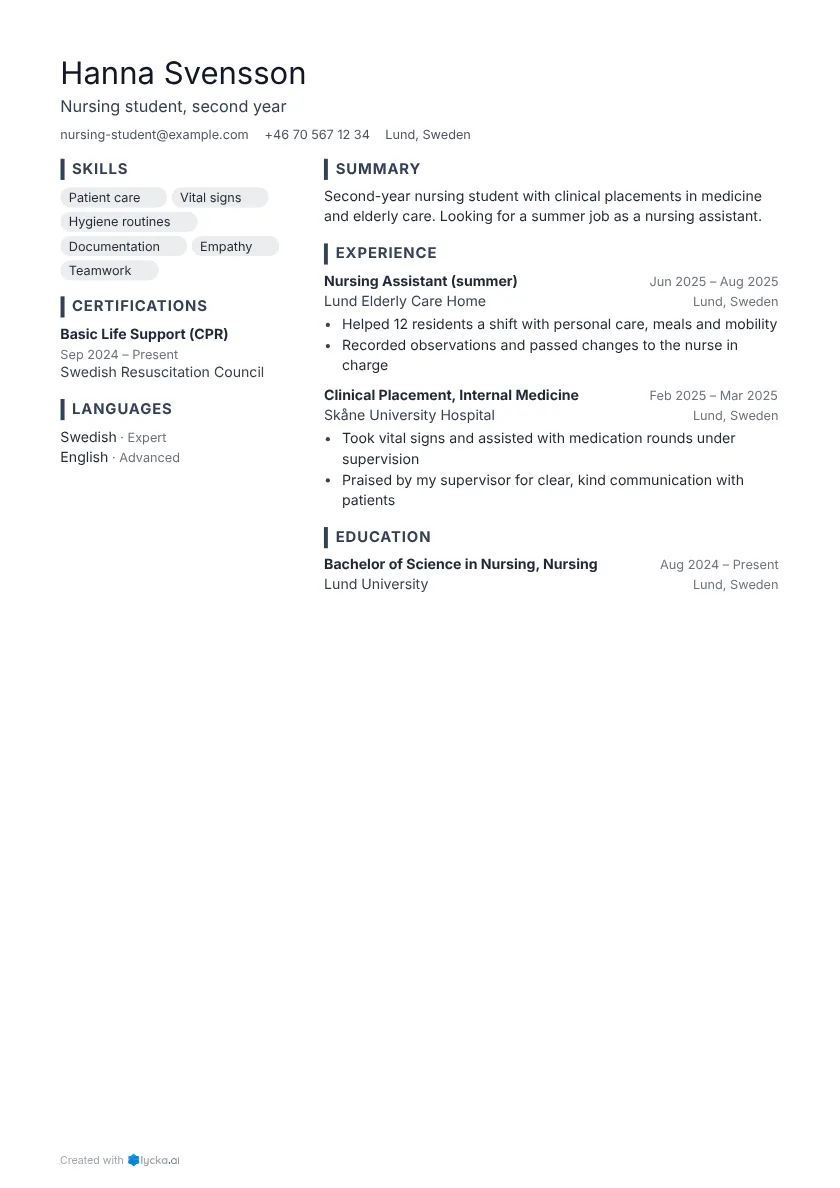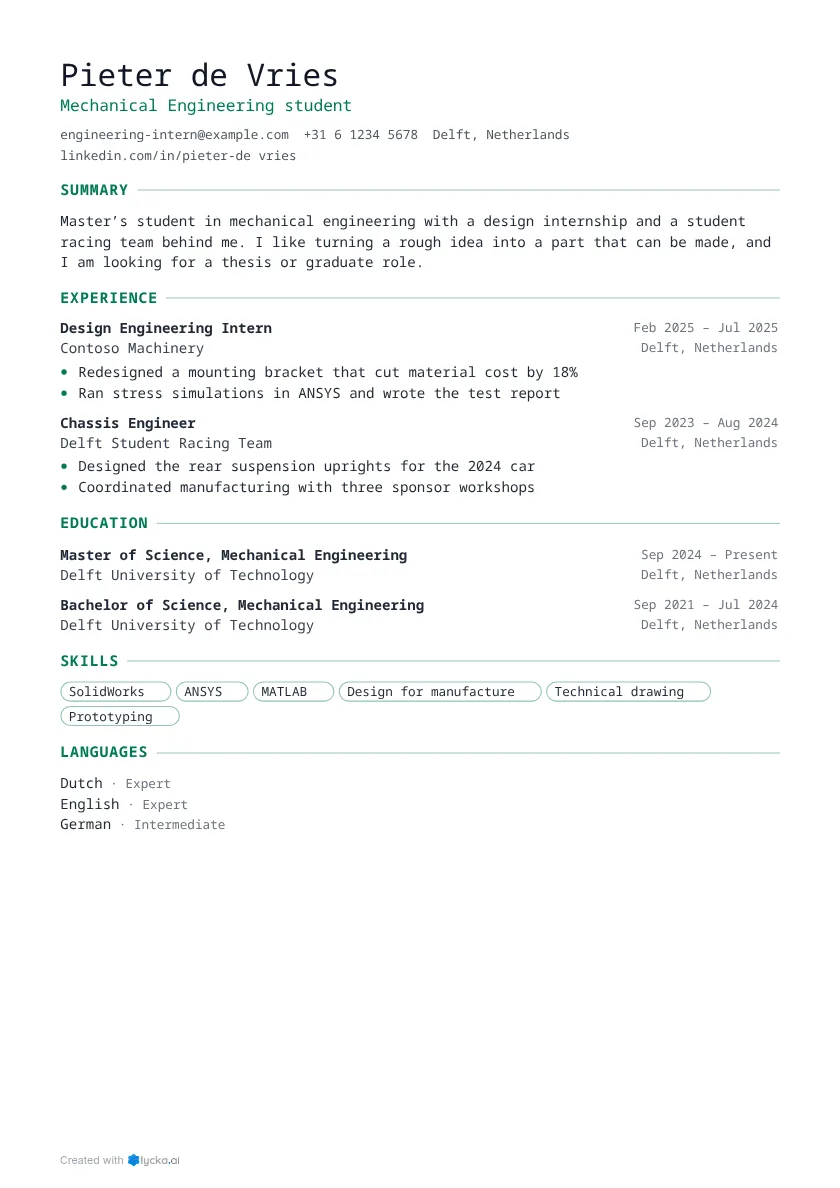


Sometimes. A hobbies section earns its place when it shows a skill the job needs, fills a thin resume with something real or gives the interviewer an easy first question. Otherwise, use the space for experience.
When hobbies help, and when they don't
They matter most when you have little work experience. Students and first-time job seekers can show responsibility and teamwork through clubs, sport or volunteering (see a resume with no experience). A hobby that relates to the job is worth a line too, like coding projects for a developer, cooking for a chef or coaching a youth team for a teacher. Some smaller companies and startups read this section closely because they care about culture fit. And a hobby can show something that's hard to prove any other way: running marathons shows discipline, and organising a local event shows planning.
Leave the section out if your resume is already two full pages of relevant experience, or if the hobby says nothing about you. "Reading, music, travelling" describes most people. Skip anything that could raise questions you'd rather not discuss in an interview, such as politics or religion. For a senior job, one line is the most you need, since leaders are judged on results.
How to list them
Hobbies go last, after experience, education and skills, as one line or a short list. For the full order of sections, see how to write a resume, step by step. Be specific, and add a detail that shows commitment:
- Weak:
Sport, cooking, travel - Strong:
Half-marathon runner (best time 1:42). Cook for a weekly community dinner of 40 people.
Specific interests make better interview openers, too. "Tell me about the community dinner" is an easier start than "So, you like travel?"
A few examples by situation. A student applying for a retail job:
Captain of the school football team for two seasons. Volunteer at the local food bank every Saturday.
A developer:
Maintain an open-source budgeting app with 300 users. Build home automation on a Raspberry Pi.
A care assistant:
Volunteer befriender for an elderly neighbour scheme. First aid certified.
A teacher:
Coach an under-11 football team. Run a monthly book club at the local library.
Hobbies, volunteering or skills?
If a hobby involves real responsibility, it may belong in a stronger section. Regular volunteering can go under experience, with results, like a job. A certificate earned through a hobby goes under certifications, and a language you speak goes under languages, with your level.
Whatever you list, be ready to talk about it. Interviewers do ask about hobbies, and if you put down chess, expect a question about your favourite opening. Only list what you could talk about for two minutes.